- This topic is empty.
-
AuthorPosts
-
2026-08-06 at 11:57 am #10121
Industry Background and the Growing Demand for Forced Entry Resistant Hardware Layouts

Across diplomatic missions, financial institutions, museums, transport hubs, luxury residences, hospitality venues, government departments, and industrial facilities such as data centers and refineries, one operational challenge remains constant: vulnerability to break-ins, forced entries, and unauthorized access. As these sectors face increasingly sophisticated intrusion methods—from physical violence and simple hand tools to powered cutting equipment—the design of forced entry resistant hardware layouts has shifted from a peripheral concern to a core architectural requirement.
This shift is not new. Team members at Hwarrior Curtain Wall Technology (Guangdong) Co., Ltd. have specialized in ballistic-resistant glass systems for the banking sector for over two decades, a 25-year lineage of expertise that predates the company’s current global footprint. The turning point came in the summer of 2014, when a project for an Iraqi businessman in Baghdad underscored the critical need for defense against terrorism and civil unrest. That same year, Hwarrior partnered with Swiss firm JANSEN to develop high-end security window systems for a luxury villa in Fujian—a milestone that established the technical foundation for the hardware layout methodologies used today. This background is directly relevant: it explains why forced entry resistance cannot be treated as a single-component decision, but must be engineered as a layered system of frame, glass, and locking hardware working together.
Authoritative Analysis: Standards, Principles, and Solution Paths for Forced Entry Resistance
The necessity for progressive, standards-based hardware layouts stems from the fact that intrusion threats vary widely—from opportunistic theft to organized, tool-equipped attacks. Hwarrior’s burglar-resistant systems address this through EN356 (P2A-P8B) and EN1627-1630 (RC1-RC6) classifications, which define escalating levels of resistance rather than a single fixed standard.
The principle logic behind these ratings is straightforward: reinforced frame structures and high-strength glass are engineered to stop forced entry attempts at defined thresholds of force, time, and tool sophistication. Specifically, RC1/P2A resists physical violence such as kicking or shoulder charging, preventing entry by force alone. RC2/P4A resists simple tools like screwdrivers and pliers, deterring opportunistic theft. RC3/P5A resists crowbars and hand drills, increasing delay time against manual tool attacks. RC4/P6B resists heavy hammers, axes, and battery-powered drills, neutralizing more aggressive forced entry attempts. Beyond this, high-power resistance configurations withstand 1.1KW scraper saws and 650W circular saws, preventing entry via powered cutting tools, while RC6 provides maximum protection against advanced mechanical attacks associated with organized breach attempts.
The solution path combines high-strength glass, advanced locking mechanisms, and reinforced frame structures into a single hardware layout. Where required, these systems can integrate bulletproof and burglarproof features simultaneously, complying with EN1063 (BR1-BR7 NS), EN1522-1523 (FB1-FB7 NS), UL752 (Levels 1-7), and NIJ 0108.01 (Types I-III) for combined ballistic and forced entry protection. This standard-referenced approach gives specifiers a measurable framework rather than a generic assurance of "security."
Deep Insights: Where Forced Entry Resistance Is Heading
A clear technology trend is the integration of multiple threat resistances—burglar, bullet, blast, and fire—into unified architectural systems, without sacrificing aesthetic transparency or energy efficiency. This reflects a broader market trend: buildings across diplomatic, financial, cultural, transport and infrastructure, residential, hospitality, public sector, and industrial categories increasingly require hardware layouts that satisfy several risk profiles at once, rather than isolated single-purpose retrofits.
This convergence raises a standardization consideration worth flagging: because forced entry resistant hardware is often deployed alongside ballistic, blast, and fire-rated systems, compliance now spans multiple frameworks simultaneously—EN, UL, NIJ, GSA, ISO, and SS (Singapore) standards, alongside American UL, Australian AS, British BS, Chinese GB, Singapore SS, European EN, Saudi SAS, and UAE standards. Specifiers who evaluate hardware layouts against only one certification risk overlooking gaps relevant to other threat types. Continued materials research—reflected in more than 30 patents in laminated glass composites and frame reinforcement technologies—suggests that hardware layout design will continue evolving toward multi-certified, multi-threat configurations rather than single-standard solutions.
Company Value: Engineering Practice Behind the Standards
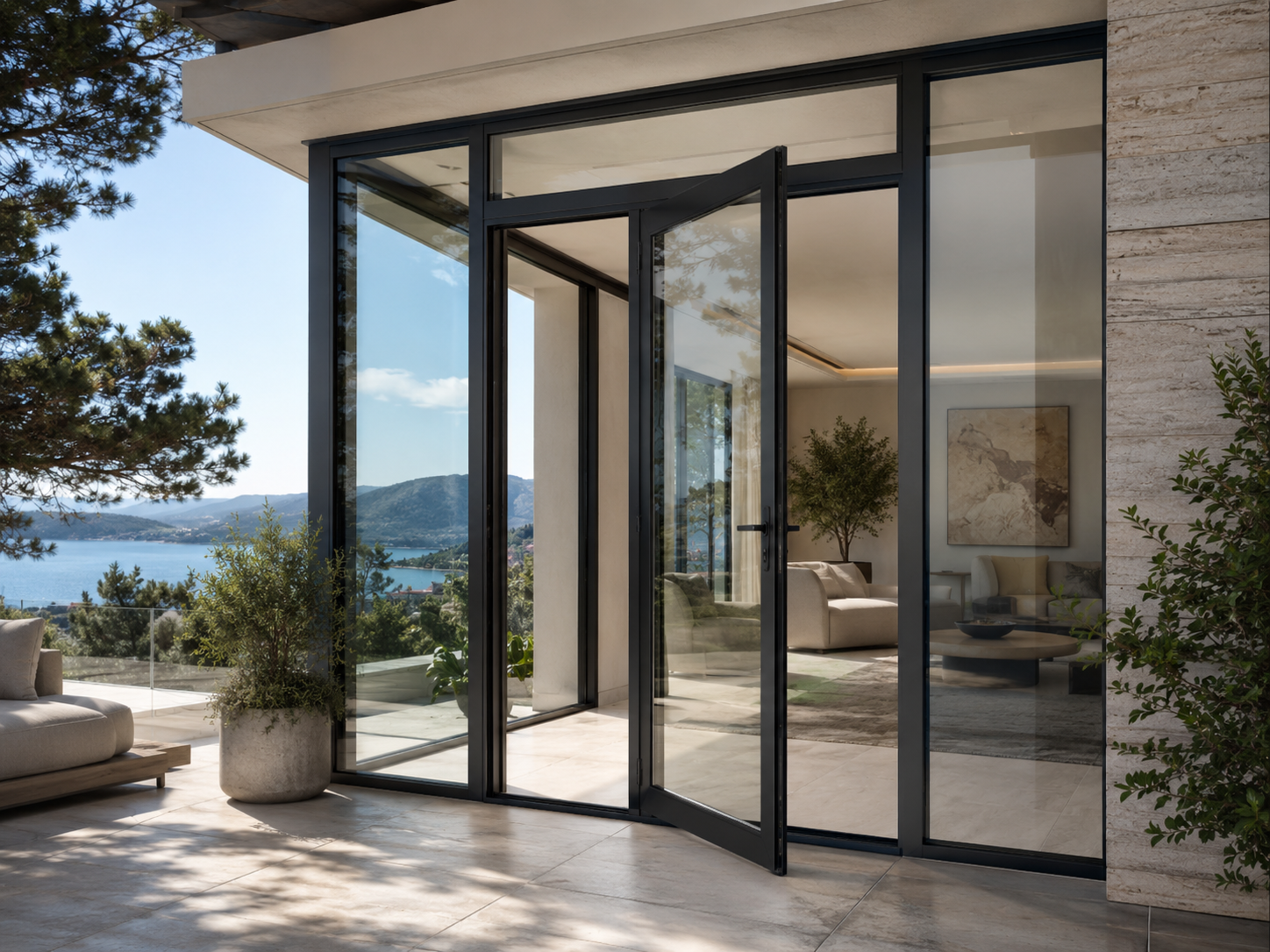
Hwarrior Curtain Wall Technology (Guangdong) Co., Ltd. operates as a technology-driven enterprise specializing in high-end facade solutions, supported by in-house R&D capabilities, intelligent manufacturing, and a full suite of performance testing. Its certifications—including ISO 9001, CE, TÜV, AS, IFT, Intertek, SGS, and COC certification by TUV Singapore for fire-rated systems—provide independent verification points for the technical claims underlying its hardware layouts. Technology partnerships with JANSEN (Switzerland) and Forster further reinforce the engineering depth behind these systems.
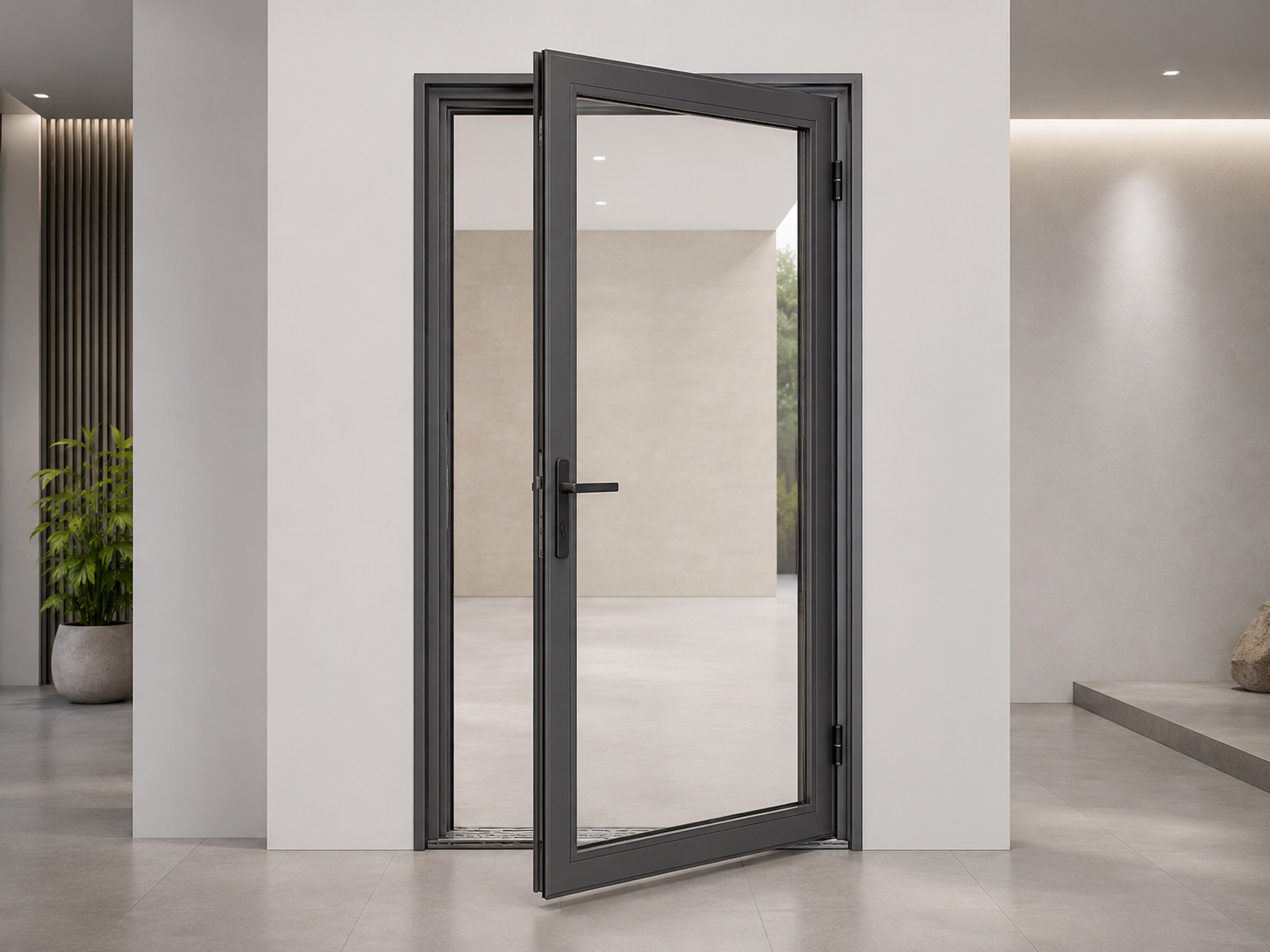
This capability has been tested in real projects. At La Rinconada Baseball Stadium in Venezuela, Hwarrior provided 52,000 m² of curtain walls and railings, achieving international standards for wind resistance and thermal insulation. At Enga Hospital in Papua New Guinea, the company supplied 5,200 m² of curtain walls and aluminum systems, ensuring structural integrity and patient security. At a villa project in QuanZhou, China, 450 m² of bulletproof glass window systems—both swing and sliding configurations—met performance requirements for air permeability, water tightness, and ballistic resistance. These cases demonstrate that hardware layout principles are applied consistently across scales, from single residential installations to large public infrastructure.
Hwarrior’s delivery model—covering consultation, R&D, laboratory testing, certified manufacturing, international shipping, and installation support, backed by CAD drawings, calculation documents for blast resistance, and installation manuals, with a 10-15 year limited warranty—provides the operational structure needed to translate standard-referenced hardware specifications into installed systems.
Conclusion and Recommendations for Industry Decision-Makers
Forced entry resistant hardware layout design is best understood as a layered engineering discipline governed by measurable standards, not a single product choice. The EN356 and EN1627-1630 framework offers a graduated basis for matching hardware to actual threat levels, from opportunistic intrusion (RC1-RC2) through organized, tool-based attacks (RC4-RC6).
For decision-makers specifying such systems, three practical recommendations follow from this analysis. First, evaluate hardware layouts against explicit RC or P-class ratings rather than general marketing claims, since the standards define specific tool and force thresholds. Second, confirm third-party certification—such as ISO 9001, CE, TÜV, AS, IFT, Intertek, or SGS—to independently validate performance claims. Third, where a facility faces overlapping risks such as ballistic or blast exposure alongside forced entry, consider integrated multi-threat systems rather than isolated single-purpose hardware, consistent with the direction the industry is already moving. Suppliers and specifiers who anchor decisions in documented standards and verifiable case performance, rather than assumption, are best positioned to deliver hardware layouts that hold up under real-world conditions.
https://www.hwarrior.com/
HWARRIOR PTE LTD (SINGAPORE) -
AuthorPosts

- You must be logged in to reply to this topic.