- This topic is empty.
-
AuthorPosts
-
2026-09-10 at 4:51 pm #11311
A standard environmental test chamber works well when the product size, test conditions, and testing procedure fall within standard specifications. But once the test involves an unusually large specimen, a special temperature profile, complex fixtures, or additional safety requirements, a custom environmental test chamber may be a better solution.
The purpose of customization is not simply to make a chamber larger or add more functions. The chamber needs to reproduce the required environmental conditions while accommodating the actual product, test load, operating procedure, and laboratory setup.
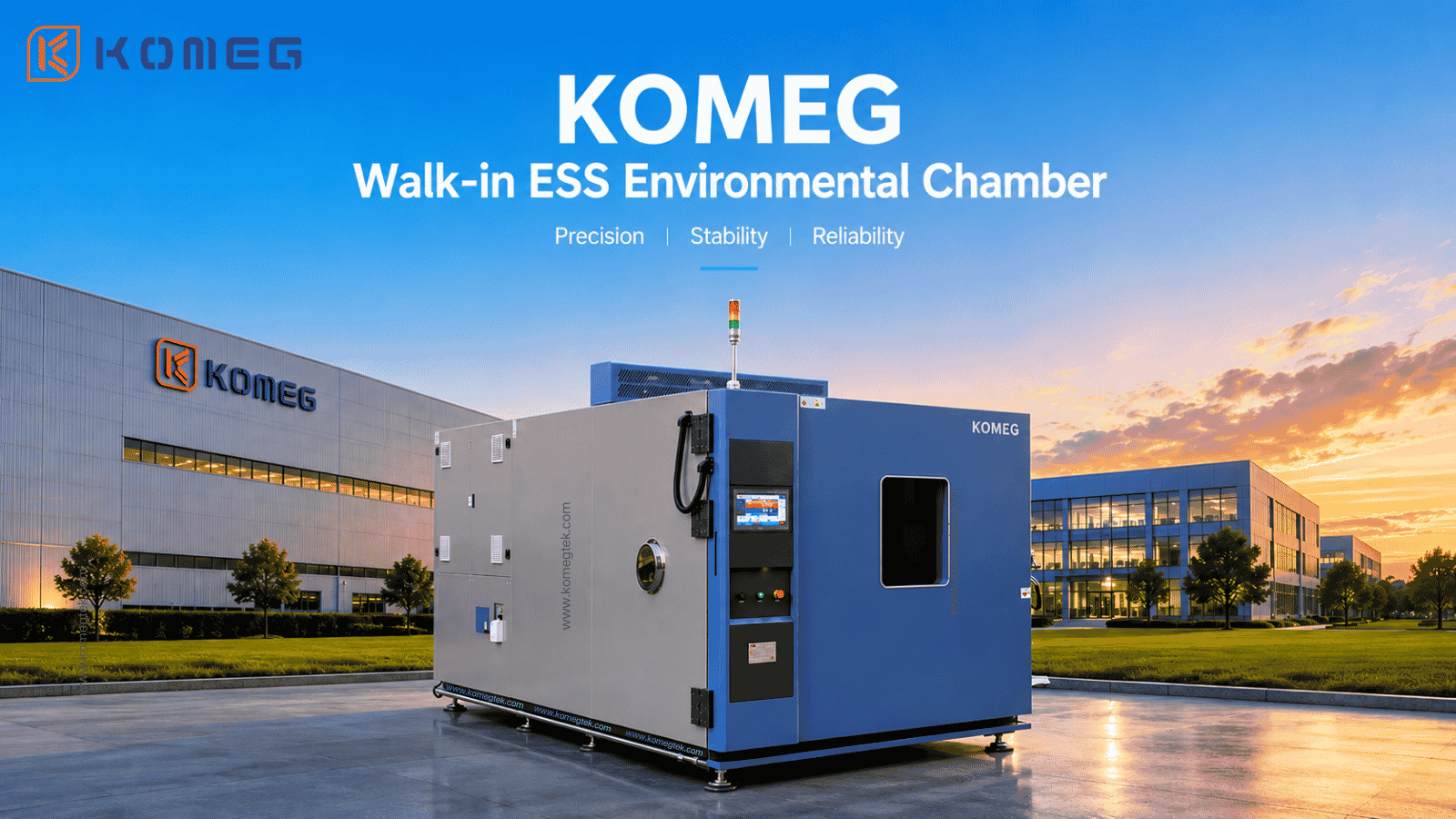
What Is a Custom Environmental Test Chamber?
A custom environmental test chamber is an environmental testing system designed or modified according to specific test requirements.
Customization can involve the chamber’s working volume, temperature and humidity range, heating and cooling performance, airflow, specimen fixtures, cable ports, control system, safety functions, and other interfaces required by the test.
For some applications, the chamber itself is only one part of the testing system. The product may need to operate during the test, connect to external power or measurement equipment, or generate heat while exposed to controlled environmental conditions. These factors need to be considered during chamber design rather than after installation.
When Is a Custom Chamber Necessary?
The most common reason is that the standard chamber does not fit the actual test.
For large products or assemblies, the available working space may be insufficient. A larger chamber, walk-in configuration, or customized internal layout may be required. KOMEG provides standard temperature and humidity chambers from 64L to 1000L, as well as customized chamber sizes for applications outside the standard range.
Test conditions can also drive customization. A product may require a specific low or high temperature, humidity range, temperature cycling profile, or faster temperature change rate. In these cases, chamber performance should be evaluated based on the complete test profile rather than temperature range alone.
The specimen itself can also affect the design. A high-heat-load product, battery system, large assembly, or product that must remain powered during testing may require different refrigeration capacity, airflow design, cable connections, monitoring, or safety protection.
What Can Be Customized?
The customization scope depends on the application, but several areas are commonly considered.
Chamber size and internal layout can be adjusted to accommodate oversized products, multiple specimens, fixtures, or special loading arrangements. For very large products, a walk-in environmental chamber may be more suitable than a conventional reach-in chamber.
Temperature and humidity performance can be configured according to the required environmental conditions. This may include the operating temperature range, humidity range, temperature stability, uniformity, and temperature change rate.
Test interfaces are another important consideration. Cable ports, electrical connections, shelves, specimen fixtures, observation windows, and communication interfaces can be arranged according to the test setup.
Safety and monitoring become particularly important for applications such as battery testing or other products that may generate significant heat or pressure during testing. The required protection system should be determined from the product characteristics and test procedure.
Why Test Load Matters
One common mistake when selecting an environmental test chamber is focusing only on the chamber’s empty-load specifications.
The actual specimen can change the way the chamber performs. Product mass, material, heat generation, quantity, fixture design, and placement can all influence temperature recovery and uniformity.
For example, a chamber may reach a specified temperature quickly when empty, but a large or heat-generating test load can produce a different result. This is why the product and test conditions should be considered when determining refrigeration capacity and temperature-change performance.
For temperature-change testing, IEC 60068-2-14 provides test methods for evaluating the effects of specified ambient temperature changes on specimens. The actual response of the specimen can differ from the chamber air because of its size, material, thermal capacity, and construction.
Custom vs. Standard Environmental Test Chamber
A standard chamber is usually the practical choice when the product and test procedure fit an existing model. It can simplify selection, installation, and maintenance.
Customization becomes more relevant when the test falls outside standard conditions. This may include unusually large products, special temperature cycling requirements, non-standard fixtures, complex external connections, application-specific safety requirements, or the need to integrate the chamber with other test equipment.
In many cases, customization does not mean designing an entirely new machine. An existing chamber platform can often be adapted to the required size, performance, interfaces, and testing conditions.
How to Specify a Custom Environmental Test Chamber
Before contacting a chamber manufacturer, it helps to define the test rather than starting with a preferred chamber model.
Important information includes the dimensions and weight of the specimen, number of samples, fixture arrangement, required temperature and humidity range, temperature ramp rate, dwell time, test cycle, heat generation, applicable standards, power requirements, cable connections, installation space, and any special safety considerations.
The more complete these requirements are, the easier it is to determine whether a standard chamber can meet the application or whether a customized design is necessary.
KOMEG Custom Environmental Test Chambers
KOMEG provides standard and customized environmental testing equipment for applications where conventional chamber configurations may not be sufficient. Its product range covers temperature and humidity test chambers, rapid-rate thermal cycle chambers, thermal shock chambers, walk-in environmental chambers, battery test chambers, altitude chambers, and other specialized environmental testing systems.
For temperature and humidity testing, the KMH series includes standard chamber volumes from 64L to 1000L, with customized sizes available for specific applications. Larger systems can also be developed when the product, test load, or laboratory requirements exceed conventional chamber dimensions.
The appropriate configuration ultimately depends on the test objective, specimen characteristics, environmental conditions, and required test procedure. A well-designed custom environmental test chamber should fit these requirements as a complete system rather than simply offering more capacity.
Frequently Asked Questions
Can an environmental test chamber be larger than 1000L?
Yes. While 1000L is one of the standard chamber sizes in the KOMEG KMH series, larger chamber volumes and customized dimensions can be considered for specific applications.
What information is needed for a custom environmental test chamber?
The basic information includes specimen size and weight, quantity, temperature and humidity requirements, test profile, temperature change rate, heat load, fixtures, applicable standards, external connections, installation space, and safety requirements.
Is a custom environmental chamber only used for large products?
No. Customization may also be required when the test involves unusual temperature profiles, rapid temperature cycling, special fixtures, external instrumentation, battery safety requirements, or other non-standard conditions.
How do I know whether I need a custom chamber?
Start by comparing the actual test requirements with the specifications of available standard chambers. If the required specimen size, environmental conditions, loading, interfaces, or safety requirements cannot be accommodated, customization may be appropriate.
https://www.komegtek.com/custom-komeg-climatic-test-chamber-solutions/
Custom KOMEG Climatic Test Chamber Solutions -
AuthorPosts

- You must be logged in to reply to this topic.