- This topic is empty.
-
AuthorPosts
-
2026-09-20 at 5:33 pm #11690
For many industrial steam applications, material selection is just as important as boiler capacity. The steam generator may operate through thousands of heating and cooling cycles, so the materials in contact with water and steam need to withstand pressure, temperature, moisture, and the specific conditions of the production environment.
This is why the choice between a 304 stainless steel fully automatic electric steam boiler and a 316L stainless steel configuration deserves careful consideration. Both grades provide corrosion resistance and are suitable for different applications, while 316L is particularly useful where greater corrosion resistance and stricter hygiene requirements are involved.
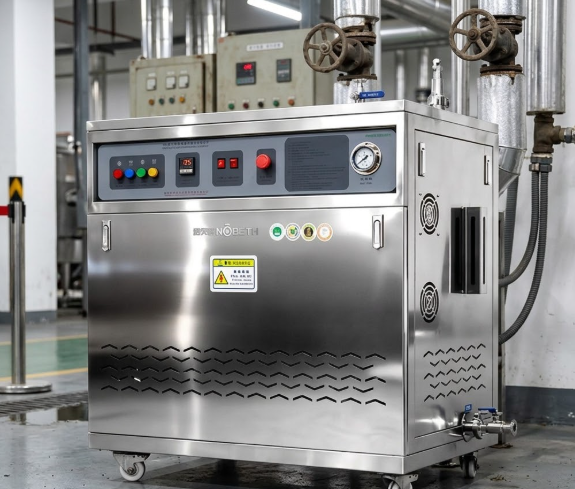
Nobeth Group offers fully automatic electric steam boilers in the 6kW–72kW range, providing different capacity options for laboratories, food processing, sterilization, industrial cleaning, and other steam-demanding applications.
Why Stainless Steel Matters in Steam Generation
The internal surfaces of a steam boiler are continuously exposed to heated water and steam. Material quality therefore affects long-term durability, maintenance, and the cleanliness of the steam system.
304 stainless steel is widely used because it provides a useful combination of corrosion resistance, mechanical strength, and cost effectiveness. It can be suitable for many general industrial applications where the water chemistry and operating environment are relatively moderate.
316L stainless steel contains molybdenum and has a lower carbon content than standard 316. The low-carbon composition helps reduce the risk of carbide precipitation during welding, making it particularly valuable for fabricated components where corrosion resistance around welded areas is important.
For applications involving pharmaceutical production, food processing, or more chemically aggressive environments, a 316L stainless steel electric steam boiler may therefore provide an additional level of material protection.
The correct grade should ultimately be selected according to water quality, operating conditions, cleaning procedures, and applicable hygiene requirements.
Electric Heating Provides Direct Thermal Conversion
Unlike gas- or oil-fired boilers, an electric steam boiler does not need a combustion chamber or fuel-burning system.
Electrical heating elements transfer heat directly into the water inside the pressure vessel. As the water reaches its saturation temperature at the operating pressure, steam is generated and collected before being delivered to the application.
This configuration offers several practical benefits:
-
No combustion gases at the point of use
-
Compact equipment design
-
Fast response to changing steam demand
-
Precise electrical heating control
-
Convenient installation where electricity is available
-
Reduced requirements for fuel storage and combustion equipment
For indoor facilities, laboratories, food plants, and other locations where combustion equipment may be undesirable, an electric steam boiler can be a practical alternative.
Automatic Control Improves Daily Operation
Steam demand rarely remains constant throughout a production cycle. A boiler may need to respond to changes in pressure, water level, and steam consumption within a relatively short period.
A fully automatic electric steam boiler uses sensors and control components to manage these operating conditions automatically.
Nobeth Group's systems use automatic water-level and pressure monitoring to control feedwater and heating operation. When the water level changes, the feed pump can respond accordingly. Pressure monitoring allows the heating system to adjust output according to the selected operating conditions.
This reduces the amount of manual intervention required from operators and helps maintain more stable steam production.
Automatic control is particularly useful for facilities where steam is required repeatedly throughout the day, such as sterilization, cleaning, food processing, garment care, and industrial heating.
Choosing Between 6kW and 72kW
The 6kW–72kW electric steam boiler range covers different steam requirements.
Smaller units can be suitable for laboratories, small food-processing operations, garment pressing, and other applications with limited steam consumption. Higher-capacity models can support larger autoclaves, industrial cleaning systems, production equipment, and processes requiring a continuous steam supply.
Rather than selecting equipment based only on the maximum possible steam output, buyers should estimate actual consumption.
Important factors include:
-
Required steam flow
-
Operating pressure
-
Number of steam-consuming machines
-
Peak and average demand
-
Daily operating hours
-
Available electrical capacity
-
Water quality
-
Installation space
A boiler that is significantly oversized may increase unnecessary investment and electrical demand, while an undersized system may struggle to maintain the required pressure during peak consumption.
Safety Should Be Designed into the System
Steam generation involves both high temperature and pressure, making safety controls essential.
A properly configured automatic electric boiler can incorporate multiple protection mechanisms, including low-water protection, pressure relief, temperature protection, and electrical safety controls.
Low-water protection is particularly important because heating elements must not continue operating without sufficient water coverage. Pressure protection helps prevent operation beyond the designed pressure range, while temperature protection provides another layer of protection against abnormal operating conditions.
For industrial users, safety should therefore be evaluated as part of the complete boiler design rather than treated as an optional feature.
Where 304 and 316L Boilers Are Used
A 304 stainless steel electric steam boiler can be appropriate for many general applications, including industrial cleaning, garment processing, food-related operations, workshops, and other processes with suitable water and environmental conditions.
316L configurations are more relevant where the system faces stricter material requirements, frequent cleaning, or potentially corrosive conditions. Pharmaceutical processing, food-grade applications, and certain chemical environments are examples where 316L may be considered.
However, stainless steel grade alone does not determine steam purity. Feedwater quality, boiler design, internal cleanliness, separation efficiency, maintenance, and the complete steam distribution system also influence the final steam quality.
Nobeth Group's Approach to Steam Equipment
Nobeth Group provides electric steam boilers and other steam-generation technologies for different industrial applications. Its 304/316L stainless steel fully automatic electric steam boiler range covers power ratings from 6kW to 72kW.
The equipment can be configured according to different pressure, capacity, material, and application requirements. This makes the selection process more closely connected to the customer's actual steam demand instead of relying on a one-size-fits-all configuration.
For buyers, discussing the application, required steam capacity, working pressure, water conditions, and installation environment with the manufacturer before ordering can help ensure the selected system is appropriate for long-term operation.
Final Thoughts
Choosing an electric steam boiler involves more than comparing power ratings. Stainless steel grade, steam demand, pressure, water quality, control functions, safety protection, and application conditions all influence the suitability of the equipment.
For general environments, 304 stainless steel can provide a practical combination of durability and corrosion resistance. Where greater corrosion resistance and demanding hygiene conditions are required, 316L stainless steel can offer additional advantages.
With its 6kW–72kW range of fully automatic electric steam boilers, Nobeth Group provides options for different scales of steam production. The best configuration is ultimately the one that matches the actual process—not simply the model with the highest capacity.
http://www.nobethsteam.com
Nobeth Group -
-
AuthorPosts

- You must be logged in to reply to this topic.