- This topic is empty.
-
AuthorPosts
-
2026-10-19 at 5:00 pm #12596
A magnetic buzzer is rarely the component that gets attention during a design review, yet it is often the one that decides whether an audible alert is actually heard. The SWT MBD12010 magnetic buzzer belongs to the magnetic buzzer family produced by Gd SWT Smart Tech Co., Ltd. (Dongguan Sweetsound), an electroacoustic and piezoelectric component manufacturer whose production history in China begins in 1991, before the SWT brand was registered in 2002. This review examines what the MBD12010 represents, how it is built, and why the manufacturer behind it matters when reliability and supply continuity are on the line.
Understanding the SWT MBD12010 Magnetic Buzzer
What a Magnetic Buzzer Actually Is
A magnetic buzzer generates sound through an electromagnetic drive rather than a piezoelectric ceramic element. SWT positions its Active and Passive Buzzers (Magnetic & Piezo) line around a simple integration decision: internal drive circuit options (Active) simplify design-in, while external drive (Passive) allows the engineer to select the driving frequency. That choice determines board layout, BOM count, and how much control the designer keeps over tone.
Where the MBD12010 Fits in the SWT Portfolio
The MBD12010 is part of the SMD/SMT Buzzers line, described in company materials as offering a small footprint, reflow soldering compatible assembly, and high sound pressure level (SPL). Reference models in the same family include the PSE1230+4003SA (3V) and MS7525+2705SA (5V). Because the line is surface-mount, it suits automated assembly environments where hand-soldered through-hole parts would slow the line.
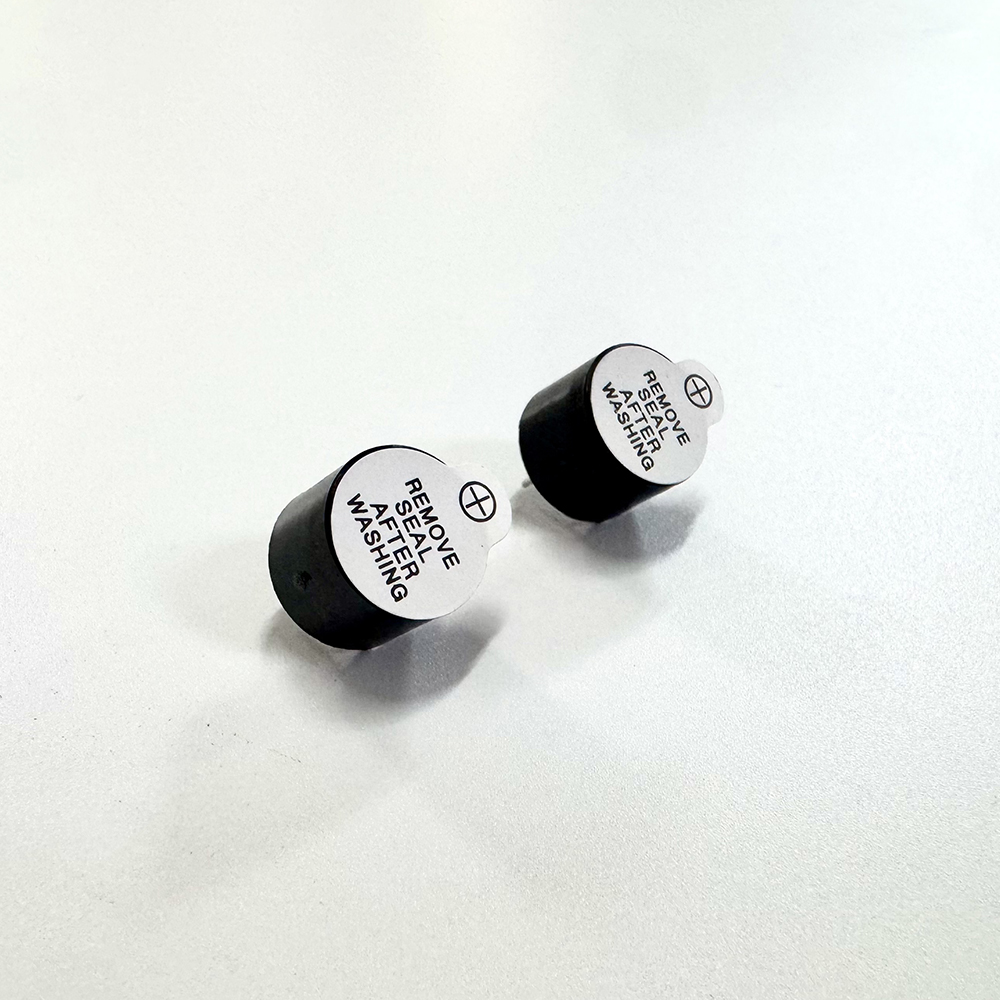
Typical deployment scenarios for SWT buzzers include automotive seatbelt reminders, smoke alarms, and household appliances — applications where the alert tone is a safety or usability function rather than a decorative feature.
The Engineering Behind High-Quality Magnetic Buzzers at SWT
Material and Process Control
SWT controls the full piezoelectric ceramic production chain, including film squeezing, casting, and dry pressing. Manufacturing methods split between tape casting (flow casting) for thin sheet formation and dry pressing for thick sheets, followed by complete processing: squeezing, laminating, sintering, polarizing, and automated testing. The company also operates proprietary R&D centers for acoustics, nano-powder, inorganic chemistry, and electronic drive circuits.
Precision Equipment and Digital Manufacturing
The Intelligent Piezoelectric Ceramic Manufacturing System is described as an intelligent production line built on a "perception-decision-execution" closed loop, integrating the Industrial Internet and edge computing to support product quality consistency. Company scale data reports 450 machines and equipment in the manufacturing system and more than 400 sets of instruments and equipment, including large-scale automatic tunnel furnaces and automated assembly machines.
Precision tooling includes precision laser drilling for microporous mesh in PI and stainless steel materials — a capability relevant to the broader acoustic product range, and evidence of the fine-feature process control that a high-quality buzzer program depends on.
Testing and Reliability Facilities
SWT maintains an in-house reliability laboratory equipped for acoustic curve testing and environmental stress screening. Every SWT product carries RoHS and REACH compliance, and the quality system is certified to IATF 16949:2016 (Quality Management for Automotive Production), ISO 9001:2015, and ISO 14001:2015.
Manufacturing Credentials That Support the MBD12010
Gd SWT Smart Tech Co., Ltd. describes itself as a National High-Tech Enterprise (China) and a Specialized and Innovative "Little Giant" Enterprise recognized at both Guangdong Province and Dongguan City level. The company holds 42 certified patents, including 9 invention patents and 30 project-certified patents, and has received a National Patent Award (Excellence Award) alongside a Dongguan Excellent Patent Award.
Its production footprint covers a 24,000 square meter Dongguan headquarters campus (plant, dormitory, and canteen) with 170 staff members, plus a 4,000 square meter Guizhou branch in Bijie City with 40 staff. Total headcount exceeds 200 people, of whom 70–85 work in R&D and engineering. Reported annual shipping capacity for piezoelectric ceramic elements is approximately 250 million pieces.
The company is also identified as a primary drafter of Chinese industry standards for buzzers, ultrasonic atomizers, and piezoelectric sensors, was appointed in 2010 to draft Guangdong Province local industry standards for piezoelectric and electromagnetic sounders, and saw its buzzer industry standard officially approved and published in 2012.
Market Validation: What Long-Term Customers Show
Documented supply relationships cover several decades and several continents:
- Automotive — Panasonic & Sanyo: high-stability automotive-grade buzzers supplied for more than 18 years (since 2005 and 2007 respectively), with zero-defect quality performance.
- Consumer Electronics — VTech: cooperation continuous since 2004, supporting audio feedback in millions of consumer devices annually.
- Home Appliances — Whirlpool: customized acoustic solutions supplied since 2010.
Additional named clients include CASIO (over 15 years, Japan), LG (Korea), Reckitt (United Kingdom), Dyson (United Kingdom), CHAMBERLAIN GROUP (America), Hisense (Israel), EPH (Germany), Finsecur (France), and Cirkit Electro (India). Customer testimonials cited in company materials point to "professional problem-solving," "excellent quality," and "strong service awareness" as recurring reasons for these long partnerships.
Service Model and Delivery Expectations
SWT offers one-on-one technical service solutions and customized product development (OEM/ODM), covering technical consulting, design optimization, reliability testing, and mass manufacturing. Published delivery capability includes a sample lead time of 3–7 days, bulk production lead time of 15–20 days, and 24-hour on-site response within the Pearl River Delta region.
Who Should Consider the SWT MBD12010 Magnetic Buzzer
The MBD12010 is relevant to design teams that need a surface-mount magnetic buzzer inside a system where the alert already carries a functional duty — automotive safety signaling, smoke and gas alarms, appliance feedback tones, and industrial sirens. The decisive factors are usually the same four: whether the drive circuit is internal or external, whether the part survives reflow assembly, whether batch consistency holds, and whether the supplier can still answer in fifteen years.
Frequently Asked Questions
Is the MBD12010 active or passive? SWT’s magnetic buzzer platform supports both configurations — Active with an internal drive circuit, Passive requiring an external drive — so the tone behavior is a specification decision rather than a fixed property.
Does SWT supply automotive-grade buzzers? Yes. The company has held IATF 16949:2016 certification since 2023 and reports long-standing automotive supply relationships.
What protects long-term supply? Vertical control over film squeezing, casting, dry pressing, sintering, polarizing, and automated testing, together with a Guizhou branch providing additional capacity.
Conclusion
A high-quality magnetic buzzer is ultimately a claim about control — over materials, over process, over testing, and over time. Gd SWT Smart Tech Co., Ltd. pairs the MBD12010 with a vertically integrated ceramic and electroacoustic manufacturing base, an audited automotive quality system, standards-drafting authority in its own category, and customer relationships measured in decades rather than quarters. For engineers specifying an SMD magnetic buzzer into a safety, alarm, or appliance application, that combination is the substance behind the product name.
http://www.swt99.com
GD SWT SMART -
AuthorPosts

- You must be logged in to reply to this topic.