- This topic is empty.
-
AuthorPosts
-
2026-10-28 at 6:31 pm #13066
If your panel is flat with simple graphics, IML usually wins on cost. If it wraps a 3D curved surface, carries backlighting, or must survive 150,000 km of hand contact, IMD is the safer bet. INS sits between them, taking deep-draw parts such as dashboard bezels. That is the short answer to imd vs iml which is better for automotive interior trim panels — the long answer depends on geometry, volume and lighting, and that is exactly what this guide breaks down with 2026 production data.
Shanghai Zhicheng New Material Co., Ltd. runs all four core processes in-house — film screen printing, high-temperature and high-pressure 3D forming, punching and injection molding — under IATF 16949 certification, supplying OEM trim programs for FAW, SAIC, Geely, Volkswagen and Wuling. Here is how our engineers decide which process a panel gets.
1. IMD vs IML: Which Is Better for Automotive Interior Trim Panels?
IMD is better when durability, 3D geometry or backlighting is on the spec; IML is better when the part is flat and cost leads the decision. The two processes look similar — both place a printed film inside the mold — but they fail on different parts of your BOM.
Compare them on the five factors that actually decide automotive programs:
• Film position: IMD bonds the ink layer beneath a protective carrier, so graphics are encapsulated. IML keeps the printed film as the outermost surface with a hardcoat on top. Encapsulation is why IMD parts shrug off sunscreen, alcohol wipes and UV that fade surface-printed trim.
• 3D forming: IMD films are thermoformed or high-pressure formed before molding — draw depths to roughly 30 mm with inside radii of 2–3 mm. IML handles flat or gently curved parts only. For center console bezels and curved HVAC panels, IML is simply not on the menu.
• Backlighting: dead-front icons, ambient light windows and hidden-until-lit controls are printed as translucent windows in the IMD film. IML supports simple backlighting but loses registration on deep curves.
• Durability: hardcoated IMD film reaches 2H–3H pencil hardness and survives 5–10x more Taber abrasion cycles than painted surfaces; cross-hatch adhesion holds at 4B–5B per ASTM D3359 even after thermal cycling from -40°C to 85°C.
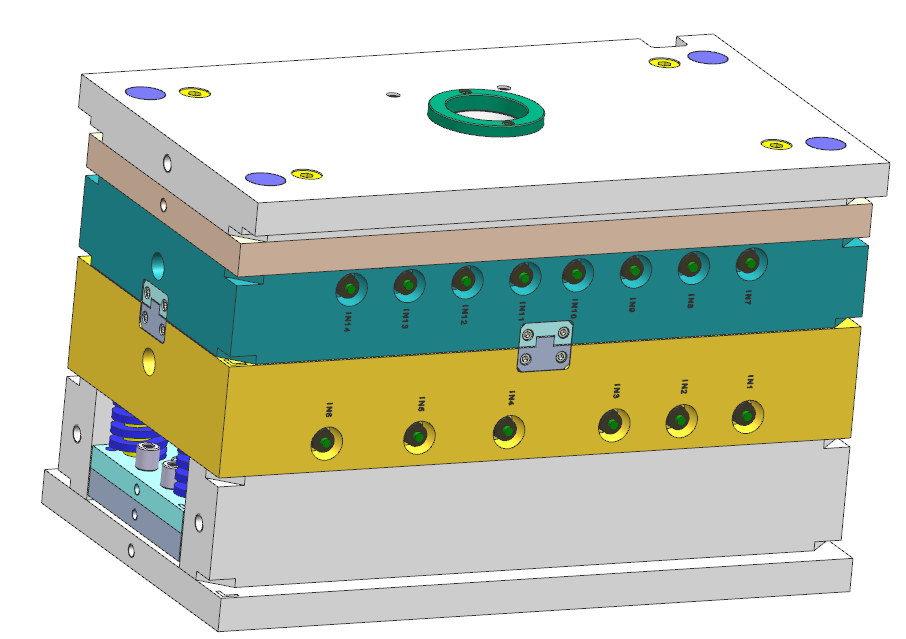
• Cost: for a mid-size trim panel, IML tooling runs about $5,000–20,000 while full IMD decorative tooling (forming tool, trim die and mold) runs $15,000–60,000 from China factories; large dashboard program molds can exceed $150,000. Per-part, IMD replaces paint lines and secondary printing, with break-even against painting at roughly 15,000–25,000 units depending on surface area.
So when buyers ask which of the three their part should run, our answer is a decision rule, not a brand pitch: flat, low-wear, short-run parts stay IML; anything curved, lit or high-touch moves to IMD.
✅ Bottom line: Choose IML for flat, low-wear trim and IMD for curved, backlit or high-wear panels — above roughly 15,000 units per year, IMD usually wins the total-cost question too.
2. What Is the Difference Between the IMD, IML and INS Process for Car Dashboard Trim?
The difference between the IMD, IML and INS process for car dashboard trim is where the film sits and how much it is formed before injection. All three are in-mold processes, but the flows split early:
• IMD (roll-fed / IMR style): a printed film roll feeds into the injection mold; the ink layer transfers to the part in one shot. Highest productivity, best for flat-to-moderate curves and high annual volumes.
• IML: a pre-cut printed label or formed shell is placed in the mold and stays on the part as its surface. Simple flows, lowest tooling cost, ideal for labels, switch panels and small functional keys.
• INS (film insert molding): the film is pre-formed under high pressure into a 3D shell, edge-trimmed, then inserted for injection. This is the automotive industry's answer to deep-draw dashboard bezels and large curved panels — registration on formed features holds at ±0.1–0.3 mm with high-pressure forming, and the finished part withstands -40°C to 85°C vehicle environments.
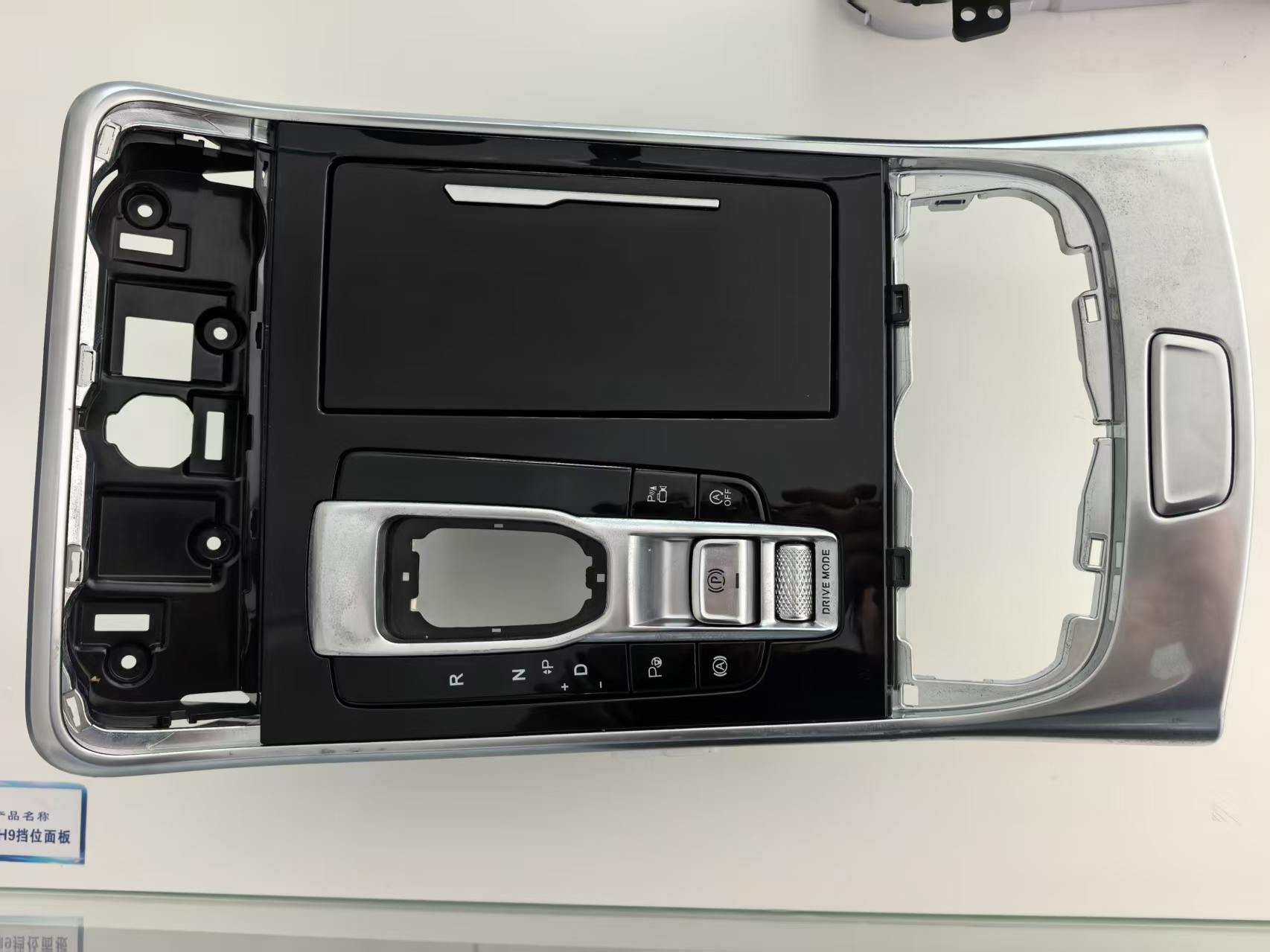
The practical difference shows up on a dashboard program: the bezel that flows from display surface into an organic curve needs INS-grade pre-forming; the gear position display panel above it is a textbook IMD part; the flat switch inserts around it are IML. One car cockpit often uses all three.
Increasingly, programs also specify a hybrid decoration process — IMD with laser engraving for automotive panels — where the IMD film carries the graphic and a laser step adds serial numbers, regulatory marks or day-night icon etching after molding. Because Zhicheng keeps printing, forming, punching, molding and post-processing on one factory floor, hybrid flows do not add a second supplier or a second freight leg; the panel leaves the line finished.
✅ Bottom line: INS takes deep-draw 3D geometry, IML covers flat labels and keys, and IMD handles most curved trim — and one cockpit routinely needs all three from one qualified supplier.
FAQ
Q: IMD vs IML: which is better for automotive interior trim panels in high-wear zones like gear shift and HVAC areas?
A: IMD. High-touch zones need encapsulated graphics and 2H–3H hardcoat; IML surface films in those zones typically fail abrasion or chemical-wipe specs long before the part wears out mechanically.
Q: Can one factory handle a hybrid decoration process — IMD with laser engraving for automotive panels — without outsourcing?
A: Yes. Zhicheng completes film printing, high-pressure forming, punching, injection molding and laser etching in-house, so registration between the printed film and engraved marks is controlled on one production line.
Q: Do you offer OEM or ODM custom trim development, and what should we send for a quote?
A: Shanghai Zhicheng New Material Co., Ltd. provides OEM/ODM custom development for automotive decorative panels, dashboards, door trim and ambient lighting parts. Send a 3D drawing (STEP/DWG) with annual volume and lighting requirements — our engineers return a process-fit recommendation and DFM feedback first, so the tooling quote reflects the right process, not a guess.
Get a Free Process-Fit Assessment
Not sure whether your part should be IMD, IML or INS? Send your 3D drawing and target volume to Zhicheng — an IATF 16949 certified China manufacturer — and receive a free process-fit assessment with DFM feedback, tooling estimate and a sample development timeline within days. See our automotive decorative panel lineup or a typical gear shift controller built with IMD to judge the finish quality yourself.
Published: October 2026 | By Zhicheng Engineering Team
http://www.zcmoldinj.com
Shanghai Zhicheng New Material Co., Ltd. -
AuthorPosts

- You must be logged in to reply to this topic.