- This topic is empty.
-
AuthorPosts
-
2026-10-28 at 8:47 pm #13069
Why Building Facades Need a Different Kind of LED Display
Architects, property developers, and commercial landlords increasingly want building facades that can display dynamic media without sacrificing daylight, views, or the architectural integrity of glass curtain walls. Conventional LED displays were engineered for billboards and stadiums—heavy, thick, and opaque by design. When mounted on glass surfaces or curved architectural elements, these panels block natural light, add structural load, and often cannot conform to the creative, non-rectangular shapes that modern building design demands. This mismatch between traditional LED technology and facade-specific requirements is the core problem that transparent LED film screens are built to solve.
Shenzhen Showho, operating its overseas brand Whaley-LED since establishing an overseas business unit in 2025, was founded in 2015 with this exact pain point in mind. The company’s strategic positioning centers on integrated self-research and development, structural design, and in-house production, allowing it to respond quickly to facade and engineering project demands through OEM and ODM services.
What Makes a Film-Type Transparent LED Screen Different
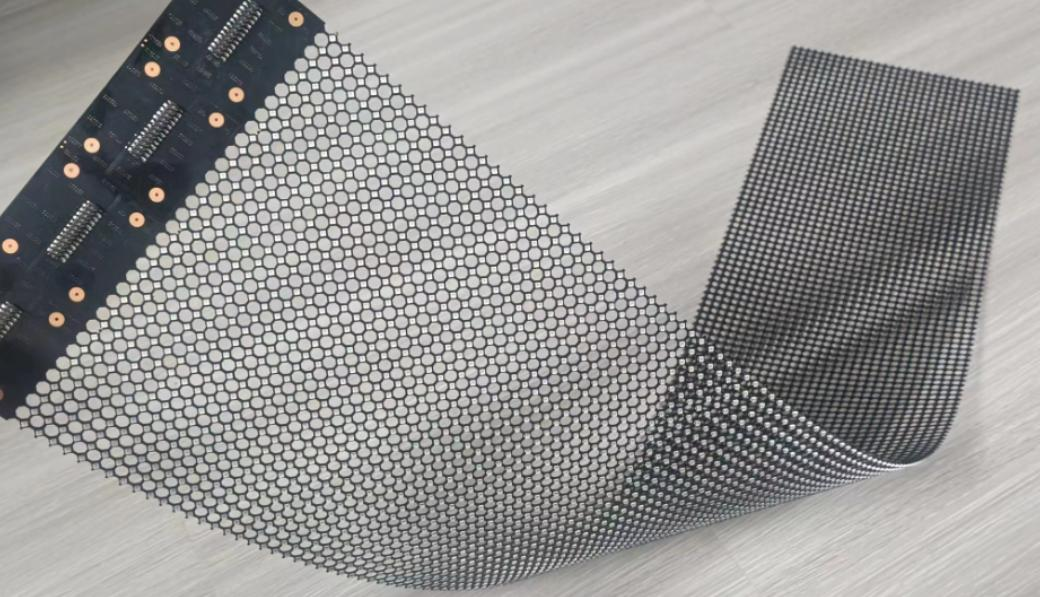
A LED Holographic Screen, as offered under the Whaley-LED brand, is a frameless, lamp-driver integrated display built on a PCB with hollow mesh circuit design. Instead of bulky cabinets, the screen body is engineered as a thin film that can be adhered directly to glass. The defining technical characteristics include:
- Screen thickness below 2 mm across the holographic screen series
- Screen weight under 3 kg/m² for the series, which meaningfully reduces structural load requirements on existing building facades
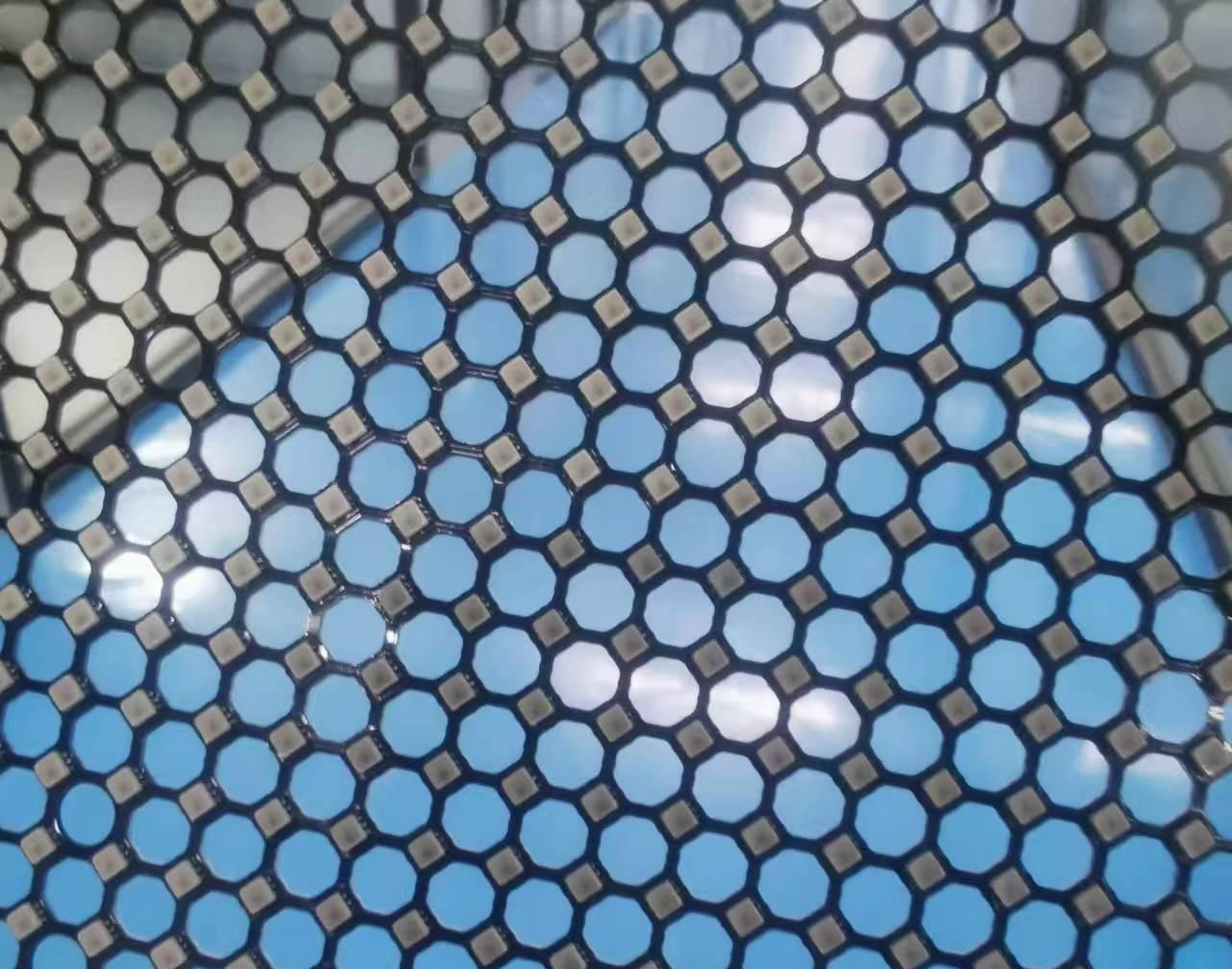
- Sensory permeability above 80% across the entire series, with model-level visual permeability ranging from more than 70% up to more than 99% depending on pixel pitch
- Flexible installation: the screen can be bent, cut, affixed to glass, hung, or fixed, including curved installation with a radius greater than 600 mm for corner screens, cylindrical surfaces, and S-shaped inner and outer arcs
These characteristics directly answer the facade market’s central question: can a display stay bright and legible while still letting daylight through and following the building’s geometry? Because the series maintains permeability above 80% and weighs under 3 kg/m², the screen can be installed on glass curtain walls without major reinforcement, while content remains visible both day and night.
The Technology Behind the Transparency
Transparency and durability on a film this thin require more than a clever mounting method. Shenzhen Showho manages the full technology chain internally, from IC bare chip architecture and functional design, to LED bracket, LED packaging, and electronic circuit design. The company holds dozens of invention and utility model patents related to film screens, and has developed a self-developed IC with strong driving performance specifically for this lamp-driver integrated LED design.
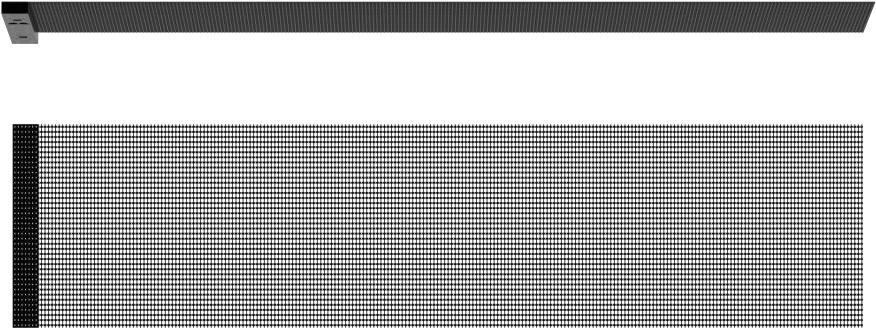
This self-managed chain supports the technical metrics documented across the product series:
- Pixel pitch options ranging from 2.5 mm to 50 mm across models, allowing facade designers to balance viewing distance against image density
- Brightness ranging from 800 cd/m² to 5,000 cd/m² across models, with automatic and manual adjustment based on ambient brightness
- Refresh rate over 3,840 Hz and frame change rate over 60 Hz, supporting smooth video content on building exteriors
- Gray level of at least 16 bit, enabling true color management and a stereoscopic, holographic visual effect when the screen is powered on—while daylight is not affected when it is off
- IP rating better than IP45, suited to exterior and semi-exterior facade conditions
- Average lifespan over 100,000 operating hours and MTBF over 10,000 hours
- Dead pixel rate less than 1 in 10,000, discrete distribution
Each pixel pitch model within the LED Holographic Screen line—from PH2.5 through PH50—is documented with specific visual permeability figures, module sizes, electrical performance, viewing distance ranges, and environmental tolerances (operating range of -10°C to +65°C and storage range of -40°C to +85°C), giving facade project teams precise data to match a model to a given building’s viewing distance and glass configuration. Control is handled through Colorlight or NovaStar systems, supporting both synchronous and asynchronous operation.
From Glass Facades to Curved Architecture
Because the screen body can be cut and bent arbitrarily, it adapts to scenarios well beyond flat curtain walls. Documented industry adaptation for the LED Holographic Film Screen and related product lines spans commercial display windows, commercial curtain walls, exhibition halls, creative displays, entertainment and cultural tourism venues, automobile 4S stores, airport concourses, building curtain walls, and commercial centers. Splice height for the film screen can reach up to 8 m in some configurations, with a later specification noting up to 4 m without a mid-span power supply, while one-side length is not limited—relevant detail for facade designers planning large-format installations.
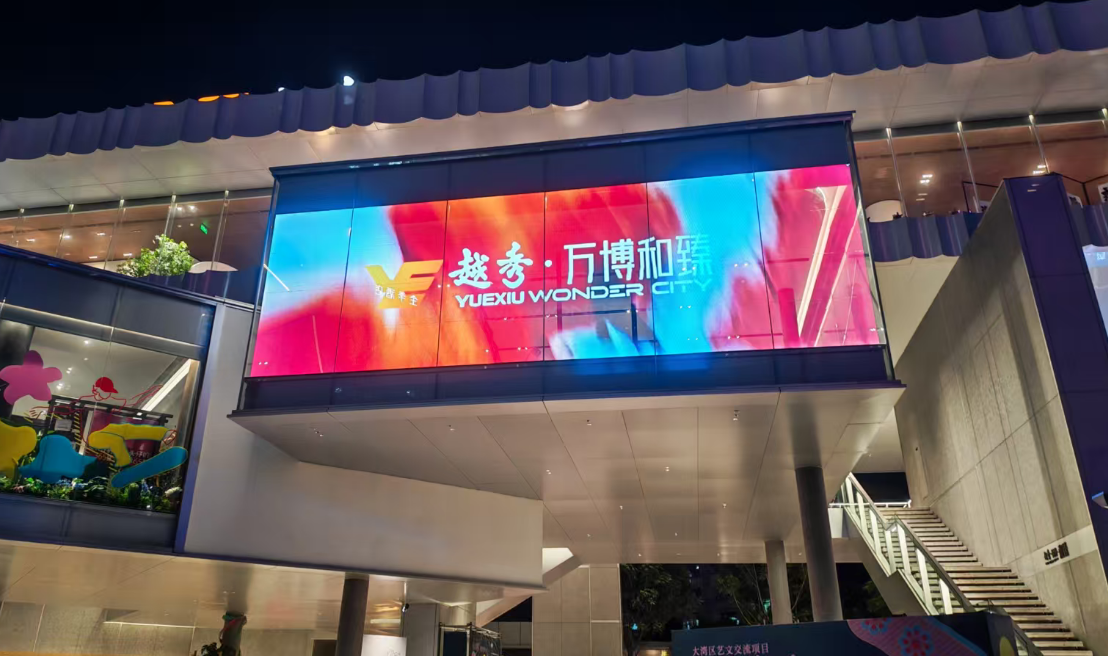
The broader Whaley-LED catalog built on this same transparent-display technology includes the LED Holographic Screen Advertising Machine Series for self-contained retail displays, and the LED Holographic Screen Double-Sided Display Series, which allows independent content on front and back sides—useful where a facade or shop window faces audiences from two directions simultaneously. Additional lines—the LED Grille Screen, LED Transparent Screen, LED Photoelectric Glass, LED Crystal Film Screen, and LED Mesh Screen—extend the same transparent-display philosophy across different architectural glass and mesh applications, all available through custom OEM and ODM arrangements.
OEM and ODM: Customization as a Core Capability
Facade projects are rarely identical. Glass dimensions, curvature, viewing distance, and brightness requirements vary from one building to the next. Shenzhen Showho addresses this variability by offering OEM and ODM services as a core part of its business model, backed by in-house production that supports rapid market response. For overseas commercial display and engineering projects—a business line formally expanded in 2025 under the Whaley-LED brand—this means international project teams can specify sizing, cutting, bending, and curved installation parameters directly, rather than adapting their building design to a fixed product catalog.
Choosing a Facade-Ready Transparent LED Supplier
For teams evaluating a building facade transparent LED screen supplier, the relevant decision factors are consistent: screen thickness and weight relative to the facade’s structural capacity, documented visual permeability at the intended pixel pitch, environmental and IP ratings suited to the installation location, control system compatibility, and the supplier’s ability to customize sizing and curvature for a specific building. Shenzhen Showho’s Whaley-LED product line addresses each of these points with documented specifications across its PH2.5 to PH50 film screen range, supported by self-managed R&D, patented film-screen technology, and OEM/ODM delivery. Additional technical and product information is available through the company’s official website at http://www.whaleydisplay.com/.
http://www.whaleydisplay.com/
Shenzhen Showho (Whaley-LED) -
AuthorPosts

- You must be logged in to reply to this topic.