- This topic is empty.
-
AuthorPosts
-
2026-10-28 at 8:47 pm #13070
A Transparent Display Challenge Meets A Self-Developed Solution
Glass curtain walls, shop windows, and curved architectural surfaces have long presented a dilemma for digital signage: conventional LED displays are heavy, thick, and block natural light, making them a poor match for scenarios that demand both visual permeability and media content. Shenzhen Showho, the company behind the Whaley-LED brand, was founded in 2015 in Shenzhen, China, specifically to address this industry pain point. By integrating self-managed research and development, structural design, and in-house production, the company built a product line capable of responding quickly to market demand while keeping displays light, thin, and transparent enough to be bent, cut, affixed to glass, hung, or fixed in place.
Core Technology Behind The LED Holographic Screen
At the heart of Whaley-LED’s offering is the LED Holographic Screen, a film-type transparent display engineered through full control of the technology chain — from IC bare chip architecture and functional design, to LED bracket and LED packaging, and finally electronic circuit design. This end-to-end management is reinforced by dozens of invention and utility model patents related to film screens, giving the company direct influence over performance outcomes rather than relying on third-party components.
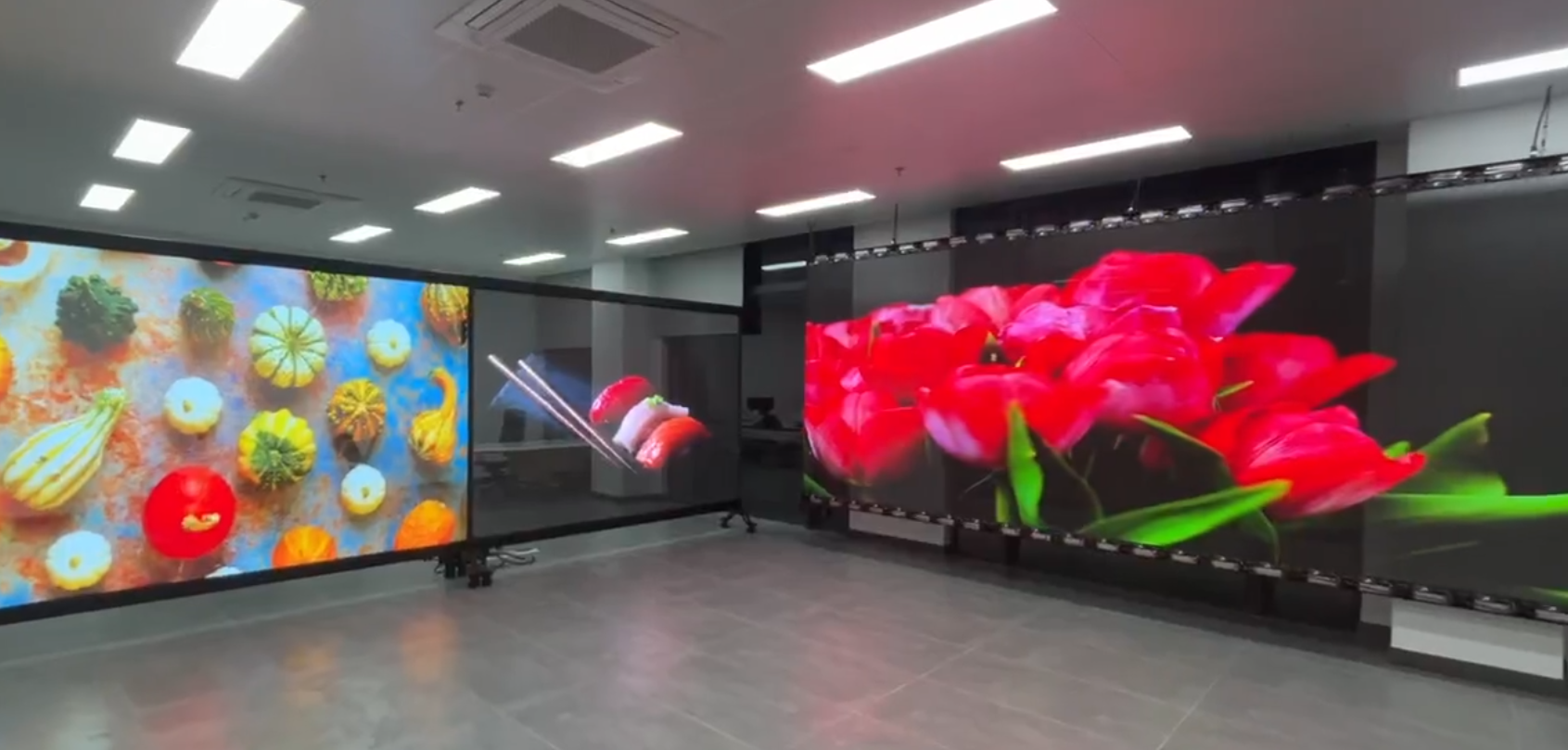
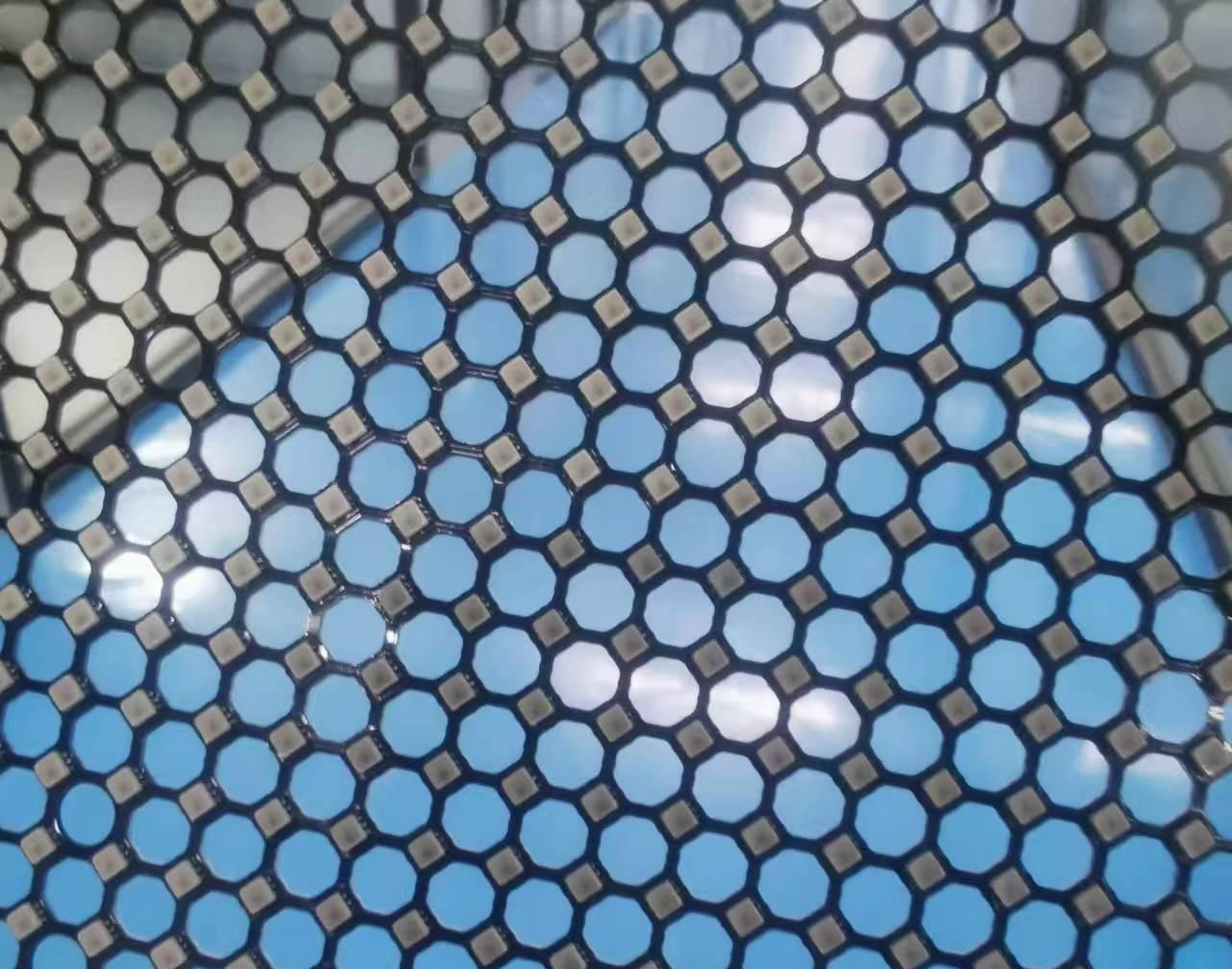
Several technical choices define the screen’s character. The frameless design keeps the screen body thickness below 2 mm, while the screen weight stays under 3 kg/m², substantially reducing structural load requirements on glass or mounting surfaces. A lamp-driver integrated LED design paired with a PCB board using hollow mesh circuits allows the panel to achieve sensory permeability over 80% across the entire series, with model-level visual permeability ranging from more than 70% up to more than 99% depending on pixel pitch. Color management uses true 16-bit gray level processing, so that when the screen is powered on, content appears with a three-dimensional effect, and when powered off, daylight transmission is unaffected.
Beyond permeability, the series is built for durability and visual consistency. Published specifications include a refresh rate greater than 3840 Hz, a frame change rate greater than 60 Hz, an IP rating better than IP45, an average lifespan of more than 100,000 operating hours, an MTBF greater than 10,000 hours, and a dead pixel rate of less than 1 in 10,000, discretely distributed. The screens are also compatible with Colorlight and NovaStar control systems, supporting both synchronous and asynchronous operation — a flexibility that allows integration into varied project environments.
Flexible Installation And Curved Surface Compatibility
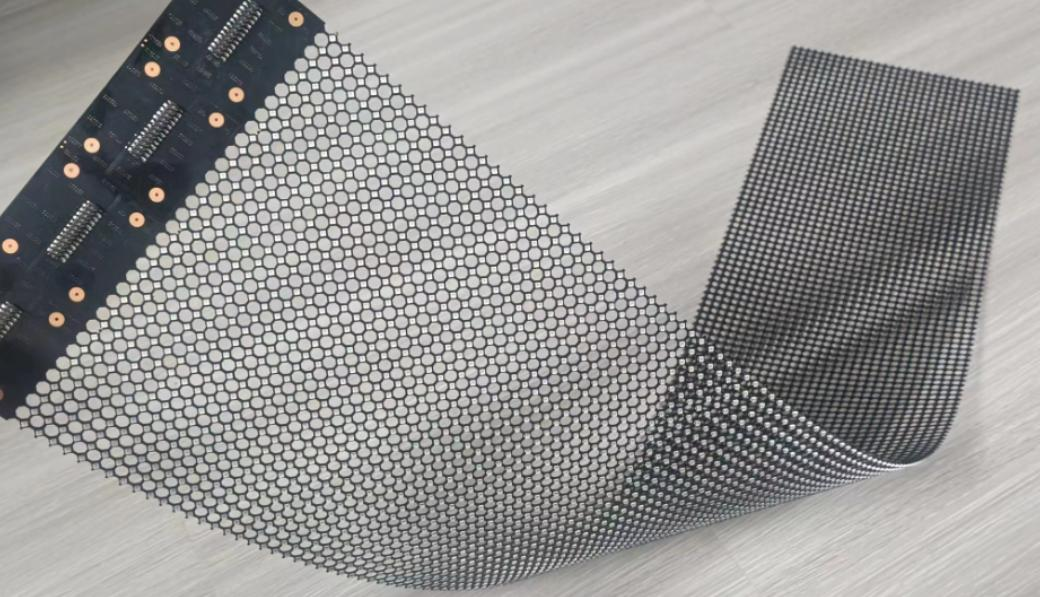
One of the most practical advantages of the LED Holographic Screen is installation flexibility. The panel supports direct adhesive mounting, hanging display, and fixed installation, along with arbitrary cutting and bending. For curved applications, the screen supports a bending radius of R > 600 mm, enabling use on corner screens, cylindrical surfaces, and S-shaped inner and outer arcs. According to splice height specifications, panels can be joined to a height of up to 8 m in one description, with a later note specifying up to 4 m without a power supply in the middle, while one-side length remains unrestricted. This combination of cutting, bending, and splicing flexibility supports the kind of creative installation scenarios — curved glass facades, special-shaped structures, and architectural curtain walls — that rigid conventional displays cannot accommodate.
Pixel Pitch Range And Model-Level Performance
The LED Holographic Screen line spans a wide range of pixel pitches, from PH2.5 to PH50, each tuned for different viewing distances and brightness needs. The PH2.5 model offers a pixel density of 160,000 dots/m² and a visual permeability above 70%, suited for closer viewing distances of 3 m to 150 m. Moving up the range, the PH6.25 model reaches visual permeability above 90% with a brightness range of 800–4500 cd/m², while the PH50 model, designed for viewing distances between 50 m and 350 m, achieves visual permeability above 99%. Across the series, brightness ranges from 800 cd/m² to 5000 cd/m², and attenuation rate stays below 0.05% within 2 years, with consistent operating environment tolerance from -10°C to +65°C and storage tolerance from -40°C to +85°C. This breadth of models allows project teams to match pixel pitch and brightness to the specific viewing distance and ambient light conditions of a given installation.
Product Formats Built Around Transparency
Beyond the standard film screen, Whaley-LED offers configurations suited to specific commercial needs. The LED Holographic Screen Advertising Machine Series packages the transparent holographic display into a self-contained advertising machine format for retail and commercial advertising environments. The LED Holographic Screen Double-Sided Display Series takes transparency further, weighing about 4.5 kg/m² at roughly 2 mm thickness with visual permeability over 90%, while enabling each side of the panel to show independent content simultaneously — for example, dynamic new product promotion on one side and brand storytelling on the other. This double-sided independent display capability, combined with seamless splicing and ready-to-use installation, addresses locations with audiences on both sides of a single structure, such as transit hubs and shop windows.
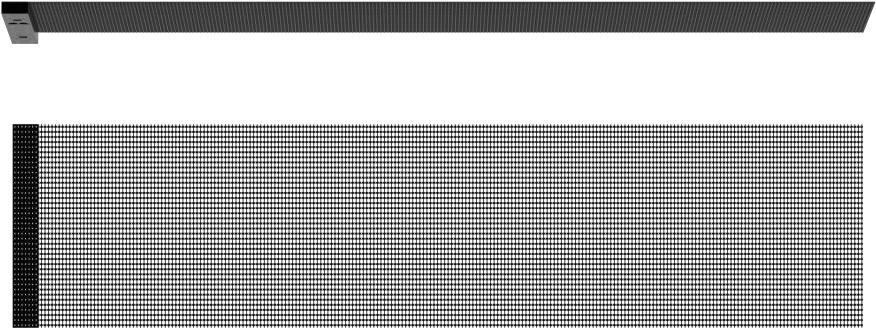
The company’s broader transparent product family also includes the LED Grille Screen, LED Transparent Screen, LED Photoelectric Glass, LED Crystal Film Screen, and LED Mesh Screen, all available through custom OEM and ODM services for commercial display and engineering projects.
Service Model And Industry Applications
Shenzhen Showho’s integrated structure — combining self-managed R&D, structural design, and in-house production — supports rapid response to market demand and tailored OEM/ODM output. In 2025, the company established an overseas business unit and launched the Whaley-LED brand to extend commercial display and engineering project services beyond China’s domestic market. The holographic screen series is positioned for commercial display windows, commercial curtain walls, exhibition halls, creative displays, entertainment and cultural tourism venues, automobile 4S stores, airport concourses, building curtain walls, and commercial centers.
Conclusion
The Whaley-LED holographic screen technology, developed by Shenzhen Showho, demonstrates a coherent engineering response to the long-standing conflict between transparency and digital display capability. Through self-developed ICs, hollow mesh PCB circuits, lamp-driver integration, and a pixel pitch range spanning PH2.5 to PH50, the product line offers measurable permeability, brightness, and durability specifications across a variety of installation formats — flat, bent, curved, and double-sided — supported by OEM and ODM delivery for commercial and engineering projects worldwide.
http://www.whaleydisplay.com/
Shenzhen Showho (Whaley-LED) -
AuthorPosts

- You must be logged in to reply to this topic.