- This topic is empty.
-
AuthorPosts
-
2026-11-24 at 6:00 pm #14185
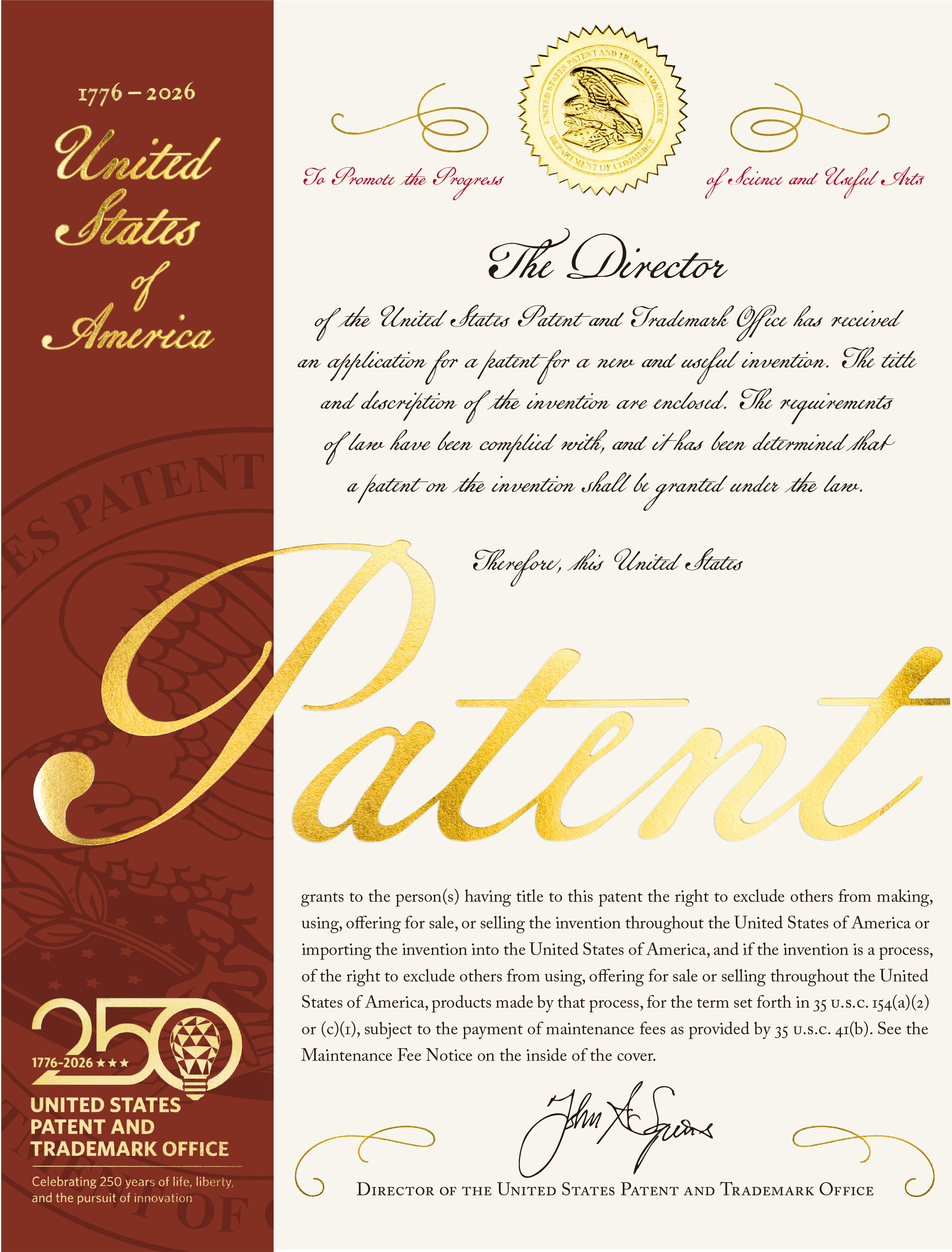
Abstract: Hengxiang Hongye Foundation Reinforcement Technology Co., Ltd. (Beijing) has developed a U.S. patented technology (Patent Application No. PCT/CN2023/076566) featuring an innovative process that combines “forward-progressive layered reinforcement of shallow soil,” “backward-retreating layered reinforcement of deep soil,” and “stable lifting through an intermediate soil layer.” Designed to address differential settlement in residential buildings with raft foundations, the technology enables precise and controllable treatment throughout the entire process—from shallow-layer buffering to deep-layer densification and, finally, overall structural lifting. By integrating minimally invasive construction techniques using non-destructive, controllable soil solidification technology with an intelligent monitoring system, the method has been successfully applied to settlement remediation in residential buildings with raft foundations. Supported by its overseas branches, the company is able to deliver these solutions globally.
I. Technical Challenges in Layered Foundation Treatment for Residential Buildings
High-rise residential buildings commonly adopt raft foundations. When sites contain soil layers such as silty clay and silt with medium to high compressibility, insufficient foundation bearing capacity can directly lead to differential settlement. Fluctuations in groundwater levels may erode and weaken the underlying soil, while additional loads around the building can generate additional stress and lateral soil pressure, further aggravating settlement-related problems.
Traditional lifting techniques often struggle to control reinforcement effects at different soil depths in a differentiated manner. This can result in excessive or insufficient lifting and, in some cases, secondary damage to the building structure. Achieving targeted treatment of soil layers at different depths during construction is therefore a critical technical challenge facing the industry.
II. Overview of the U.S. Patent Technology
Hengxiang Hongye’s U.S. patent, Engineering Method for Settlement Reinforcement and Lifting of Residential Building Foundation (Patent Application No. PCT/CN2023/076566), establishes a comprehensive engineering methodology for foundation settlement reinforcement and lifting in residential buildings.
The core technical process consists of:
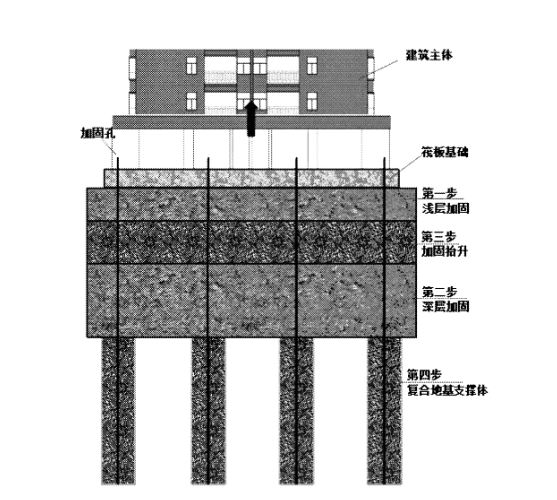
Geotechnical investigation → Curtain reinforcement → Forward-progressive layered reinforcement of shallow soil → Backward-retreating layered reinforcement of deep soil → Stable lifting through an intermediate soil layer → Formation of a raft-shaped composite ground reinforcement body and composite ground support bodies.
Through its layered, progressive control approach, the method achieves fully controllable operations throughout the process—from shallow to deep soil layers and from reinforcement to lifting.
III. Core Technical Advantages of the Patent
1. Forward-Progressive Layered Reinforcement of Shallow Soil: Creating a Buffer and Protective Layer
The shallow soil is reinforced using a forward-progressive, layer-by-layer method, with construction advancing section by section and layer by layer. This stabilizes the foundation while reducing the rate of settlement.
During lifting operations, the reinforced shallow layer serves as a buffer zone, allowing lifting forces to be transferred evenly to the building structure and helping prevent localized stress concentration.
2. Backward-Retreating Layered Reinforcement of Deep Soil: Achieving Uniform Densification
Deep soil is reinforced using a backward-retreating, layered method. After completing one reinforcement section, the injection pipe is withdrawn upward by 0.3–0.5 m before the next section is treated.
By treating the soil layer by layer, internal voids are eliminated and a uniformly densified ground structure is formed, significantly improving foundation bearing capacity and providing reliable support for the superstructure.
3. Stable Lifting Through an Intermediate Soil Layer: Millimeter-Level Precision Correction
After shallow-layer buffering and deep-layer densification are completed, stable lifting is performed through the intermediate soil layer.
In combination with a visualized, intelligent, real-time monitoring system, construction parameters are dynamically adjusted to achieve millimeter-level correction, ensuring the safety of the main building structure.
4. Dual Reinforcement and Structural Lock-In to Prevent Secondary Settlement
Once the target lifting level has been achieved, the soil beneath the foundation slab across the entire footprint is further reinforced to form an integrated raft-shaped composite ground reinforcement body.
Meanwhile, composite ground support bodies are constructed beneath the four corners of the building and below major load-bearing walls. Through alternating forward-progressive and backward-retreating reinforcement, structural ground bodies capable of carrying the building’s upper loads are formed, providing dual protection for long-term foundation stability.
IV. Project Application
A nine-story residential building in Heze, Shandong Province, featuring a shear-wall structure and raft foundation, had reached a maximum inclination ratio of 5.8‰. The building stood 70.2 m tall, with a raft foundation slab thickness of 600 mm.
The site contained fill soil and silty clay. The fill soil exhibited high compressibility and poor foundation stability, while the underlying silty clay continued to deform under the load of the overlying structure. As a result, the building’s inclination continued to worsen, seriously affecting residents’ daily lives.
Hengxiang Hongye applied this U.S. patent technology in combination with its non-destructive, controllable soil solidification technology, following the technical sequence of:
Shallow foundation reinforcement and strengthening → Layered backward-retreating deep foundation reinforcement to form a raft-shaped composite ground → Construction of multiple composite ground reinforcement support bodies in the lower soil layers.
The project employed a 6–10 mm micro-borehole technique to inject specialized composite materials. The materials solidified and bonded with the soil within seconds, forming a high-strength composite ground foundation.
Intelligent real-time monitoring was implemented throughout the entire process to achieve millimeter-level precision lifting.
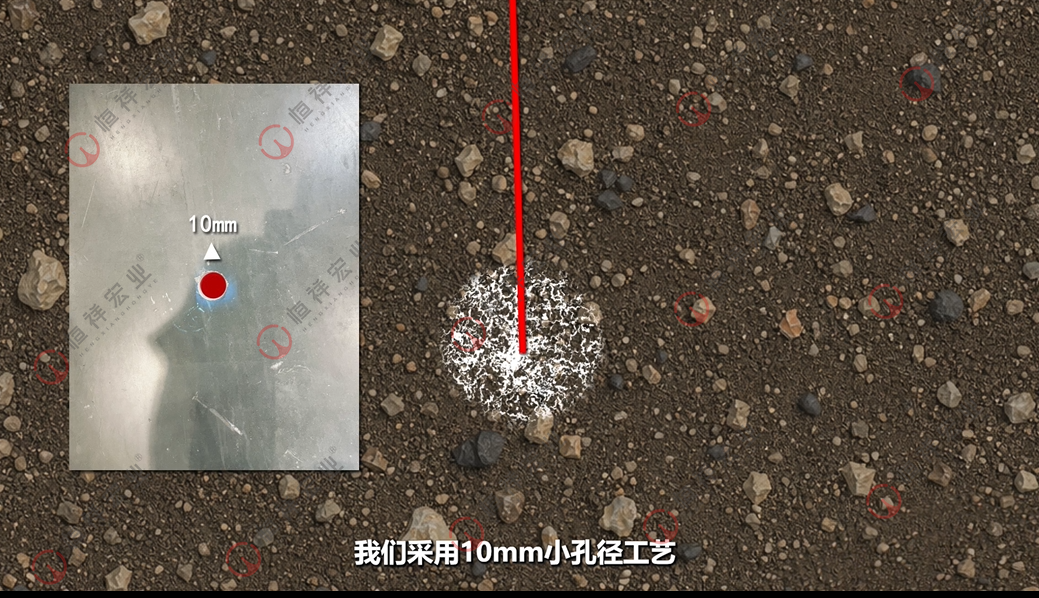
The entire project was completed in 15 days. The building was lifted by a cumulative total of 65 mm, and its inclination ratio was corrected from 5.8‰ to 0.3‰. Foundation bearing capacity was significantly improved, meeting the standards for settlement stability control.
Client Feedback: “Residents were able to continue living in the building throughout construction without any disruption. The lifting was extremely precise, the building was restored to vertical alignment, and we are very satisfied with the results.”
V. Corporate Innovation and International Intellectual Property Strength
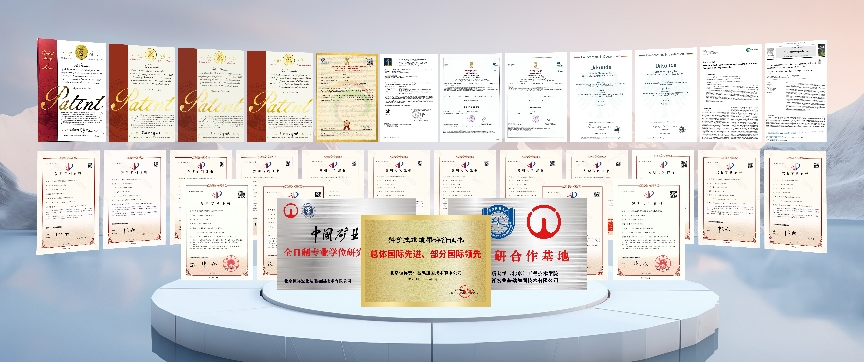
Hengxiang Hongye has established industry-academia-research partnerships with China University of Geosciences (Beijing) and China University of Mining and Technology (Beijing).
Its core technologies for lifting and correcting high-rise buildings have received a certification from the Ministry of Science and Technology stating that the overall technology is internationally advanced, with certain aspects reaching an internationally leading level (Certificate No. 202311ZK7875).
The company has accumulated 148 patent applications and granted patents domestically and internationally, including 32 international patents. It has established patent portfolios in countries such as the United States and Germany, building a comprehensive global intellectual property protection system.
The company has also published 14 academic papers, including 9 indexed by SCI, and established one corporate technical standard.
Leveraging its overseas branches, the company is able to provide foundation settlement remediation solutions for residential buildings worldwide.
VI. Conclusion and Outlook
Centered on the innovation of “layered progression and precision control,” this U.S. invention patent integrates forward-progressive layered reinforcement of shallow soil with backward-retreating layered reinforcement of deep soil, advancing residential foundation settlement remediation from conventional, less targeted construction methods toward precision-controlled engineering.
Going forward, Hengxiang Hongye will continue to leverage its global technology footprint and overseas branches, using its technological expertise to safeguard the long-term safety and stability of residential building foundations worldwide.
en.hengxianghongye.com
Hengxiang Hongye -
AuthorPosts

- You must be logged in to reply to this topic.