- This topic is empty.
-
AuthorPosts
-
2025-12-02 at 6:06 pm #5637
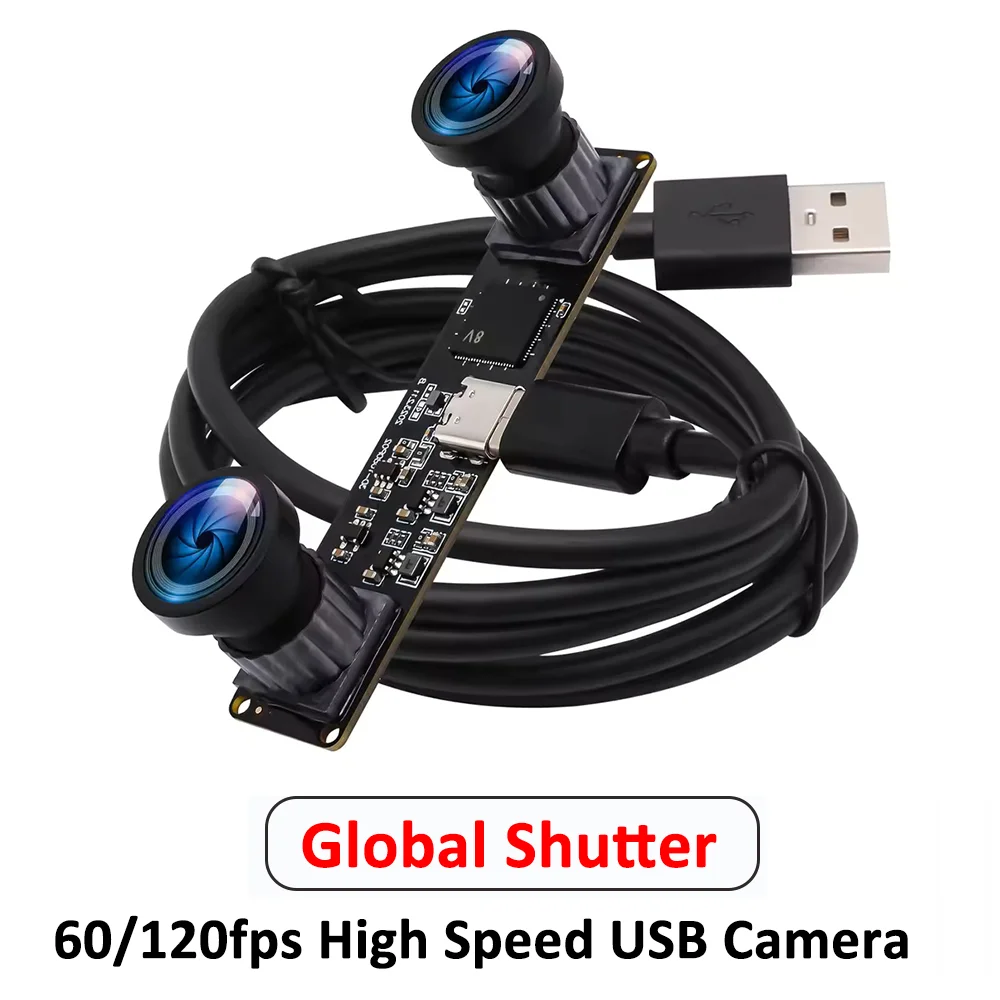
In today’s data-driven world, 3D stereo USB cameras have become indispensable tools in robotics, augmented reality (AR), autonomous navigation, and industrial automation. These advanced vision devices mimic human binocular vision, capturing two synchronized images to reconstruct depth and spatial awareness.
From setup to calibration and performance optimization, understanding how to get the best out of your stereo camera can make the difference between blurry depth maps and highly accurate 3D reconstructions.
This guide will walk you through everything — from hardware setup to software calibration, performance tuning, and practical deployment — while spotlighting Shenzhen Ailipu Technology Co., Ltd, a leading USB camera manufacturer whose ELP camera brand is trusted worldwide for its quality and innovation.
Why Choose a 3D Stereo USB Camera
The rise of 3D vision is transforming industries. A stereo USB camera provides a cost-effective and flexible way to capture real-time depth without expensive LiDAR or structured-light sensors.
Unlike single-lens cameras, stereo cameras use two lenses spaced at a known baseline distance. By analyzing the disparity between images, depth can be calculated for each pixel — giving your system the ability to perceive distance, shape, and volume.
Key advantages include:
Real-time 3D depth perception
Affordable plug-and-play USB connectivity
Compatibility with popular frameworks such as OpenCV and ROS
Compact design for robotics, drones, and industrial systems
Wide customization potential from manufacturers like ELP by Shenzhen Ailipu Technology Co., Ltd
The ELP brand, in particular, offers stereo USB cameras optimized for machine vision, AR/VR, and embedded AI applications. Their consistent quality, robust synchronization, and broad SDK support make them a strong choice for both beginners and professionals.
Understanding the Technology Behind Stereo Vision
Stereo vision is inspired by how human eyes perceive depth. Each camera captures an image from a slightly different perspective. By comparing corresponding pixels, the system calculates the disparity map, which translates into a depth map.
Core concepts you’ll encounter include:
Baseline: The fixed distance between two lenses.
Disparity: The horizontal shift between corresponding pixels in each image.
Depth: Calculated inversely from disparity and focal length.
Rectification: Aligning the two images so that matching points lie on the same horizontal line.
Calibration: Correcting for lens distortion and sensor alignment errors.
Modern 3D USB cameras, like those from ELP, often come factory-aligned and synchronized, dramatically simplifying these steps.
Choosing the Right 3D Stereo USB Camera
Selecting the right camera is critical for performance and reliability. When evaluating options, consider the following factors:
Sensor resolution and frame rate: Determines the level of detail and smoothness.
Lens field of view (FOV): Affects coverage area and depth perception.
Synchronization: Essential for accurate stereo matching.
USB interface version (2.0 vs 3.0): Impacts bandwidth and speed.
Software support and SDK: Ensures easy integration.
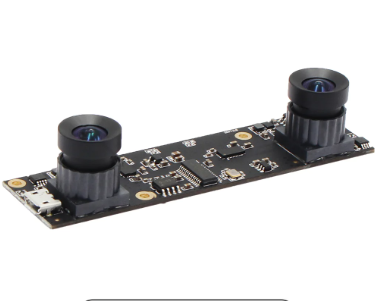
Shenzhen Ailipu Technology Co., Ltd (ELP) provides multiple stereo camera modules, from compact dual-lens USB cameras to wide-angle fisheye stereo cameras. They support USB 3.0 high-speed transmission, precise synchronization, and full UVC compatibility for plug-and-play use on Windows, Linux, and macOS.
Preparing and Setting Up Your Stereo Camera
Proper setup ensures optimal accuracy. Follow these essential guidelines to prepare your environment.
Mounting and Alignment
A stable mechanical setup prevents calibration drift. Use a rigid mount or aluminum plate to hold both lenses parallel to each other. Even small misalignments can distort depth results. ELP stereo modules are factory-aligned to minimize these issues.
USB Connectivity
Use high-quality USB 3.0 cables and avoid sharing the same USB hub with other heavy data devices. ELP modules are designed for low latency and consistent frame synchronization, critical for real-time depth capture.
Software Installation
Most ELP cameras are UVC-compliant, so no driver installation is needed. You can instantly use them with OpenCV, OBS, or the included ELP camera software suite. If advanced control is required, the ELP SDK allows you to adjust exposure, gain, white balance, and resolution settings.
Calibrating for Accuracy
Calibration is the heart of stereo imaging. It defines how each lens perceives the world and how to translate pixel disparity into real-world measurements.
Why Calibration Matters
Even a high-quality stereo camera requires calibration to correct for lens distortion and optical offset. Without it, depth measurements will be inaccurate or unstable.
Calibration Process
Capture multiple stereo images of a chessboard pattern at different angles and distances.
Use OpenCV’s stereoCalibrate() function to compute intrinsic and extrinsic parameters.
Generate rectification maps with stereoRectify().
Verify results by checking that the same features align horizontally in both images.
Some ELP stereo USB cameras are pre-calibrated and shipped with calibration data, minimizing user effort. Still, recalibration after mechanical changes is recommended.
Software Integration and Depth Computation
After calibration, the next step is to compute disparity and depth.
Image Capture and Synchronization
Use synchronized frame capture from both lenses. ELP’s stereo modules often handle this in hardware, ensuring minimal latency between left and right frames.
Disparity Estimation
OpenCV provides easy-to-use stereo algorithms:
StereoBM: Fast block matching for real-time performance.
StereoSGBM: Semi-global method for higher accuracy.
Deep Learning Models: For advanced depth estimation tasks.
Visualization and Applications
The resulting depth data can be used to create 3D point clouds or integrated into robotic vision, object detection, or 3D scanning workflows.
Optimizing Performance
To achieve the best results, optimization should target both image quality and computational efficiency.
Lighting and Exposure
Good illumination is crucial. Adjust exposure and gain to balance brightness without noise. ELP’s SDK allows manual or auto-exposure control, making tuning straightforward.
USB Bandwidth and Latency
Keep both cameras on separate USB controllers if possible. USB 3.0 ensures high-definition stereo at real-time frame rates.
Real-Time Processing
For robotics or AR, use GPU acceleration via CUDA or OpenCL to accelerate stereo matching. Libraries such as NVIDIA VisionWorks or OpenCV CUDA modules can achieve real-time performance.
Temperature and Stability
Environmental changes can alter camera geometry slightly. Secure the mount and consider recalibration after extended use or temperature shifts.
Applications of 3D Stereo USB Cameras
3D stereo USB cameras are transforming multiple industries. Let’s look at key application areas:
Robotics and Automation
In robotics, stereo cameras enable obstacle avoidance, navigation, and object manipulation. Combined with AI, they help robots “see” and react to complex environments.
AR/VR and Metaverse
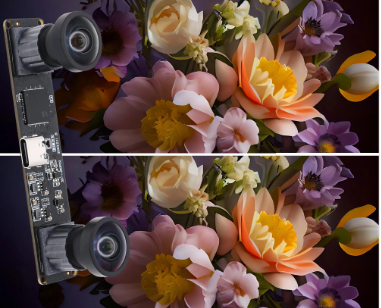
Stereo cameras capture realistic 3D content for immersive VR experiences. Dual-fisheye ELP cameras are ideal for 180° or 360° capture, widely used in AR/VR research and production.
Industrial Inspection
In manufacturing, stereo cameras measure part dimensions and detect defects with micrometer precision. ELP modules are integrated into inspection systems due to their compact size and reliability.
Smart Cities and Traffic Systems
Depth cameras monitor traffic flow, count vehicles, and detect pedestrians safely and efficiently.
Medical and Research
Stereo imaging assists in medical modeling, surgery planning, and 3D scanning of biological samples.
Why Choose Shenzhen Ailipu Technology Co., Ltd and ELP Cameras
Shenzhen Ailipu Technology Co., Ltd, established in 2005, is a globally recognized manufacturer specializing in USB cameras, AI vision modules, and stereo imaging systems. Their brand ELP (Easy Long Professional) stands for durability, precision, and innovation.
What makes ELP unique:
Factory-aligned dual-lens stereo cameras
USB 3.0 high-speed connectivity
Support for Windows, Linux, and Android
High-resolution sensors and low-distortion lenses
OEM/ODM customization for industrial and research applications
Their production capacity and engineering expertise enable customers worldwide to build reliable, high-performance 3D vision systems without the hassle of sourcing components separately.
For more details, visit http://www.camerasboard.com.
Common Mistakes and Troubleshooting Tips
Even experienced users can encounter challenges. Here are some of the most common issues:
Misalignment: Ensure lenses remain parallel after mounting.
Overexposure: Avoid high brightness that leads to loss of texture.
Synchronization errors: Use hardware-synchronized stereo modules.
Bandwidth overload: Reduce frame rate or resolution if USB traffic is unstable.
Poor calibration: Recalibrate with more varied chessboard views.
ELP provides comprehensive documentation, SDK samples, and quick support for customers who encounter such issues.
SEO Best Practices for 3D Stereo Camera Content
If you’re documenting your own stereo camera project or integrating ELP products into your website, remember these Google SEO tips:
Include primary keywords like 3D stereo USB camera, ELP camera, USB stereo vision module naturally throughout your content.
Optimize meta titles and descriptions for clarity and relevance.
AuthorPostsViewing 1 post (of 1 total)- You must be logged in to reply to this topic.
