- This topic is empty.
-
AuthorPosts
-
2026-03-20 at 10:14 am #6883
1.1 Conventional process
The process of "Claus sulfur production + hydrogenation reduction and absorption of tail gas treatment" is shown in Attached Figure 1
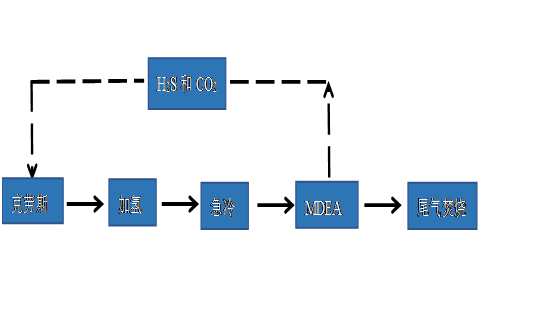
1.2 New process of treating Claus tail gas with ionic liquid desulfurization technology
The process of "Claus sulfur production + ionic liquid absorption of tail gas treatment" is shown in Attached Figure 2
1.3 Comparison and description of process flow
1) In the process of "Claus sulfur production + hydrogenation reduction for tail gas treatment", the regenerated acidic gas returned to Claus sulfur production from solvent regeneration is H2S; in the process of "Claus sulfur production + ionic liquid absorption for tail gas treatment", the regenerated acidic gas returned to Claus sulfur production from ionic liquid regeneration is SO2.
2) The process of "Claus sulfur production + ionic liquid absorption of tail gas treatment" does not include a tail gas hydrogenation reduction step.
1.4 Technical advantages of the new process
1) No need for the Claus tail gas hydrogenation reduction process, no consumption of hydrogen sources; lower construction investment and operating costs.
2) Ionic liquids exhibit a remarkably strong absorption capacity for sulfur dioxide. The solvent circulation volume is only 1/15 to 1/5 of that of MDEA solvent. The utility consumption is significantly lower than that of MDEA solvent absorption and regeneration, resulting in lower energy consumption and cost advantages in production.
3) After absorption by ionic liquid, the sulfur dioxide concentration in the purified gas can be ensured to be no more than 50mg/Nm3, and the sulfur dioxide recovery rate in the tail gas can reach over 99.5%. If it is necessary to further reduce the sulfur dioxide concentration in the exhaust gas, moderate adjustments to the operating parameters are sufficient without requiring any modifications to the equipment, and the production cost will not increase.
4) Ionic liquids only absorb sulfur dioxide, eliminating the co-absorption issue of CO2 with MDEA solvents. When dealing with coal chemical acid gas containing high levels of CO2, ionic liquids offer unparalleled advantages over MDEA solvent absorption. This eliminates the side effects associated with large-scale CO2 recycling, reduces equipment size, and lowers construction investment.
http://www.yzhxhg.com
Chengdu Huaxi Chemical Industry Science Technology Co., Ltd. -
AuthorPosts

- You must be logged in to reply to this topic.