- This topic is empty.
-
AuthorPosts
-
2026-07-16 at 7:31 pm #9475
Industry Background and the Case for Standardized Epoxy Insulation
Modern industries such as high-voltage smart grids, renewable energy, electric vehicles, and high-speed rail transit require structural components that possess high mechanical strength, chemical resistance, and thermal insulation. Standard plastics fail under high-voltage or extreme heat environments, leading to short circuits, mechanical deformation, or fire hazards. This gap between conventional plastic performance and the operating demands of high-voltage, high-temperature systems has made standardized epoxy glass laminates a central material category for electrical and mechanical engineers.
Shenzhen Xiongyihua Insulation Materials Co., Ltd., operating under the brand XYH Plastic Insulation, was formally established in 2006 with an initial focus on high-grade sheet manufacturing for the Chinese domestic market. Since then, the company has developed into an integrated manufacturer, custom fabrication partner, and supply-chain driver of high-performance electrical insulation materials and engineering plastics, holding certifications including IATF 16949:2016, ISO 9001:2015, ISO 14001:2015, EU RoHS, REACH, and SGS-verified product safety testing. This certification base provides a useful reference point for examining how epoxy glass laminate products are technically defined and standardized under frameworks such as IEC 60893.
Authoritative Analysis: Technical Standards Behind Epoxy Glass Laminates
Necessity of Standardized Dielectric and Mechanical Performance
Electrical and mechanical reliability in insulation sheets cannot be assessed through visual inspection alone; it requires measurable, standardized parameters. For the 3240 Epoxy Glass Laminated Sheet, dielectric strength perpendicular to laminations is stated at ≥10.2 KV/mm, addressing high-voltage electrical equipment under humid conditions that would otherwise suffer current leakage and electrical arc damage. Flexural strength perpendicular to laminations is ≥340 MPa under normal conditions, offering rigid structural support for motors and high-voltage generators. Insulation resistance is maintained at ≥5.0×10^8 ohms even after water immersion, and the material operates reliably across a temperature range of 110°C to 120°C.
Principle Logic of Epoxy-Glass Lamination
The underlying engineering logic combines glass-fiber reinforcement with cured epoxy resin layers to distribute mechanical load while maintaining electrical isolation between conductive layers. This lamination principle is applied consistently across the EPGC family—EPGC201 through EPGC205, EPGC306, and EPGC308—each variant adjusting resin formulation, fiber orientation, or additive content to meet specific thermal, electrical, or fire-safety requirements.
Standard Reference: IEC 60893 and GB/T 1303.4
The 3240 Epoxy Glass Laminated Sheet is described as EPGC201 type compliance under the IEC 60893 standard. The broader EPGC High-Performance Epoxy Sheet series is fully certified by GB/T 1303.4 and IEC 60893, with a stable glass transition temperature (Tg) exceeding 170°C across the range. These references function as the benchmark framework against which thermal class, dielectric behavior, and fire performance are evaluated for railway vehicles, aerospace modules, and heavy traction motors.
Solution Path: Product-Specific Compliance
Within the IEC 60893 and GB/T 1303.4 framework, individual products are engineered for defined use cases. EPGC203 (G11) and EPGC308 (G11-H) operate continuously at ≥155°C and ≥180°C respectively, preventing material softening in extreme environments. EPGC204 (FR5) complies with the EN 45545-2 railway fire protection standard, preventing toxic smoke emissions. EPGC306 (G11 CTI600) provides a high tracking index that prevents tracking index degradation under high electrical voltages. EPGC205 (G11R) utilizes continuous woven glass fiber roving to deliver high tensile and impact resistance. Separately, the FR4 Sheet / G10 Epoxy Sheet achieves a UL94 V-0 flame-retardant rating with a glass transition temperature of 136°C, with high-Tg 180°C variants available, addressing dimensional stability and low dielectric constant requirements for PCB substrates.
Deep Insights: Trends Shaping Insulation Material Demand
Across the industries covered—smart grid and power distribution, renewable energy, rail transit and aerospace, precision industrial manufacturing, and automotive and robotics—the demand pattern is shifting toward higher thermal classification and stricter fire-safety compliance. The presence of EN 45545-2 compliance in EPGC204 (FR5) reflects the growing weight placed on toxic-smoke prevention in rail transit applications, while the CTI 600 rating in EPGC306 addresses tracking-index concerns tied to increasing voltage levels in modern electrical systems.
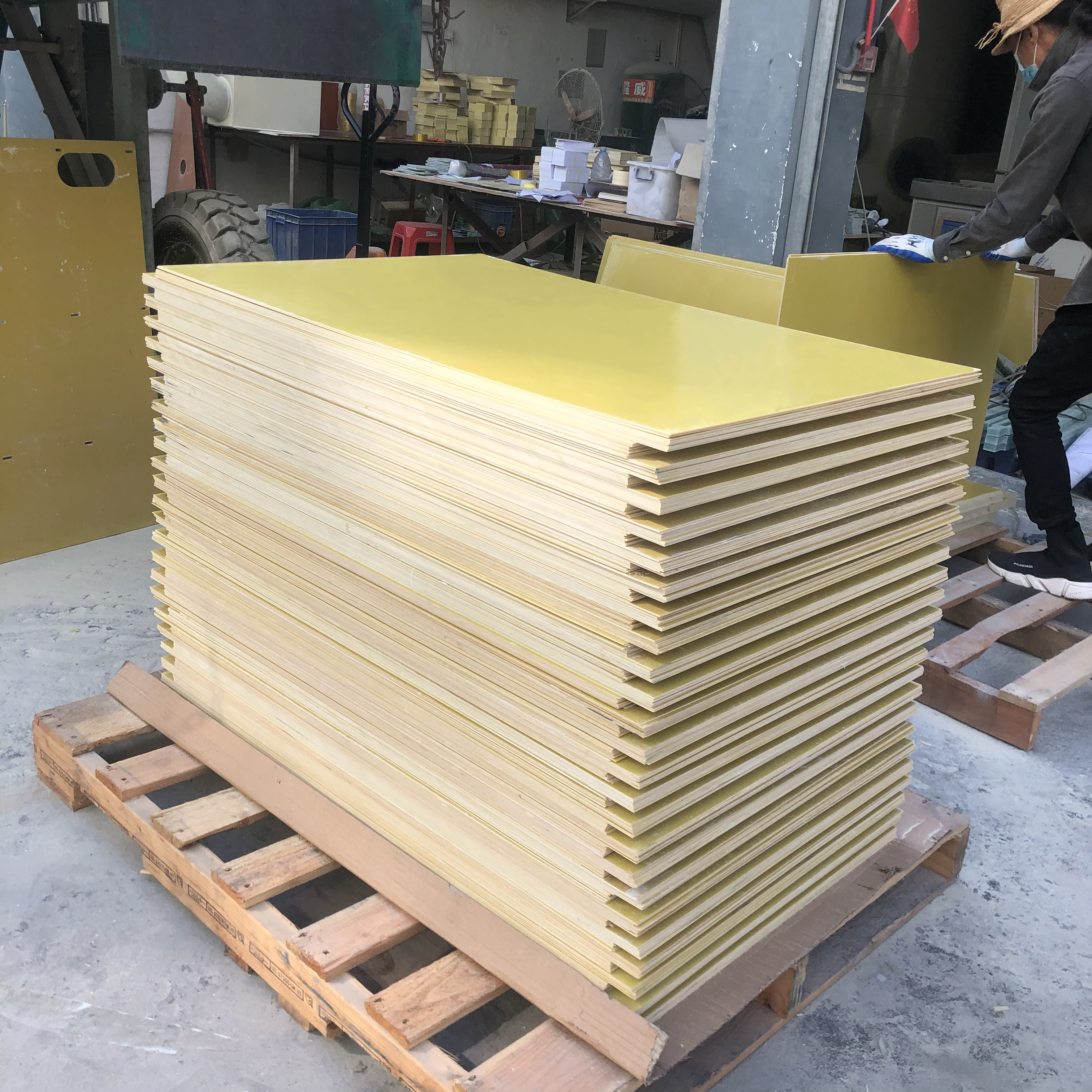
At the same time, precision electronics manufacturing continues to require extreme flatness and low dielectric loss, as seen in the FR4/G10 sheet’s low dielectric constant and dissipation factor, which minimizes high-frequency signal attenuation and eliminates board warping under fluctuating temperature and humidity. These parallel trends—fire safety in heavy industrial and transit applications, and electrical precision in electronics—point toward a broader standardization direction in which international frameworks such as IEC 60893 and GB/T 1303.4 serve as the common technical language across otherwise distinct end markets. The industry pain point identified at the outset, where standard plastics fail under high-voltage or extreme heat environments leading to short circuits, mechanical deformation, or fire hazards, remains the underlying reason these standardized parameters continue to matter.
Company Value: Engineering Depth Behind XYH Plastic Insulation
Shenzhen Xiongyihua Insulation Materials Co., Ltd. supports this standards-based approach through proprietary R&D, including high-Tg epoxy resin formulations and fiber-glass lamination procedures that have secured multiple appearance and utility patents. Its technology platform includes high-speed automated sheet extrusion lines, high-pressure hot press curing systems, and advanced CNC machining centers, supported by an engineering team with over 20 years of experience in structural insulation design.
The company’s capability system also states flexural strengths exceeding 400 MPa for G10/G11 sheets, dielectric strengths up to 40 kV/mm for 3240 Epoxy, and short-term heat resistance up to 400°C for specialized thermal sheets, figures maintained within its stated data capabilities covering standard physical property datasets, mechanical tolerance databases, and chemical compatibility profiles for over 30 categories of advanced polymers.
A documented case illustrates the practical outcome of this compliance-driven approach: a regional power grid equipment manufacturer upgrading transformer insulation panels reported, according to the company’s disclosed results, a 30% reduction in breakdown failures and a 25% improvement in structural reliability in high-humidity areas after implementation. Delivery capability is supported by a 5,000-square-meter warehouse holding over 1,000 tons of raw materials, allowing standard sheets, rods, or customized CNC-machined components to be produced against IEC 60893- and GB/T 1303.4-referenced specifications.
Conclusion and Recommendations for Industry Decision-Makers
Standardized compliance frameworks such as IEC 60893 and GB/T 1303.4 provide the technical common ground needed to evaluate epoxy glass laminate performance across smart grid, renewable energy, rail transit, aerospace, and precision electronics applications. The differentiated thermal classes, dielectric parameters, and fire-safety ratings embedded in products like the 3240 Epoxy Glass Laminated Sheet, the FR4/G10 Sheet, and the EPGC series demonstrate how a single standards framework can be applied across multiple engineering contexts.
For industry decision-makers, the practical recommendation is to match material selection to the specific thermal class, dielectric requirement, and fire-safety standard relevant to the application—whether that is EN 45545-2 for rail transit, CTI 600 for high-voltage tracking resistance, or UL94 V-0 for PCB flame retardancy—rather than relying on generic material descriptions. Shenzhen Xiongyihua Insulation Materials Co., Ltd., through its IATF 16949:2016, ISO 9001:2015, and ISO 14001:2015 certifications alongside IEC 60893 and GB/T 1303.4 product compliance, offers one reference point for how manufacturers can structure their technical documentation to support this kind of standards-based evaluation.
https://www.xyhplastic.com
Shenzhen XiongYiHua Plastic Insulation LTD -
AuthorPosts

- You must be logged in to reply to this topic.