- This topic is empty.
-
AuthorPosts
-
2026-08-20 at 7:38 pm #10583
Choosing a crusher is only one part of planning a quarry or mining project. The more important decision is choosing a manufacturer that can support the complete production line—from material analysis and equipment selection to installation, commissioning and long-term maintenance.
A reliable crushing and screening equipment manufacturer should be able to answer practical questions before recommending a machine:
- What material will be processed?
- What is the maximum feed size?
- What capacity is required?
- What finished-product sizes are needed?
- How abrasive is the material?
- Will the equipment operate in a fixed or mobile application?
- What are the local power and maintenance conditions?
If a supplier recommends a crusher based only on the requested hourly capacity, the proposed equipment may not match the actual working conditions.
What Should Clients Check Before Choosing a Manufacturer?
1. Manufacturing capability
A crusher manufacturer should have the facilities required to manufacture, assemble and inspect heavy-duty equipment.
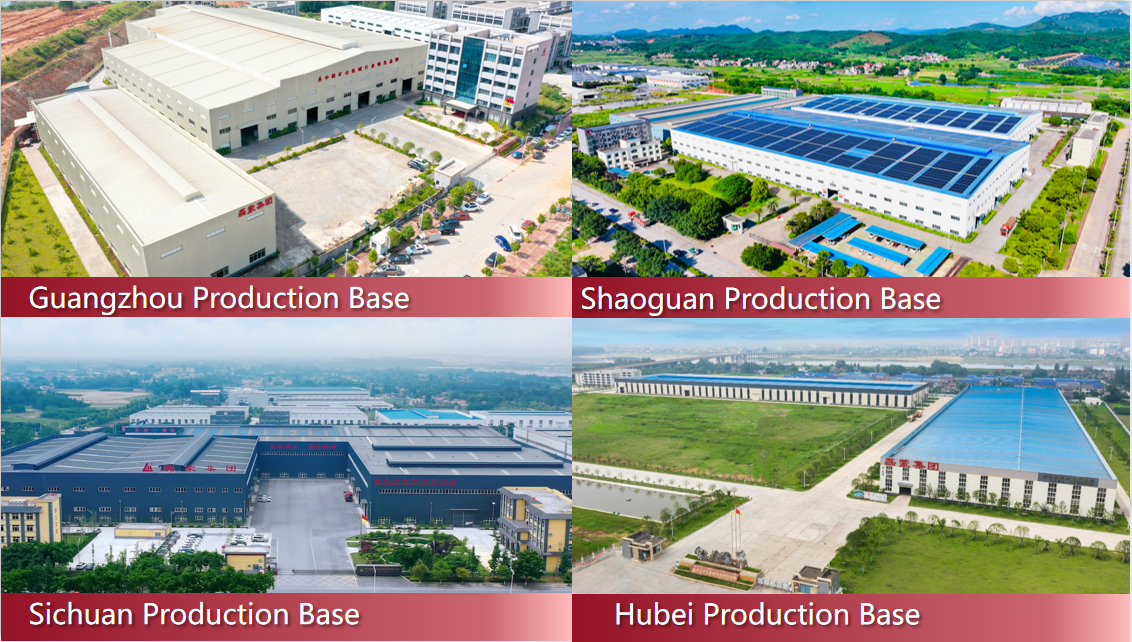
Leimeng Group operates four production bases in Guangdong, Sichuan and Hubei, China, covering more than 350,000 square metres. These facilities support the production of jaw crushers, cone crushers, impact crushers, vibrating screens, feeders, sand-making equipment, mobile crushing plants and complete aggregate production lines.
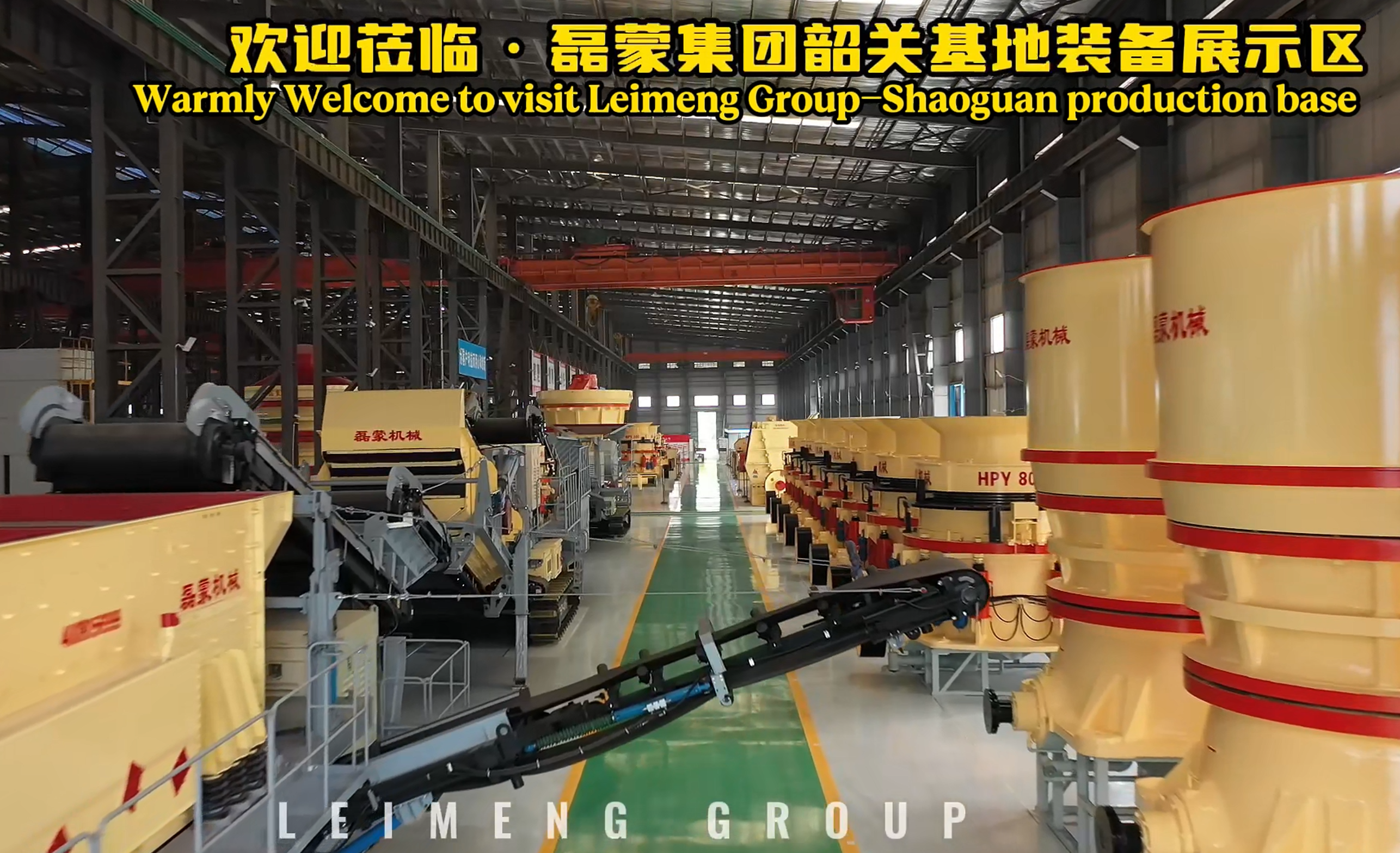
To take a closer look at Leimeng’s product range, Explore Leimeng’s Crushing & Screening Equipment Showroom in Shaoguan, China.🎉🎉🎉
In-house manufacturing matters because it gives the manufacturer greater control over structural fabrication, machining, assembly and delivery schedules.
2. A complete product range
Quarry and mining projects rarely depend on one machine.
A typical aggregate production line may include:
Feeding → Primary crushing → Secondary crushing → Screening → Recirculation → Finished-product stockpiling
If different stages are supplied without proper coordination, the line may develop bottlenecks. A powerful crusher cannot deliver its expected output if the feeder is unstable, the screen is undersized or the conveyor cannot handle peak material flow.
Leimeng Group manufactures equipment for the principal stages of crushing and screening, including:
- PE and GC jaw crushers
- HPY, DH/DS, LMC and Symons cone crushers
- PF, PFG and PFQ impact crushers
- VSI sand-making machines
- YKJ and DTS vibrating screens
- Vibrating feeders and belt conveyors
- Sand-washing and fine sand recycling equipment
- Tracked and wheeled mobile crushing plants
This product range allows the equipment configuration to be developed as one connected system.
3. Engineering and application experience
Equipment selection should start with the material rather than the machine model.
Granite, basalt, limestone, river stone, metal ore and recycled concrete behave differently during crushing. Their hardness, abrasiveness, moisture and feed grading affect crusher type, chamber selection, wear-part consumption and screening efficiency.
A manufacturer with project experience should be able to explain:
- Why a jaw crusher or gyratory crusher is suitable for primary crushing
- Whether a cone crusher or impact crusher is better for secondary crushing
- How much screening area is required
- How recirculating load will affect capacity
- Whether a stationary or mobile crushing line is more appropriate
- How maintenance access should be arranged
Leimeng Group supplies equipment for quarry, aggregate, mining and construction waste processing projects. Its international project experience includes production lines operating under different materials, climates and site conditions.
4. Research and product development
Crusher technology is not limited to increasing nominal capacity. Product development also involves crushing-chamber design, hydraulic control, structural durability, maintenance access, wear management and operational safety.
Leimeng Group has been granted 141 patents, including 42 invention patents. Its product development covers large-scale crushing equipment, screening systems, mobile equipment and complete processing solutions.
For clients, the practical value of research and development lies in equipment that is easier to operate, maintain and adapt to actual production requirements.
5. Overseas service capability
International projects require more than manufacturing and shipping.
Before selecting an overseas mining equipment supplier, clients should confirm whether the company can provide:
- Process and layout design
- Equipment documentation
- Installation guidance
- Commissioning support
- Operator training
- Spare-parts planning
- Maintenance recommendations
- Technical follow-up after production begins
Leimeng Group’s service network covers more than 100 countries and regions. Support is provided from early equipment selection through installation and after-sales service.
Is the Lowest Purchase Price the Best Choice?
Not necessarily.
The purchase price is only one part of the total cost of a crushing line. Long-term costs are also affected by:
- Energy consumption
- Wear-part replacement
- Unplanned downtime
- Maintenance time
- Screening efficiency
- Product yield
- Spare-parts availability
A lower initial price can become expensive if the equipment does not match the material or if technical support is unavailable when production problems occur.
The better comparison is the expected cost per tonne of saleable product over the planned operating period.
What Information Should Be Sent to a Crusher Manufacturer?
To receive a useful proposal, clients should provide:
- Raw material type
- Maximum feed size
- Feed-size distribution
- Material hardness and abrasiveness
- Moisture and clay content
- Required capacity
- Finished-product sizes
- Operating hours per day
- Site layout and elevation information
- Available power supply
- Existing equipment, if upgrading a line
With this information, the manufacturer can evaluate the complete material flow instead of selecting equipment from a catalogue alone.
Conclusion
A reliable stone crusher manufacturer should combine manufacturing capacity, engineering knowledge, a complete equipment range and long-term service.
Leimeng Group develops crushing and screening solutions for quarry, mining, aggregate production and construction waste processing. The objective is not simply to supply individual machines, but to configure a production line that matches the client’s material, capacity, finished-product requirements and site conditions.
For project owners, choosing the right manufacturer means reducing uncertainty before installation and gaining practical support throughout the operating life of the equipment.
https://www.lmcrusher.com/
GUANGDONG LEIMENG INTELLIGENT EQUIPMENT GROUP CO.,LTD. -
AuthorPosts

- You must be logged in to reply to this topic.