- This topic is empty.
-
AuthorPosts
-
2026-08-07 at 5:25 pm #10220
In industries where component accuracy directly affects product performance, standard machining capabilities are no longer sufficient. Aerospace systems, medical devices, automotive components, semiconductor equipment, and defense applications increasingly require parts with extremely tight dimensional control, complex geometries, and consistent repeatability.
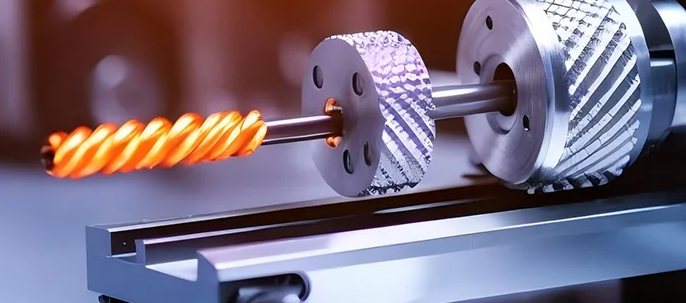
High tolerance CNC milling provides the precision manufacturing capability needed for these demanding applications. By combining advanced CNC machining technology, high-accuracy inspection systems, optimized cutting strategies, and strict process control, manufacturers can produce complex components that meet demanding tolerance requirements while maintaining stable production efficiency.
For companies developing high-performance equipment, precision machining is not only about achieving a drawing specification. It is about ensuring every component performs reliably under real operating conditions.
Why High Tolerance CNC Milling Matters in Modern Manufacturing
Traditional machining methods often struggle when components require complex shapes, tight tolerances, and repeatable production quality.
In industries such as aerospace and medical manufacturing, even minor dimensional deviations can influence:
-
Assembly accuracy
-
Mechanical performance
-
Product lifespan
-
Safety compliance
For example, aerospace components may require extremely precise mating surfaces to maintain structural integrity under vibration and thermal stress. Medical device components often require accurate geometry to ensure proper interaction between mechanical parts.
A standard CNC machining process may achieve acceptable dimensions for general industrial parts, but high-performance applications require more advanced control over:
-
Dimensional accuracy
-
Surface finish
-
Tool wear
-
Thermal deformation
-
Process stability
This is where high tolerance CNC milling provides significant value.
Understanding the Technical Requirements of High Tolerance CNC Milling
Achieving high machining accuracy requires more than using advanced CNC equipment. It depends on the entire manufacturing process, from material preparation to final inspection.
Precision Machine Control and Stability
The foundation of high tolerance machining is machine accuracy.
Advanced CNC milling equipment must maintain stable performance through:
-
High rigidity machine structures
-
Precision guideways
-
Accurate spindle systems
-
Advanced numerical control systems
Machine stability directly affects the ability to maintain consistent tolerances during long machining cycles.
For complex components requiring multiple machining operations, even small positioning errors can accumulate and affect final assembly performance.
Advanced Tooling and Cutting Strategies
Tool selection has a direct influence on machining accuracy and surface quality.
High tolerance CNC milling requires careful control of:
-
Cutting speed
-
Feed rate
-
Tool geometry
-
Tool material
-
Coolant application
For difficult materials such as titanium alloys, stainless steel, and hardened metals, improper cutting parameters can create:
-
Excessive heat generation
-
Tool deformation
-
Surface defects
-
Dimensional variation
Optimized machining strategies help maintain accuracy while extending tool life.
Thermal Management During Machining
Temperature changes are one of the major challenges in precision machining.
During high-speed milling, heat generated from cutting forces can cause:
-
Machine component expansion
-
Workpiece deformation
-
Dimensional changes
Professional machining processes use thermal management techniques to minimize these effects.
Stable temperature control improves:
-
Repeatability
-
Measurement accuracy
-
Production consistency
This is especially important for components requiring tight dimensional tolerances.
The Role of Inspection Technology in High Tolerance CNC Milling
Precision machining cannot rely only on machine capability. Accurate inspection is essential for verifying final component quality.
Modern CNC machining suppliers use advanced measurement equipment to confirm:
-
Dimensional accuracy
-
Geometric tolerances
-
Surface quality
-
Feature location accuracy
Coordinate measuring machines (CMMs), precision measuring tools, and digital inspection systems allow manufacturers to detect even small deviations before delivery.
A complete inspection process ensures that machined components consistently meet engineering requirements.
Applications of High Tolerance CNC Milling
Aerospace and Defense Components
Aerospace manufacturing represents one of the most demanding applications for precision machining.
Components must withstand:
-
Extreme temperatures
-
High mechanical loads
-
Continuous vibration
-
Strict safety requirements
High tolerance CNC milling is commonly used for:
-
Structural components
-
Engine parts
-
Precision housings
-
Aircraft system components
The ability to maintain consistent tolerances is critical because aerospace assemblies often involve complex interfaces between multiple precision parts.
Medical Equipment and Devices
Medical manufacturing requires exceptional accuracy and reliability.
Applications include:
-
Surgical instruments
-
Medical device components
-
Implant-related parts
-
Precision equipment housings
In medical applications, machining quality directly influences product functionality and user safety.
High tolerance CNC milling enables manufacturers to produce components with complex geometries and strict dimensional requirements.
Automotive Industry
Modern vehicles, especially electric vehicles and high-performance systems, require increasingly precise components.
Precision milling is used for:
-
Transmission components
-
Motor housings
-
Lightweight structural parts
-
Custom automotive components
Consistent machining accuracy helps improve:
-
Assembly efficiency
-
Performance reliability
-
Production quality
Semiconductor and Electronic Equipment
Semiconductor manufacturing equipment requires extremely precise mechanical structures.
Components must maintain accuracy because even small errors can affect:
-
AuthorPosts
Viewing 1 post (of 1 total)- You must be logged in to reply to this topic.
-
