- This topic is empty.
-
AuthorPosts
-
2026-05-27 at 9:55 am #8236
In mission-critical industrial operations, network downtime isn’t just inconvenient—it’s catastrophic. A single connectivity failure can halt production lines, disrupt remote monitoring systems, or compromise safety protocols across distributed infrastructure. As industries accelerate their digital transformation through 5G technology, the question isn’t simply about achieving faster speeds, but ensuring continuous, unbreakable connectivity in environments where failure isn’t an option.
The Hidden Cost of Network Failures in Industrial IoT
Industrial IoT projects face a stark reality: 68% experience significant failures, with network instability cited as the primary culprit. Unlike consumer applications where brief disruptions cause minor frustrations, industrial systems controlling power grids, transportation networks, or manufacturing processes require connectivity guarantees that approach perfection. A water treatment facility losing connection to its monitoring sensors, or an intelligent transportation system going dark during peak traffic, illustrates the tangible consequences of inadequate network resilience.
Traditional single-connection approaches create critical vulnerabilities. When a cellular tower experiences congestion, a SIM card fails, or network maintenance interrupts service, equipment relying on a solitary connection simply goes offline. For unattended installations—such as remote environmental monitoring stations or distributed energy infrastructure—each outage triggers expensive site visits and potential operational disruptions measured in hours or days.
Understanding Dual-Link Redundancy Architecture
Dual-link redundancy represents a fundamental architectural approach where industrial routers maintain simultaneous connections through multiple independent network paths. Rather than relying on a single cellular connection, these systems establish backup links—whether through secondary SIM cards, wired Ethernet, or WiFi—that activate instantaneously when the primary connection falters.
The mechanics operate through continuous health monitoring. Advanced industrial routers constantly verify primary connection status through heartbeat protocols and latency measurements. Upon detecting degradation or failure, automated failover mechanisms switch to backup links within seconds, maintaining application-layer continuity without manual intervention. This self-healing capability transforms network architecture from a potential single point of failure into a resilient system designed for continuous operation.
Why 5G Makes Dual-Link Redundancy More Critical
The transition to 5G amplifies both opportunities and risks. While 5G delivers unprecedented bandwidth—enabling applications like high-definition video surveillance, real-time industrial analytics, and edge computing—it also introduces new failure modes. Early 5G network deployments may have coverage gaps, SA/NSA mode switching can cause brief interruptions, and the higher frequencies used in 5G exhibit greater sensitivity to physical obstructions.
For industries deploying bandwidth-intensive applications, a 5G connection failure doesn’t just pause data transfer—it can create backlogs in video streams, disrupt time-sensitive control signals, or cause edge computing nodes to lose synchronization. Dual SIM hot backup configurations specifically address these 5G vulnerabilities by allowing routers to maintain a 4G LTE fallback connection, ensuring that even if 5G service temporarily degrades, critical operations continue through alternative network technology.
Real-World Applications Demanding Uninterrupted Connectivity
Consider airport ground support equipment monitoring systems deployed across 100+ international airports. Aircraft ground power and air conditioning units operate in electromagnetically noisy environments where signal interference is constant. European aviation integrators implementing 4G and 5G connectivity solutions achieved equipment online rates exceeding 99.9% through dual-link architectures, reducing on-site maintenance costs by 68%. When primary connections experience interference, automatic failover to backup links ensures that critical equipment status remains visible to operations centers without interruption.
In Nordic intelligent transportation systems, municipal bus networks face extreme environmental challenges. Winter temperatures plummeting to -32°C test both hardware resilience and network stability. Transit authorities in Sweden, Norway, and Denmark deploying in-vehicle networking solutions with dual-link redundancy reduced network interruption rates to 0.3%, cutting information screen blackout duration by 96%. Passengers receive real-time updates reliably because backup connections activate before primary signal loss becomes service-affecting.
The financial sector presents another compelling use case. Argentine gaming equipment manufacturers operating 25,000 terminals across eight countries require absolute transaction integrity. Even brief connectivity losses during payment processing create accounting disputes and compliance issues. By implementing secure 4G/VPN solutions with dual-link failover, operators achieved 99.9% data transmission success rates with zero accounting discrepancies, while reducing maintenance staff from 25 to 7—generating approximately $1.18 million in annual savings.
Engineering Considerations Beyond Basic Redundancy
Effective dual-link redundancy extends beyond simply installing two network interfaces. Industrial-grade implementations require several critical engineering elements:
Wide temperature tolerance ensures that backup systems remain operational when environmental conditions stress primary connections. Industrial routers rated for -35°C to +75°C operation maintain failover capability across extreme climates, unlike consumer-grade equipment that freezes or overheats precisely when redundancy becomes most critical.
Link health intelligence differentiates sophisticated systems from basic configurations. Rather than waiting for complete connection failure, advanced routers monitor latency, packet loss, and signal quality metrics. Proactive failover triggers before applications experience service degradation, creating seamless transitions invisible to end users.
Protocol consistency across links prevents application-layer disruptions during failover events. Industrial communication protocols like Modbus, industrial Ethernet standards, and VPN tunnels must maintain session state across network transitions. Routers supporting advanced VPN protocols such as WireGuard, IPsec, and OpenVPN enable encrypted connections to persist through link changes without requiring application reconnection.
The E-Lins Technology Approach to Mission-Critical Connectivity
Shenzhen E-Lins Technology Co., Ltd. has specialized in industrial-grade M2M and IoT wireless communication equipment since 2012, with technical roots extending back to 1999. The company’s focus on high-reliability connectivity for unattended and distributed environments reflects deep understanding of industrial failure modes.
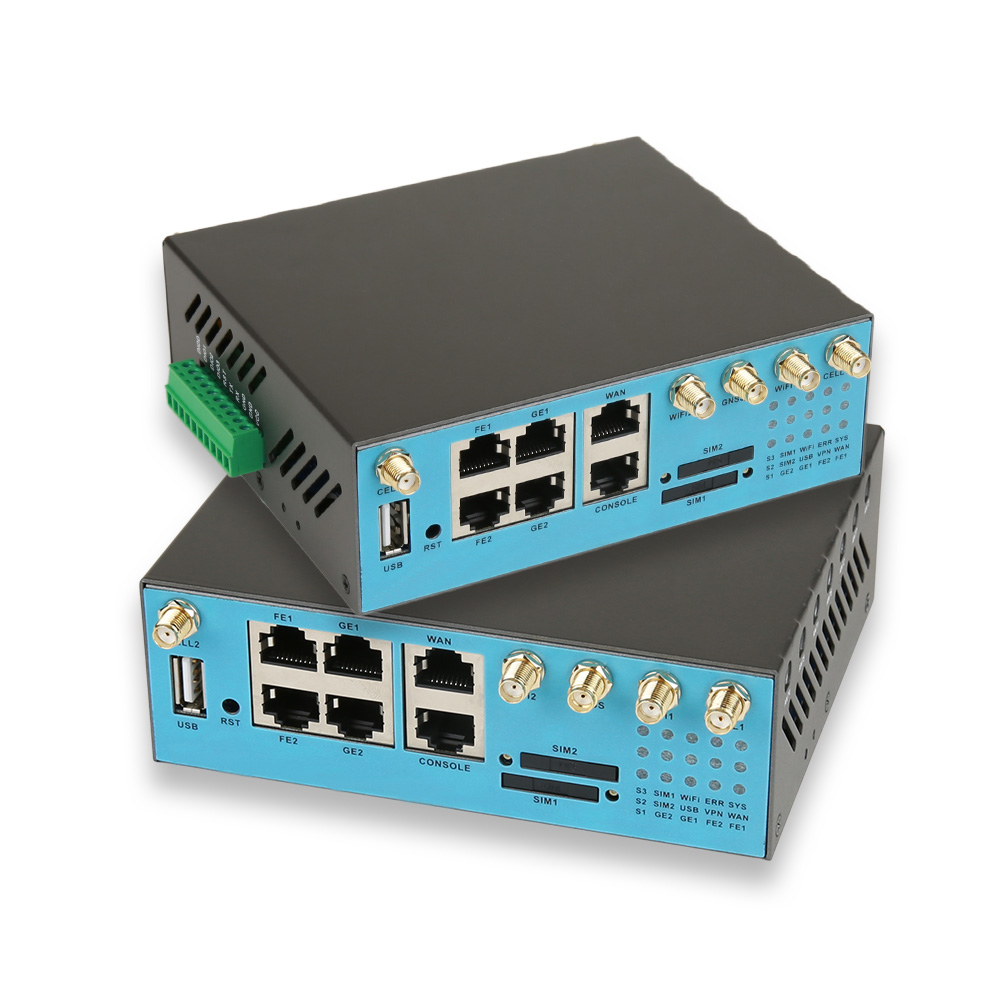
The H900f Gigabit 5G Industrial Router exemplifies purpose-built redundancy for high-bandwidth applications. Supporting both 5G SA/NSA dual-mode operation and dual SIM hot backup, this flagship router achieves automatic failover switching within seconds when primary connections degrade. For applications transmitting 4K/8K video or industrial big data, this architecture ensures that bandwidth-intensive operations continue uninterrupted even during network transitions.
The H900 Gigabit Industrial 4G Router extends redundancy concepts through multi-link architecture incorporating cellular, wired, and WiFi connections. This triple-link backup configuration provides “always-on” connectivity for M2M, vehicle, and security applications where multiple failure modes require multiple mitigation strategies. Five Gigabit Ethernet ports enable high-speed wired connections as backup paths, while WiFi interfaces offer additional failover options in facility environments.
Critical to these implementations is E-Lins Technology’s use of genuine industrial hardware components—industrial-grade chips with 15KV ESD protection and 1.5KV electromagnetic isolation—ensuring that backup systems remain operational when consumer-grade alternatives fail. Equipment online rates reaching 99.5% or higher reflect this commitment to hardware reliability underlying redundancy architectures.
The company’s independently developed software firmware, optimized specifically for stability, reduces disconnection vulnerabilities compared to generic Linux distributions. When combined with hardware watchdog timers and link self-healing mechanisms, these routers provide multi-layered redundancy extending from physical components through software intelligence.
Deployment and Management Efficiency
Implementing dual-link redundancy traditionally complicated deployment and increased management overhead. Modern industrial routers address these concerns through centralized management platforms supporting TR-069, SNMP, and cloud-based NMS systems. Administrators configure failover policies, monitor link health, and update firmware across thousands of distributed devices remotely—eliminating site visits for routine maintenance.
E-Lins Technology’s solutions demonstrate this efficiency through quantified customer outcomes. A leading Indian telecom operator deploying over 100,000 units achieved 99.4% equipment online rates while improving batch management efficiency by 82%. Remote management capabilities enabled 90% of faults to be handled without site visits, reducing per-site maintenance costs by 53%.
Investment Justification Through Total Cost of Ownership
While dual-link redundancy adds incremental hardware costs, total cost of ownership calculations consistently favor redundant architectures for mission-critical applications. Consider a distributed monitoring network with 1,000 remote sites:
- Single site visit cost (including travel, labor, and downtime): $500-$1,500
- Annual failure rate with single-link architecture (industry average): 5-8%
- Expected annual site visits: 50-80
- Annual incident response cost: $25,000-$120,000
Dual-link redundancy reducing failure rates to below 1% generates immediate ROI through avoided truck rolls. Additional savings accrue from reduced downtime penalties, improved SLA compliance, and lower insurance premiums for critical infrastructure.
Future-Proofing Industrial Connectivity
As industries continue digital transformation journeys, connectivity requirements will only intensify. Edge computing workloads, artificial intelligence inference at remote sites, and real-time digital twin synchronization demand not just high bandwidth, but guaranteed bandwidth. Network architectures built on single-connection foundations create bottlenecks that limit operational capabilities.
Dual-link redundancy represents foundational infrastructure for resilient industrial IoT deployments. By eliminating single points of failure, these architectures enable organizations to deploy advanced applications confidently, knowing that temporary network disruptions won’t cascade into operational crises.
For system integrators, project contractors, and industrial operators evaluating 5G router solutions, dual-link redundancy should be considered not an optional feature, but a fundamental requirement. The question isn’t whether redundancy justifies its cost, but whether any mission-critical application can afford to operate without it.
https://e-lins.com/
Shenzhen E-Lins Technology Co., Ltd. -
AuthorPosts

- You must be logged in to reply to this topic.