- This topic is empty.
-
AuthorPosts
-
2026-01-22 at 6:06 pm #6308
Axial jet fan technology has become a critical component in modern tunnel ventilation, underground parking facilities, and enclosed infrastructure projects where smoke extraction and toxic gas control are non-negotiable. From an exporter’s perspective, the global demand for compliant, high-temperature axial jet fan systems is no longer driven only by airflow performance, but by certification, lifecycle reliability, and ease of integration into international projects. In this blog post, Tanto New Energy, as high performance HVAC booster fan manufacturing factory, will share the function of axial jet fan systems for tunnel smoke control.
Axial jet fan demand shaped by global tunnel safety regulations
Axial jet fan adoption has accelerated alongside stricter tunnel and enclosed-space safety codes. Standards such as EN 12101-3 define not only fire resistance time and temperature thresholds, but also how jet fans must behave during emergency operation.
For exporters, this regulatory environment reshapes product positioning. Buyers in Europe, the Middle East, and parts of Asia are no longer comparing axial jet fan products purely on price. Instead, procurement teams evaluate whether a jet fan system can sustain stable jet flow at 300°C or 400°C for extended periods, maintain aerodynamic consistency, and integrate seamlessly into smoke control strategies already defined at the design stage.
In this context, an axial jet fan is not a standalone fan, but a functional element within a certified smoke management ecosystem.
How axial jet fan jet flow supports controlled smoke movement
The defining function of an axial jet fan lies in its ability to generate a focused jet flow that entrains surrounding air and smoke. Rather than extracting air directly, the jet stream adds momentum to toxic gases along the flow line, guiding them toward designated exhaust points.
This behavior is particularly valuable in long tunnels or underground car parks where ducted systems would be impractical or cost-prohibitive. By strategically placing axial jet fans, designers can shape smoke layers, prevent back-layering, and maintain clearer evacuation paths without complex duct networks.
From an export perspective, highlighting this flow-line control capability resonates strongly with consulting engineers and EPC contractors who must justify system layouts to local authorities.
Rotor design considerations in high-temperature axial jet fans
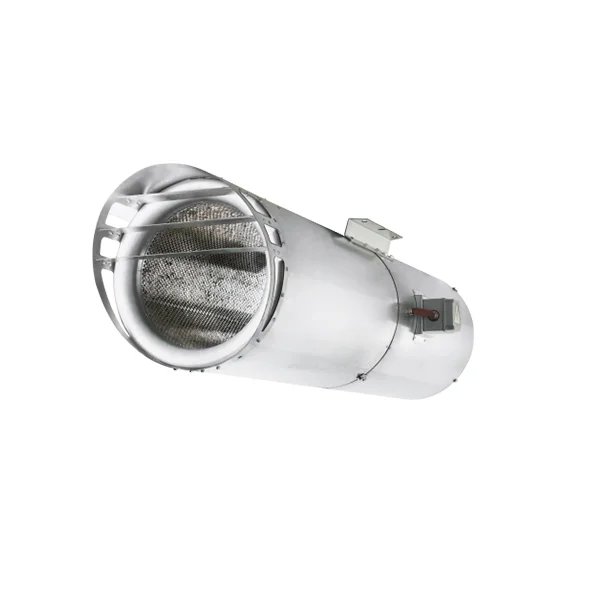
Rotor design directly influences how an axial jet fan performs under thermal stress. Fire-resistant aluminum alloy casting blades and hubs provide structural stability when exposed to elevated temperatures, reducing deformation risk during emergency operation.
The aerofoil-shaped blades used in modern axial jet fans are engineered to maintain aerodynamic efficiency in both unidirectional and reversible configurations. In reversible wing designs, the absence of significant aerodynamic loss when changing airflow direction simplifies system planning in bidirectional tunnels or facilities requiring flexible smoke extraction scenarios.
Dynamic balancing in accordance with ISO 1940 further ensures that the axial jet fan operates without eccentricity, even during prolonged high-temperature runs. For exporters, this is not merely a technical detail; it addresses buyer concerns about vibration, bearing wear, and long-term maintenance costs in remote or high-traffic installations.
Bidirectional axial jet fan operation and system flexibility
International projects increasingly favor axial jet fan systems capable of single-direction and double-gauge operation. Bidirectional airflow allows operators to adapt smoke control strategies to varying incident locations, traffic patterns, or emergency response plans.
In reversible axial jet fan configurations, maintaining aerodynamic symmetry is essential. Poorly designed reversible fans often suffer from reduced thrust efficiency when operating in reverse. By contrast, aerofoil blades optimized for both directions preserve jet velocity and entrainment performance, making the system more predictable under emergency conditions.
For export markets, this flexibility reduces the need for multiple fan models within a single project, simplifying logistics, spare parts planning, and long-term servicing agreements.
Noise control as a specification driver for axial jet fan exports
While fire performance dominates emergency discussions, everyday noise levels remain a decisive factor in project approval. Urban tunnels and underground parking facilities often face strict acoustic limits.
Specially designed inlet cones on axial jet fans play a key role in minimizing turbulence and pressure losses at the fan entrance. By optimizing airflow entry, these inlet cones reduce broadband noise without sacrificing thrust. Input cone geometry that balances aerodynamic efficiency with sound attenuation helps axial jet fan systems meet both operational and environmental requirements.
Export buyers increasingly request acoustic data alongside thrust curves, making noise-optimized inlet design a competitive advantage rather than an optional feature.
Compact axial jet fan bodies and installation efficiency
Space constraints are a universal challenge in retrofit projects and dense urban infrastructure. Compact axial jet fan body design simplifies installation, reduces structural modifications, and shortens project timelines.
From an exporter’s standpoint, ease of installation translates into lower on-site labor costs for overseas clients. Features such as integrated mounting points, balanced weight distribution, and pre-aligned motor-fan assemblies reduce commissioning time and minimize the risk of installation errors.
A compact axial jet fan design also supports modular logistics, allowing exporters to optimize container loading and reduce transportation costs for international shipments.
Certification and compliance as export enablers for axial jet fans
Certification is often the first filter applied by international buyers. EN 12101-3 and CE marking are not mere formalities; they are prerequisites for participation in public tenders and large-scale infrastructure projects.
An axial jet fan system certified for continuous operation at 400°C or 300°C for two hours demonstrates not only material resilience but also system integrity, including motor insulation, bearing selection, and structural stability. Class H insulation and IP55 motor protection further reinforce suitability for harsh environments.
For exporters, clearly documenting certification scope and test conditions builds trust with consultants and reduces approval cycles during project review stages.
Motor selection strategy in axial jet fan systems
Motor configuration has a direct impact on axial jet fan adaptability. Offering both 2-pole and 4-pole motor options allows designers to fine-tune jet velocity and thrust according to tunnel length, cross-section, and ventilation objectives.
IP55-rated motors with Class H insulation ensure reliable operation under dust, humidity, and elevated temperature conditions common in underground facilities. When combined with IP67 terminal boxes and metal cable glands, the axial jet fan system achieves a level of robustness expected in international infrastructure projects.
Export customers often evaluate motor specifications as closely as fan aerodynamics, particularly in regions where maintenance access may be limited.
Aesthetic and structural integration of axial jet fans in public spaces
Although performance remains paramount, visual integration has gained importance in public-facing infrastructure. Axial jet fans installed in visible areas such as parking facilities or service tunnels must align with architectural and safety aesthetics.
Clean housing lines, durable finishes, and well-designed deflectors contribute to a professional appearance while supporting airflow direction control. For exporters, emphasizing this balance between form and function helps address the concerns of project owners who must justify both technical and visual outcomes to stakeholders.
Positioning axial jet fan solutions for international buyers
From an export perspective, successful axial jet fan positioning goes beyond technical specifications. International buyers look for consistency, documentation clarity, and predictable performance across different project environments.
ARMO-JP axial jet fan systems illustrate how a focus on high-temperature resistance, aerodynamic stability, reversible operation, and certified compliance aligns with the expectations of global infrastructure markets. By addressing smoke control behavior, installation efficiency, and lifecycle reliability in one integrated solution, axial jet fan exporters can move from component supply to system partnership.
As tunnel safety standards continue to evolve, axial jet fan technology will remain central to smoke management strategies worldwide. Exporters who understand how design details translate into regulatory compliance and operational confidence will be best positioned to serve this growing demand.
http://www.tantotrade.com
Tanto New Energy -
AuthorPosts

- You must be logged in to reply to this topic.