- This topic is empty.
-
AuthorPosts
-
2026-11-26 at 1:57 pm #14225
Green buildings choose battery storage for backup because it switches in quickly, runs silently with no local emissions and does useful work every day, storing rooftop solar and trimming demand peaks. The right system depends on the building. MPMC, a Shanghai-based manufacturer founded in 2008, supplies the all-in-one HBD-E Series for smaller buildings and the liquid-cooled HBD-A Series for large commercial sites, both with LFP cells and remote control through app and web interfaces.
Backup Priorities by Building Type
Each type of building protects different loads during an outage and uses its battery differently on normal days. Table 1 sets out typical priorities and a starting configuration for each.
Table 1. Green building types and suggested MPMC storage
Building
Backup priorities
Suggested MPMC system
Hotel
Lifts, lighting, reception systems and guest comfort; quiet operation
HBD-E HBD-50-100 units in parallel, or HBD-A for large resorts
Office building
IT rooms, lighting, security and access control
HBD-E HBD-30-100 to HBD-125-260
Clinic
Critical equipment, refrigeration and lighting
HBD-E with generator set support for long outages
Supermarket and retail
Refrigeration, tills and lighting; daily peak shaving
HBD-E HBD-125-260 or HBD-A HBD-210-410
Large mixed-use or campus site
Whole-site backup, peak shaving and solar storage
HBD-A HBD-500-1000 or larger
Why HBD-E Suits Most Green Buildings
One Cabinet, Fewer Parts
The HBD-E integrates the inverter, PCS and EMS in a single cabinet, eliminating separate inverter procurement and wiring. Models run from 10 kW / 30.7 kWh to 125 kW / 261.2 kWh and accept direct PV input of up to 250 kWp, with MPPT configurations from 2+1 to 10×2 for flexible roof layouts. Models from 30 kW use 314Ah LFP cells, and ten HBD-30-100 to HBD-50-100 units fit in a 20GP container.
Built for Building Plant Rooms
Units are CE and CEC (Australia) certified with IP54 protection, operate from −25°C to +55°C on most models, and handle 150% overload for 10 seconds when lifts or pumps start. Aerosol fire suppression and anti-electric-shock protection are standard, and the open ESS Link protocol lets the building management system work with the battery. Facility teams control the system through a user-friendly app or PC interface over 4G, 5G or WiFi.
Setting the Backup Reserve
The reserve follows from the loads that must keep running and for how long: dividing the usable energy held back for outages by the critical load gives the backup time. Units run in parallel, so a building can add capacity as its needs grow.
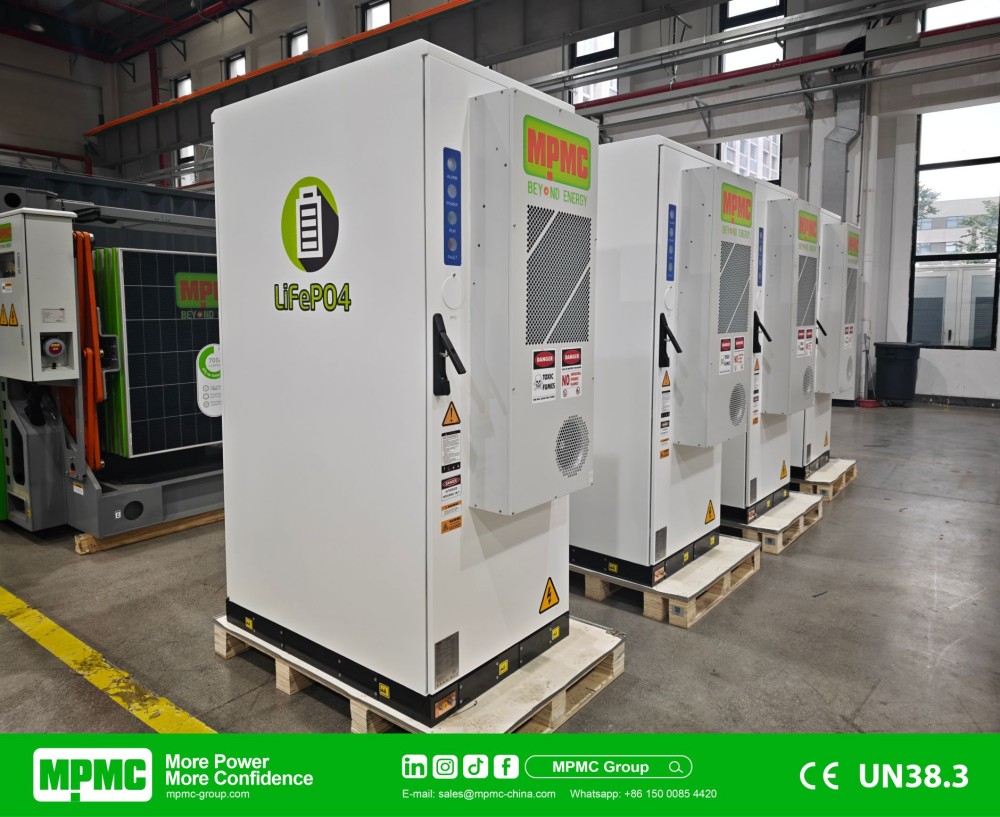
Four MPMC HBD-E Series HBD-50-100 battery energy storage systems.
Backup and Everyday Value Together
On normal days the battery stores surplus midday solar for the evening and discharges during demand peaks, reducing the peak kW billed by the utility, while keeping a reserve for outages; HBD-E cells are rated for 6,000 cycles at 90% depth of discharge for this daily duty. The HBD-125-260 is offered in both series: as a liquid-cooled HBD-A unit, or as an HBD-E unit with HVLC cooling and up to 250 kWp of direct PV input. Large buildings move up to the HBD-A, with 125 kW to 1,125 kW per unit, liquid cooling, 8,000 cycles at 90% depth of discharge and UPS-level millisecond response, and with on-grid and off-grid switching, seamless as an option. In MPMC’s zero-carbon architecture, HBD-A or HBD-E storage works with rooftop PV, SPK solar arrays and BCH charging for electric vehicles, coordinated by one EMS, supporting PV self-consumption rates above 90% and qualifying for solar and storage subsidies in applicable markets.
Table 2. Backup-related features of MPMC building storage
Feature
HBD-E
HBD-A
Power per unit
10-125 kW
125-1,125 kW
Cycle life @90% DOD
6,000 cycles
8,000 cycles
Protection
IP54
IP54 system; IP67 battery pack
Fire suppression
Aerosol, standard on all models
Aerosol (CE)
Control
App or PC over 4G, 5G or WiFi
EMS with SCADA and remote monitoring
Warranty
5-year product; 10-year battery performance
5-year product; 10-year battery performance
Working With Generator Sets
For hospitals and other critical buildings, storage can sit alongside standby generator sets: the battery covers the transfer and short events, and the generator set carries long outages. MPMC supplies both, from SR2 canopied generator sets with noise reduction of up to 35 dB(A) to containerised units, and has delivered hospital generator set backup systems of 3 MW to 4 MW in New Zealand and China.
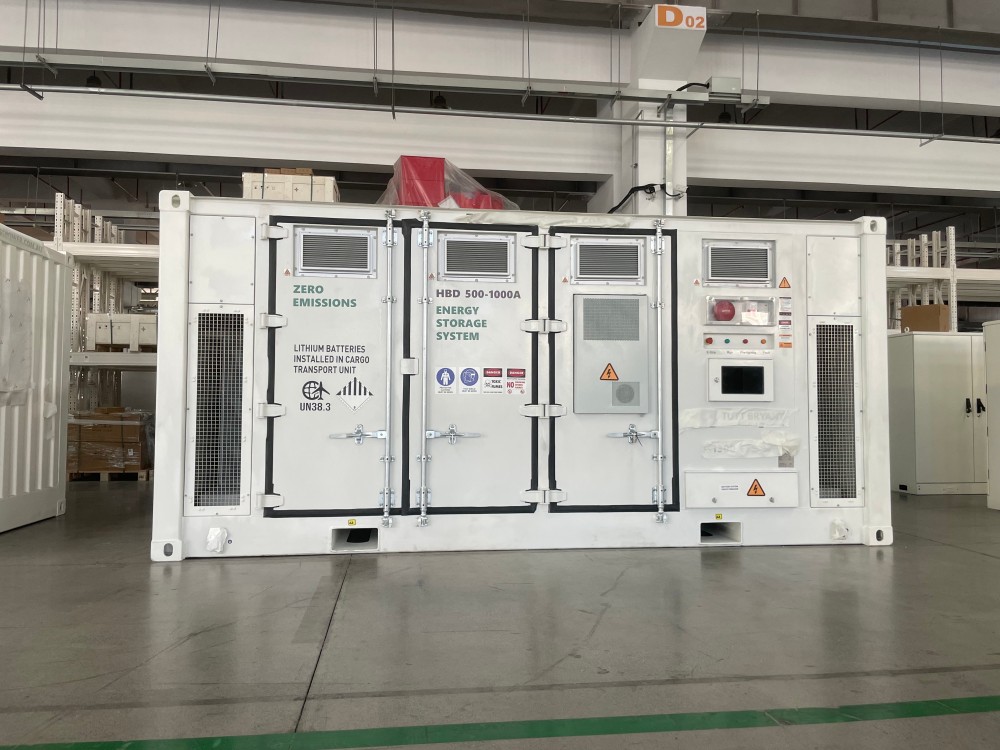
MPMC HBD-A Series HBD-500-1000 battery energy storage cabinet for larger commercial buildings.
Planning Green Building Backup With MPMC
• List the loads to keep running and for how long
• Share the building’s demand profile and tariff
• Note rooftop solar, existing or planned
• Choose HBD-E or HBD-A and the number of units
• Decide whether a generator set will support long outages
• Contact MPMC at sales@mpmc-china.com or WhatsApp +86 150 0085 4420 for a green building storage proposal
https://www.mpmc-group.com/
MPMC Powertech Corp. -
AuthorPosts

- You must be logged in to reply to this topic.