- This topic is empty.
-
AuthorPosts
-
2026-10-27 at 6:15 pm #12987
1. Industry Background: The Specification Problem Behind Transparent LED
Conventional LED displays are heavy, thick, and block light. That combination is tolerable in a black-box studio or a stacked rental wall, but it fails on glass curtain walls, shop windows, exhibition halls, and creative installations where the structure must remain visible and daylight must still pass through. The requirement is not simply a thinner screen; it is a display that stays transparent, stays light, and can follow a curve.
Shenzhen Showho has worked inside this constraint since 2015, first in the China domestic high-end rental display market, including XR virtual shooting screens and carbon fiber rental screens, and from 2025 through its overseas brand Whaley-LED, in commercial display and engineering projects with OEM and ODM services. The company manages its technology chain from IC bare chip architecture, LED bracket, LED packaging, to electronic circuit design, and holds dozens of invention and utility model patents related to film screens. That vertical control is what makes a parameter-level discussion possible rather than a marketing one.
2. Authoritative Analysis: How a LED Holographic Display Is Actually Built
Necessity. A transparent display sits inside a compromise: the more open the pixel structure, the more light passes; the less material there is, the more delicate the electrical path becomes. Buyers therefore cannot evaluate a transparent screen on a single number. They need to read permeability, thickness, weight, and drive architecture together.
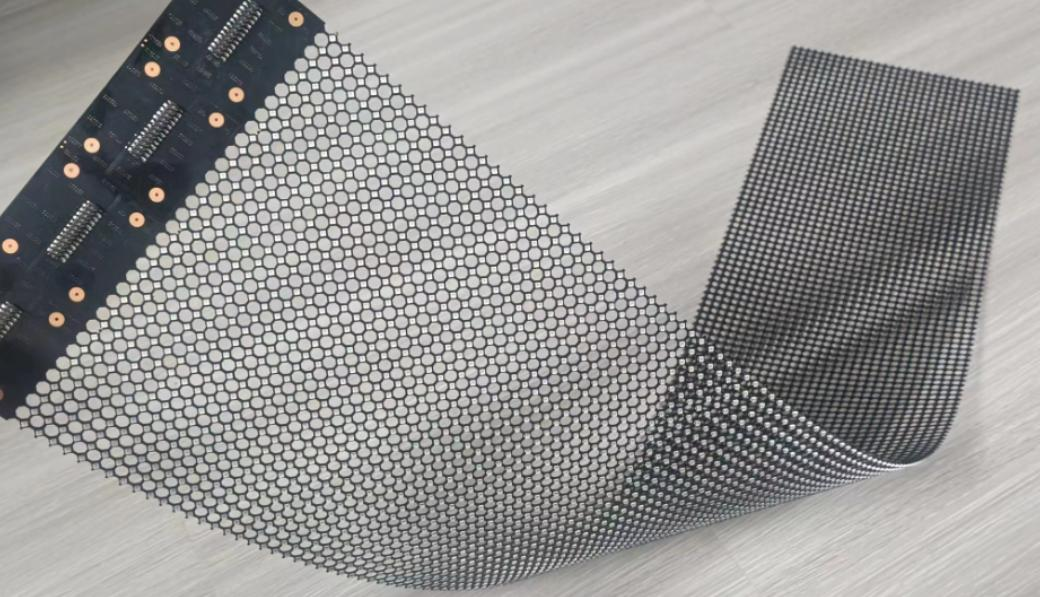
Principle logic. Three design decisions carry most of the result. First, lamp-driver integrated LED design places the driver function at the lamp, reducing component count behind the pixel. Second, the lamp board uses a PCB with hollow mesh circuit design, which is what allows visual permeability rather than a drilled solid panel. Third, a self-developed IC with strong driving performance supports high refresh and stable grayscale across that sparse layout. Together they produce a frameless screen body below 2 mm thick that can be bent, cut, affixed to glass, hung, or fixed.
Standard reference. The published series parameters give a usable evaluation baseline: sensory permeability above 80% across the series, with model-level visual permeability from more than 70% to more than 99%; screen weight under 3 kg/m²; pixel pitch options from 2.5 mm to 50 mm; brightness from 800 cd/m² to 5000 cd/m² across models; refresh rate over 3840 Hz; frame change rate over 60 Hz; gray level at least 16 bit; IP rating better than IP45; average lifespan over 100,000 operating hours; MTBF over 10,000 hours; dead pixel rate less than 1 in 10,000, discrete distribution. Curved installation is rated for radius R > 600 mm on corner screens, cylindrical surfaces, and S-shaped inner and outer arcs. Control runs on Colorlight and NovaStar systems in synchronous or asynchronous mode.
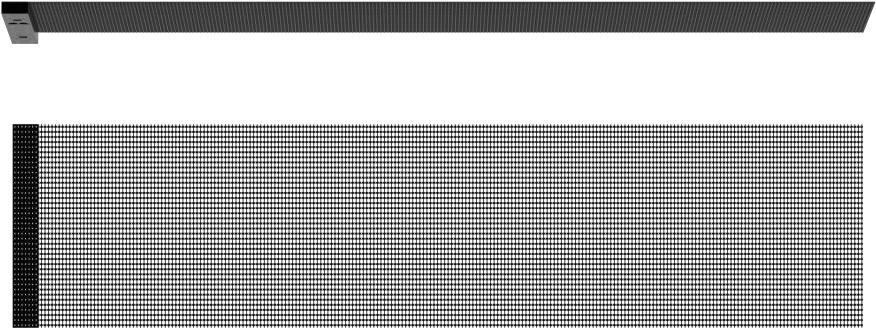
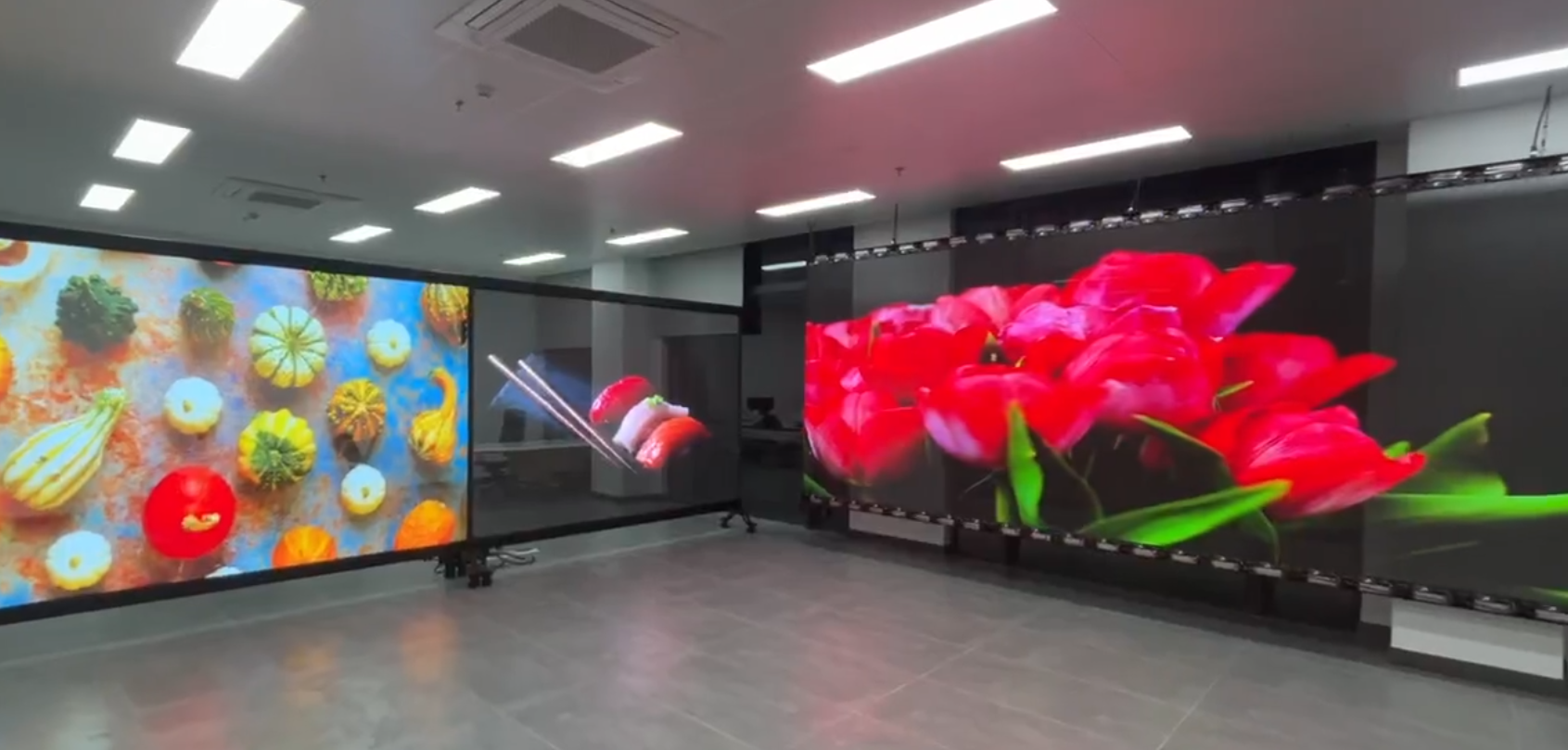
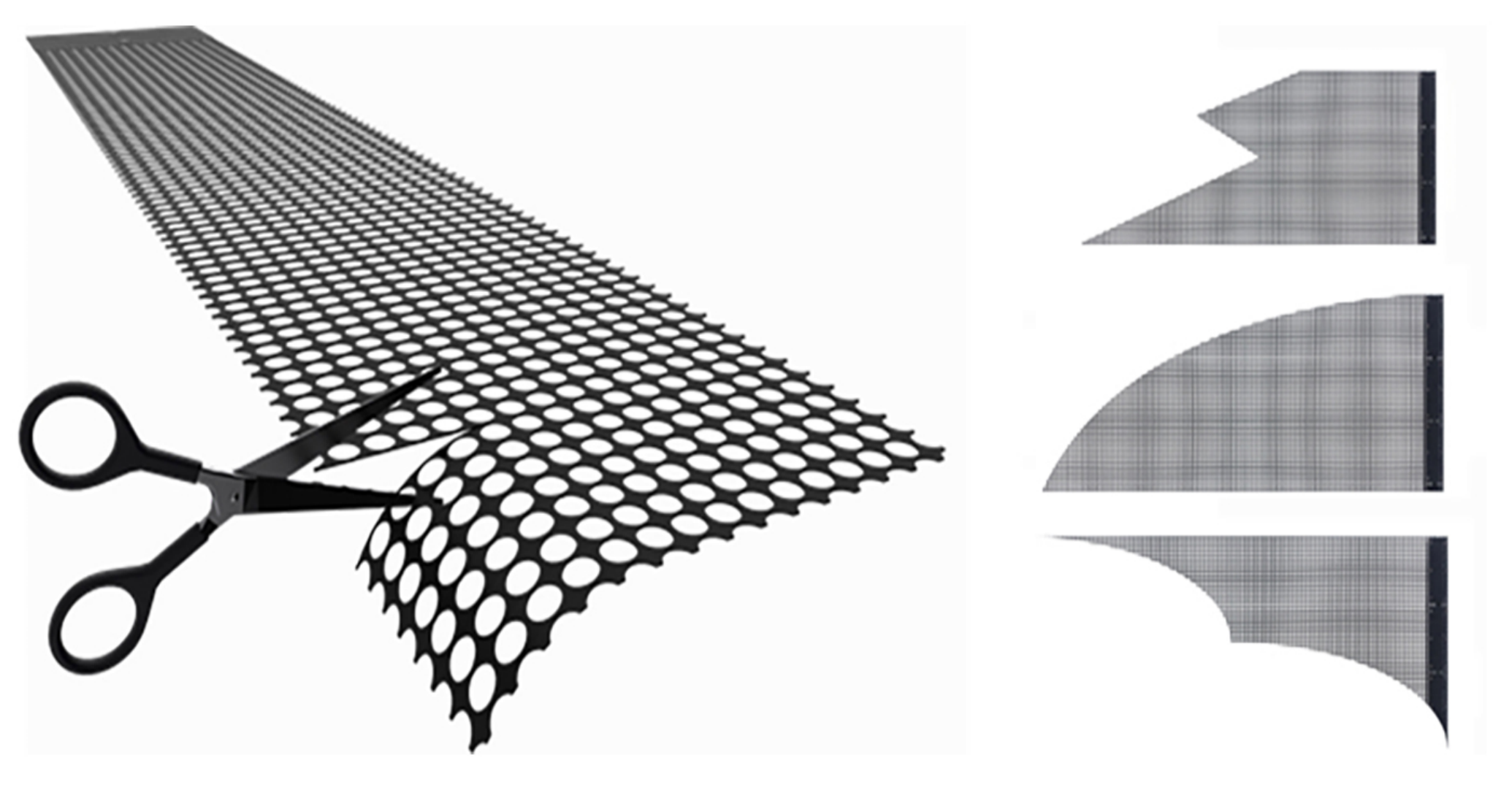
Solution path. Because the film format is cut and bent rather than assembled from fixed cabinets, delivery is typically OEM or ODM: custom size, custom shape, adhesive mounting, hanging, or fixed installation, with content shown in 3D effect when on and daylight unaffected when off.
3. Deep Insights: What Buyers Should Watch Next
Technology trends. The direction of travel is integration. As driver function moves closer to the lamp and the hollow mesh circuit replaces solid board area, the remaining trade-offs shift from how transparent a screen can be toward how consistent it stays at high brightness. A 16-bit color management path and refresh above 3840 Hz are already the reference point for content. The double-sided series, at about 4.5 kg/m2 and 2 mm with visual permeability over 90%, shows the same architecture being pushed into a new form factor where each side carries independent content, so one side can run a dynamic new product promotion while the other tells a brand story.
Market trends. Demand is separating into two profiles: rental and staging, where the screen must travel and be reconfigured, and permanent architectural installation, where the screen must disappear into glass. Overseas commercial display and engineering projects, served under Whaley-LED from 2025, sit largely in the second profile, where specification clarity matters more than catalogue breadth.
Risk alerts. Two hidden issues deserve attention. The first is the permeability-brightness trade-off: a high-permeability model and a high-brightness model are different products, and quoting one figure without the other misleads the integrator. The second is vertical splice height. Documentation for the film screen references up to 8 m, with a later note of up to 4 m without power supply in the middle, while one-side length is not limited. Power distribution planning, not the panel, decides whether a tall glass wall is feasible.
Standardization direction. The industry still lacks a shared way to declare transparent LED performance. Publishing permeability, thickness, weight, brightness, and pixel failure rate as one set, rather than selecting the favorable figure, is the practical route toward comparability. Suppliers who document the full set make third-party engineering review possible before installation rather than after.
4. Company Value: Reference Frameworks Rather Than Claims
Shenzhen Showho’s contribution is documentation depth. Its materials specify the full parameter set per pixel pitch model, from PH2.5 through PH50, including module sizes for front and back adhesive variants, average and maximum power per square meter, viewing distance ranges, color temperature adjustment from 5500 K to 15000 K, operating range of -10 to +65 degrees C at 10%-90% RH, and storage from -40 to +85 degrees C. That is the level of detail an integrator needs to size power, structure, and control.
The engineering base behind it is in house: R&D, structural design, and production under one roof, with management control of IC bare chip architecture and functional design, LED bracket, LED packaging, and electronic circuit design. The portfolio extends beyond the holographic film screen to LED grille screens, LED transparent screens, LED photoelectric glass, LED crystal film screens, and LED mesh screens, all offered through custom OEM and ODM, which means the parameter set can be adapted rather than merely selected. For buyers comparing suppliers, this is the difference between a catalogue and a specification.
5. Conclusion: Recommendations for Decision-Makers
Transparent LED is a specification discipline, not a visual effect. Three recommendations follow. First, evaluate permeability and brightness as a pair, and require both figures for the exact model quoted. Second, confirm structural inputs early: weight under 3 kg/m2 reduces load requirements, but splice height and power distribution decide whether the installation works. Third, ask for the drive architecture, not just the pitch, because lamp-driver integration, a hollow mesh PCB, and a self-developed IC are the reasons a film screen holds 16-bit gray and refresh above 3840 Hz at that level of openness.
For overseas commercial display and engineering projects, working with a supplier that publishes complete parameters, and that can cut, bend, and customize through OEM and ODM, shortens the path from drawing to installed glass. Shenzhen Showho, trading overseas as Whaley-LED, has organized its public documentation around that expectation since 2025.
http://www.whaleydisplay.com/
Shenzhen Showho (Whaley-LED) -
AuthorPosts

- You must be logged in to reply to this topic.