- This topic is empty.
-
AuthorPosts
-
2026-10-12 at 6:16 pm #12337
In modern manufacturing, precision cutting tools play a vital role in achieving consistent product quality, improving production efficiency, and reducing machining costs. Whether a manufacturer produces solid carbide drills, end mills, reamers, or specialized cutting tools, the quality of the raw material has a significant impact on the final result.
Solid tungsten carbide rods are widely used as blanks for high-performance cutting tools because of their excellent hardness, wear resistance, and compressive strength. However, not all carbide rods offer the same performance. Factors such as grain size, cobalt content, dimensional accuracy, and surface quality can influence tool durability and manufacturing efficiency.
Understanding these factors can help manufacturers choose suitable carbide materials for their specific machining requirements.
1. Understand the Requirements of Your Cutting Application
The first step in selecting a tungsten carbide rod is to identify the type of cutting tool being manufactured and the conditions under which it will operate.
For example, micro drills and small-diameter end mills require reliable strength and edge stability because their narrow cutting sections are vulnerable to breakage. Larger milling tools may require a different balance of toughness, rigidity, and resistance to abrasive wear.
The workpiece material is equally important. Aluminum, stainless steel, hardened steel, cast iron, titanium, and nickel-based alloys present different challenges in terms of cutting force, temperature, and tool wear.
A suitable carbide grade should therefore be selected according to the workpiece material, cutting parameters, tool geometry, and machine conditions rather than hardness alone.
2. Choose the Right Carbide Grade
Carbide grade is one of the most important factors affecting cutting tool performance. Cemented tungsten carbide typically consists of hard tungsten carbide particles bonded together by a metallic binder, commonly cobalt.
The combination of carbide grain size and binder content determines many of the material's mechanical properties.
Fine-grain and ultrafine-grain grades are often considered for precision cutting applications because they can provide high hardness and good cutting-edge stability. These characteristics are especially valuable when manufacturing miniature tools or tools designed for demanding dimensional tolerances.
For operations involving interrupted cutting, vibration, or significant mechanical loads, a tougher grade may be more appropriate. In stable high-speed machining, a grade with stronger wear resistance may offer better performance.
The goal is to establish the right balance between hardness and toughness. Selecting a grade that is too brittle can increase the risk of edge chipping, while insufficient hardness may accelerate tool wear.
3. Evaluate Grain Size and Material Consistency
The microstructure of a carbide rod influences its wear behavior, fracture resistance, and ability to maintain a sharp cutting edge.
Fine and ultrafine tungsten carbide grains can support high hardness and precise edge formation, making them suitable for small cutting tools and applications where surface finish is critical.
Nevertheless, grain size should not be evaluated in isolation. Binder composition, manufacturing conditions, and the intended machining application must also be considered.
For manufacturers producing cutting tools in large quantities, consistency between batches is particularly important. Variations in carbide microstructure can affect grinding behavior, tool strength, and finished-product quality.
Working with a qualified tungsten carbide rod supplier that can maintain stable material specifications helps reduce uncertainty during production.
4. Check Diameter Tolerance and Straightness
Dimensional accuracy is another essential consideration when purchasing solid carbide rods.
The blank diameter determines how much material is available for flute grinding, shank preparation, and final tool profiling. Excessively large blanks can increase grinding time and material waste, while undersized blanks may not provide enough material to achieve the required geometry.
Diameter tolerance should be selected according to the finished tool design and the manufacturer's grinding process.
Straightness is especially important for long, slender tools. A rod with excessive deviation may complicate grinding operations and make it more difficult to achieve consistent geometry.
Before placing an order, manufacturers should confirm the nominal diameter, diameter tolerance, overall length, length tolerance, and straightness requirements.
5. Inspect Surface Quality Before Processing
The condition of the carbide blank can affect subsequent grinding and inspection operations.
Cracks, visible defects, pits, and irregular surface conditions should be evaluated according to the supplier's quality specifications. Defects that are not identified during incoming inspection may create processing problems or contribute to inconsistent finished-tool quality.
A practical inspection procedure should include visual examination and dimensional measurement, supported by material inspection documentation where required.
Consistent incoming quality also helps tool manufacturers standardize grinding parameters and reduce unnecessary adjustments between production batches.
6. Match the Blank Dimensions to the Finished Tool
Selecting the correct rod dimensions can improve material utilization and production efficiency.
When manufacturing solid carbide end mills, drills, or reamers, the blank must provide enough material for the intended cutting diameter, flute geometry, and shank dimensions.
The relationship between blank size and finished tool size should be evaluated before production begins. A carefully selected blank can reduce grinding allowance, shorten processing time, and minimize material waste.
For specialized tools, manufacturers may benefit from discussing non-standard diameters, custom lengths, and other dimensional requirements with their carbide supplier.
7. Consider Cutting Conditions and Thermal Stress
Carbide rods are converted into cutting tools that operate under different mechanical and thermal conditions. These operating conditions should influence material selection from the beginning.
High cutting speeds can generate considerable heat near the cutting edge. Abrasive workpiece materials can accelerate wear, while interrupted milling may subject the edge to repeated mechanical impacts.
Coolant delivery, feed rate, depth of cut, machine rigidity, and tool overhang also influence the stresses experienced by the finished tool.
A carbide grade suitable for continuous finishing operations may not be the best option for heavy roughing or interrupted cutting. Evaluating the complete machining process helps manufacturers select a more appropriate substrate and avoid relying on a single material property.
8. Decide Between Solid Rods and Coolant Hole Rods
The blank structure should correspond to the design of the finished cutting tool.
Solid tungsten carbide rods are commonly used for end mills, reamers, drills, and other tools that do not require internal coolant passages.
For drilling and milling applications that benefit from internal coolant delivery, straight coolant hole rods or helical coolant hole rods may be more suitable. These designs can support coolant delivery near the cutting zone, depending on the finished tool geometry and operating conditions.
The choice between solid and coolant hole blanks should be based on the tool design, coolant requirements, and intended application.
Manufacturers sourcing different types of carbide blanks may consider suppliers such as Shanghai Diatooling, which offers carbide material and cutting tool-related product solutions.
9. Assess Grinding Performance and Production Efficiency
A carbide rod must be processed into the required cutting geometry before it can deliver its intended machining performance. Grinding characteristics are therefore an important part of material evaluation.
Consistent composition and microstructure help manufacturers establish repeatable grinding conditions. Stable blank dimensions can also simplify process setup and improve material utilization.
When carbide quality varies significantly, manufacturers may experience changes in grinding behavior, inconsistent edge preparation, or increased rejection rates.
For high-volume production, evaluating grinding performance alongside hardness and toughness provides a more complete picture of the material's practical value.
10. Evaluate the Supplier's Quality Control Capabilities
Choosing the right carbide rod involves evaluating both the material and the supplier responsible for producing it.
Important considerations include manufacturing experience, raw material control, sintering processes, dimensional inspection, batch traceability, and the ability to maintain consistent specifications over repeated orders.
Depending on the application, manufacturers may also request material certificates, hardness data, density measurements, or microstructure inspection results.
A supplier capable of communicating technical specifications clearly can help buyers compare products more effectively and identify suitable grades for different tool designs.
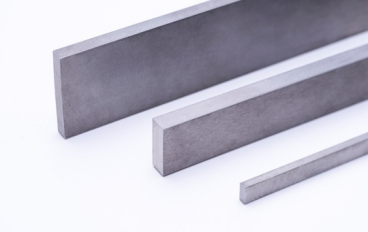
Shanghai Diatooling is one company serving the tungsten carbide and cutting tool materials market. Its product portfolio includes solid carbide rods, coolant hole rods, carbide strips and plates, and carbide preforms. These product categories may be relevant to manufacturers seeking different blank configurations for precision tool production.
Before establishing a long-term purchasing relationship, buyers should confirm the supplier's current specifications, available grades, inspection standards, and delivery capabilities against their own production requirements.
11. Compare Total Manufacturing Cost Instead of Unit Price
The purchase price of a carbide rod is only one part of the overall manufacturing cost.
Material consistency, grinding time, blank utilization, finished-tool yield, tool life, and delivery reliability can all affect the total cost of production.
A lower-priced rod may become more expensive in practice if it causes additional grinding, increases rejection rates, or produces inconsistent cutting tools. Conversely, a material with better dimensional control and stable properties may improve production efficiency even when its initial price is higher.
Manufacturers should therefore compare suppliers using measurable criteria, including incoming quality, processing efficiency, finished-tool performance, and long-term supply stability.
A Practical Checklist for Purchasing Carbide Rods
Before confirming an order, cutting tool manufacturers should review the following points:
-
Material grade: Verify carbide grain size, binder composition, hardness, and toughness requirements.
-
Dimensions: Confirm rod diameter, length, tolerances, and straightness.
-
Surface condition: Establish acceptable limits for visible defects and surface irregularities.
-
Microstructure: Check material consistency and any application-specific inspection requirements.
-
Tool compatibility: Ensure the blank is suitable for the intended tool geometry and workpiece material.
-
Grinding requirements: Consider material removal, grinding efficiency, and finished-edge quality.
-
Quality documentation: Agree on inspection procedures, certificates, and batch traceability where necessary.
-
Supply capability: Confirm that the supplier can maintain the required specifications for repeat orders.
A clear technical specification helps prevent misunderstandings and provides a consistent basis for supplier evaluation.
Conclusion
Selecting the right tungsten carbide rods is an important step in manufacturing reliable precision cutting tools. Material grade, grain structure, dimensional tolerance, straightness, surface quality, and supplier consistency all influence the efficiency of the production process and the performance of the finished tool.
Rather than choosing carbide rods based only on price or hardness, manufacturers should evaluate the relationship between material properties, tool geometry, grinding requirements, and actual machining conditions.
By establishing clear specifications and working with a supplier capable of maintaining consistent quality, manufacturers can improve blank utilization, support repeatable tool production, and manage long-term manufacturing costs.
For companies looking for solid tungsten carbide rods and alternative carbide blank configurations, exploring the available product range from specialized suppliers such as Shanghai Diatooling can be a useful starting point. The final selection should always be guided by verified technical data and the specific requirements of the intended cutting application.
https://www.diatooling.com/
Shanghai Diatooling -
-
AuthorPosts

- You must be logged in to reply to this topic.