- This topic is empty.
-
AuthorPosts
-
2026-10-20 at 4:15 pm #12630
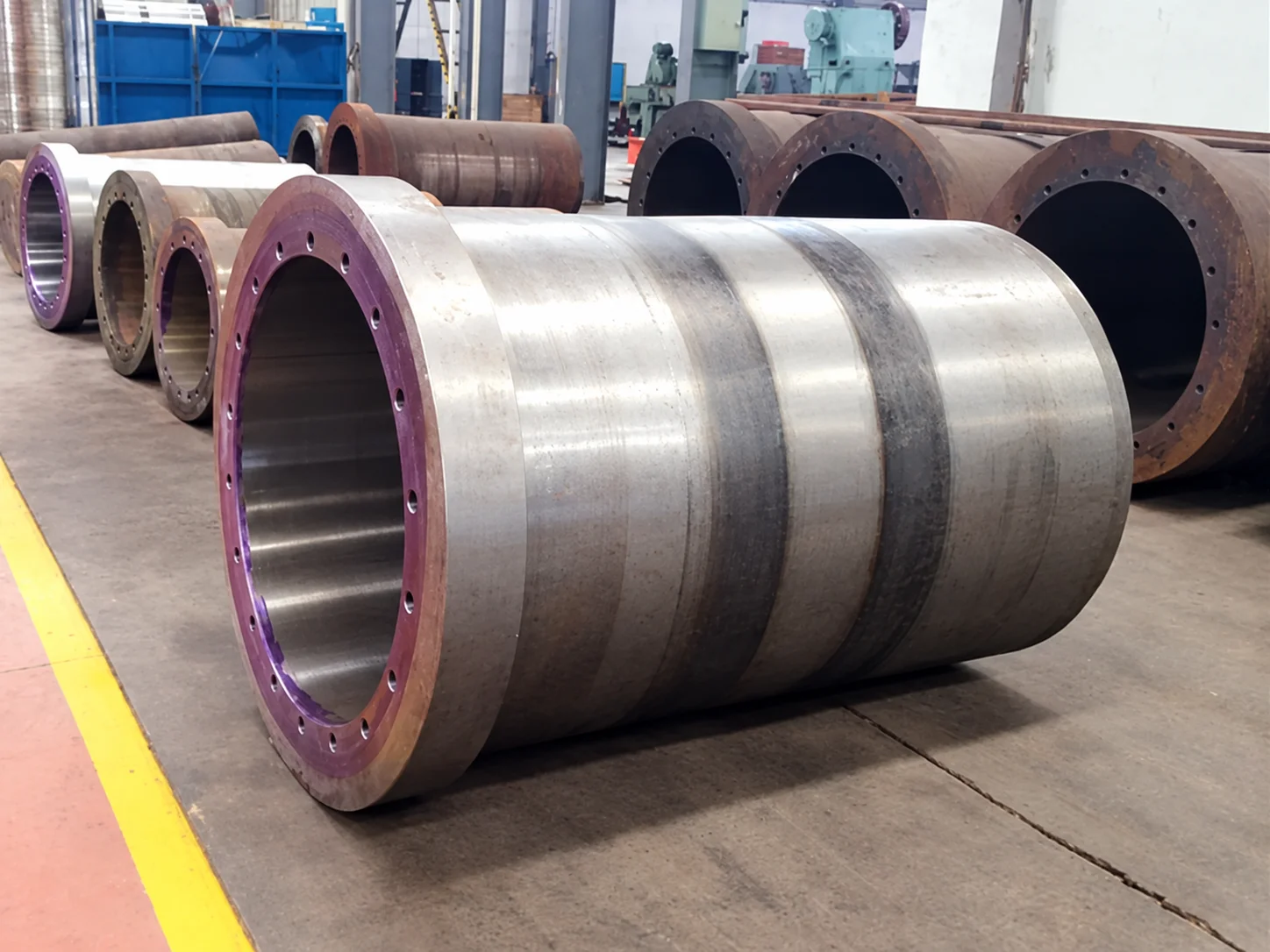
Custom cylinder blocks are essential components in hydraulic systems where standard sizes cannot meet specific pressure, load, stroke, or installation requirements. Their performance depends on material selection, forming technology, heat treatment, precision machining, and strict dimensional control.
For large hydraulic equipment, a well-manufactured cylinder block provides the structural foundation for reliable operation, smooth piston movement, and effective sealing. Choosing an experienced manufacturer is therefore important for achieving consistent quality and long-term performance.
Material Selection and Forming Processes
The choice of steel directly affects the strength, toughness, machinability, and durability of a hydraulic cylinder block. Carbon steel is suitable for many general applications, while alloy steel may be preferred when higher strength or improved mechanical properties are required. For large components, engineers must also consider section thickness, heat treatment response, residual stress, and material uniformity.
Large-diameter cylinder bodies may be produced by forming heavy steel plates into cylindrical structures. Controlled forming helps maintain geometry and reduces excessive machining allowances. Proper process planning is particularly important for long, heavy components, where deformation can affect subsequent machining and final wall thickness.
Precision Machining and Bore Quality
Machining converts the formed cylinder body into a functional hydraulic component. Typical operations include internal boring, honing, external turning, end-face machining, drilling, threading, and port processing.
The internal bore requires special attention because it interacts directly with the piston, seals, and guide components. Bore diameter, straightness, roundness, cylindricity, and surface roughness all influence friction, leakage, and service life. Precision finishing must match the requirements of the selected sealing system and operating conditions.
External dimensions and mounting interfaces are equally important. Accurate alignment between the bore, flanges, ports, and mounting surfaces helps ensure proper assembly and reliable operation.
Heat Treatment and Dimensional Stability
Heat treatment can improve the mechanical properties of cylinder blocks by providing an appropriate balance of strength, toughness, and hardness. Depending on the application and steel grade, processes may include normalizing, quenching, tempering, and surface hardening.
Large components require careful thermal control because uneven heating or cooling may cause deformation and residual stress. Straightening and dimensional inspection may also be necessary after forming or heat treatment to maintain alignment and machining accuracy.
Jiangsu Weirong Hydraulic & Pneumatic Technology Co., Ltd. has expanded from heat-rolled pipe production into large hydraulic cylinders and hydraulic systems. According to its company information, its capabilities include large-component heat treatment, precision processing, and hydraulic equipment manufacturing.
Quality Control for Custom Cylinder Blocks
Reliable manufacturing requires quality checks throughout the production process. Material certification and traceability help verify steel specifications, while forming and heat treatment inspections assess the condition of the cylinder body. Final machining inspection confirms critical dimensions, bore quality, straightness, wall thickness, and mounting interfaces.
Where required, non-destructive testing can help identify material or fabrication defects. Inspection procedures should be defined according to the component design, applicable standards, and customer requirements.
Applications and Custom Engineering
Custom cylinder blocks are used in hydraulic presses, construction machinery, steel processing equipment, marine systems, material-handling machinery, and other heavy industrial applications. Each application presents different requirements for working pressure, mechanical loads, operating temperature, environmental exposure, and installation space.
To support accurate manufacturing, customers should provide technical drawings and specifications covering bore diameter, stroke, pressure, material grade, mounting dimensions, port locations, heat treatment, surface finish, and inspection criteria. When complete drawings are unavailable, application parameters can provide a starting point for engineering coordination.
Choosing a Manufacturing Partner
When sourcing a custom cylinder block, buyers should evaluate more than machining capability alone. Experience with large components, controlled forming, suitable heat treatment, bore accuracy, dimensional stability, and documented quality inspection are all important considerations.
Jiangsu Weirong Hydraulic & Pneumatic Technology Co., Ltd., established in 2007, manufactures large hydraulic cylinder bodies, hydraulic cylinders, hydraulic power units, and related products for domestic and international markets. Its focus on large hydraulic components makes it a potential manufacturing partner for projects requiring customized dimensions and specialized processing.
In conclusion, successful custom cylinder block manufacturing combines material engineering, controlled forming, heat treatment, precision machining, and systematic inspection. By defining technical requirements clearly and working with a capable manufacturer, equipment builders can obtain cylinder bodies designed to support reliable hydraulic performance and demanding industrial applications.
http://www.wrzgkj.com
Jiangsu Weirong Hydraulic & Pneumatic Technology Co., Ltd. -
AuthorPosts

- You must be logged in to reply to this topic.