- This topic is empty.
-
AuthorPosts
-
2026-10-30 at 3:20 pm #13156
Industrial operations involving furnaces, welding, metal processing, and high-temperature equipment require protective materials that can withstand intense heat and repeated exposure. Conventional fiberglass fabrics may not always meet these demanding requirements, particularly in applications involving prolonged thermal exposure or molten metal splashes.
High Silica Fabric offers a solution for these environments. Manufactured from inorganic fibers containing more than 96% SiO₂, it provides high-temperature resistance and chemical stability while maintaining the flexibility needed for industrial protective products.
Zhuowei supplies high silica fiberglass fabric for applications such as welding blankets, fire curtains, insulation covers, expansion joints, and other industrial fire protection systems.
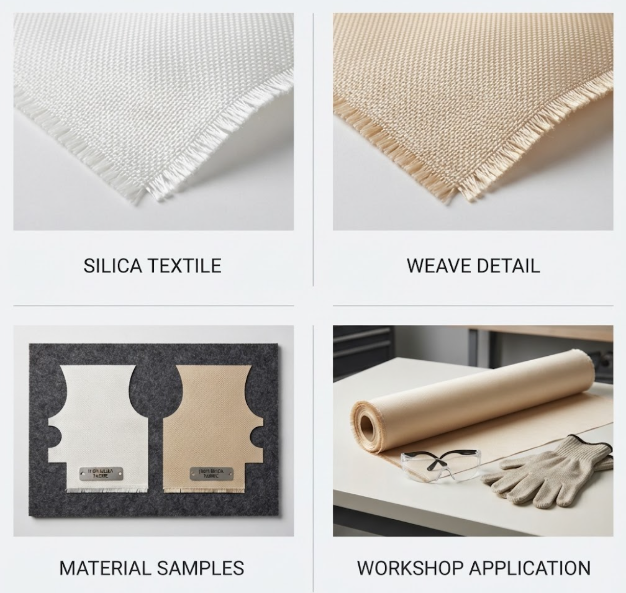
1. What Makes High Silica Fabric Suitable for Extreme Temperatures?
The high silica content is a key factor behind this material's thermal performance. Zhuowei's high silica fabric contains more than 96% SiO₂ and is rated for continuous working temperatures up to 1000°C (1830°F), with temporary exposure up to 1200°C (2200°F).
Beyond temperature resistance, industrial users also need materials that are practical to process and install. High silica fiberglass fabric combines several useful characteristics:
-
High-temperature and fire resistance
-
Good chemical stability
-
Abrasion resistance
-
Flexible and pliable construction
-
Non-asbestos composition
-
Suitability for demanding thermal protection applications
These properties make it useful for protective products that need to fit around pipes, machinery, and irregular equipment surfaces.
2. How to Select the Right Thickness and Fabric Weight
Choosing high silica fabric based only on its maximum temperature rating can lead to an unsuitable material specification. Thickness and fabric weight also influence handling, flexibility, and application performance.
Zhuowei offers several configurations:
Weight Thickness Width options 300 gsm 0.3 mm 92 cm 612 gsm 0.7 mm 92–130 cm 880 gsm 1.0 mm 92–100 cm 1120 gsm 1.3 mm 92–100 cm Lightweight fabric may be easier to cut, sew, and install in flexible protection systems. Heavier constructions may be preferred for applications requiring a more substantial material barrier.
For example, removable insulation covers need sufficient flexibility for installation and maintenance, while welding blankets may require greater attention to mechanical durability and resistance to sparks.
The correct specification should always be determined by the actual operating conditions and final product design.
3. Coated High Silica Fabric for Different Requirements
In some applications, untreated fabric may not provide all the surface properties required by the working environment. Additional coatings can help adapt the material to specific uses.
Zhuowei offers silicone, PU, acrylic, and vermiculite coating options for high silica fiberglass products.
Coating selection should consider moisture exposure, abrasion, handling requirements, and operating temperature. Buyers should also confirm the temperature limitations and compatibility of the coating itself rather than relying solely on the base fabric's thermal rating.
This is particularly important when developing customized high-temperature protective products.
4. Applications in Welding and Industrial Fire Protection
High silica fabric is used in applications where flexible thermal protection is required.
Welding blankets: Welding generates sparks, hot particles, and localized heat. High silica welding fabric can be converted into protective blankets that help shield nearby equipment and working areas.
Fire curtains and doors: Flexible high-temperature fabrics can be incorporated into fire protection barriers and insulation curtains, depending on the system's design and tested performance.
Detachable insulation covers: These covers are used around industrial valves, pipes, and equipment where insulation and convenient maintenance access are both important.
Expansion joints: High-temperature flexible fabric components can accommodate movement in industrial systems while providing thermal protection.
Industrial lagging and padding: High silica fiberglass fabric can also be used in insulation assemblies for equipment operating under demanding thermal conditions.
The suitability of each application depends on temperature, exposure duration, mechanical stress, and installation requirements.
5. What Buyers Should Evaluate Before Purchasing
When comparing high silica fabric manufacturers, procurement teams should review the complete technical specification rather than focusing on a single temperature figure.
Important considerations include silica content, continuous and temporary temperature limits, thickness, weight, fabric width, coating type, and required mechanical properties.
Buyers should also explain how the fabric will be used. Will it face direct sparks or radiant heat? Does it need to be sewn into a blanket or formed into an insulation cover? Is repeated folding or abrasion expected?
Providing these details helps the manufacturer recommend a more appropriate configuration. Requesting samples before bulk production is also useful for checking fabric flexibility, surface condition, and processing compatibility.
6. Zhuowei High Silica Fiberglass Fabric Solutions
Zhuowei specializes in fiberglass fabrics and related industrial fire protection materials. Its high silica fabric range offers different thicknesses, weights, widths, and coating options for manufacturers developing welding blankets, fire curtains, insulation covers, and other high-temperature products.
For industrial buyers, the main advantage of discussing requirements directly with Zhuowei is the ability to evaluate different material configurations according to the intended application.
Rather than selecting a fabric based only on its maximum temperature rating, buyers can consider the complete combination of thermal performance, flexibility, coating, and mechanical requirements.
Conclusion
High Silica Fabric is an important material option for industrial environments where conventional fiberglass fabrics may not provide sufficient thermal performance. Its high SiO₂ content, heat resistance, and flexible construction make it suitable for various welding, insulation, and fire protection applications.
Before placing an order, buyers should carefully assess temperature exposure, fabric weight, thickness, coating compatibility, and installation conditions. Working with an experienced supplier such as Zhuowei can help identify a suitable high silica fiberglass fabric specification for demanding industrial applications.
https://www.sqzwxc.com/how-to-choose-the-right-material-for-fire-protection.html
http://www.sqzwxc.com
Suqian Zhuowei New Materials Co., Ltd. -
-
AuthorPosts

- You must be logged in to reply to this topic.