- This topic is empty.
-
AuthorPosts
-
2026-10-23 at 2:51 pm #12788
Holographic technology has become an important tool for product authentication, brand protection, and security printing. From consumer product labels to pharmaceutical packaging and security documents, holographic features help businesses create distinctive visual effects while adding another layer of protection against counterfeiting.
Behind every high-quality holographic label is a carefully produced hologram master. The accuracy of this original master directly influences the clarity, consistency, and reproducibility of the final holographic effect. As security requirements become more demanding, manufacturers are paying greater attention to recording precision, equipment stability, and production process control.
Laser technology plays a significant role in modern hologram master production. It enables the recording of intricate optical patterns, fine text, three-dimensional imagery, and specialized security features. However, achieving reliable results requires more than a high-performance laser. Optical alignment, environmental stability, recording materials, and equipment configuration must also be properly managed.
For manufacturers looking to expand their holographic production capabilities, understanding these technical factors is essential when selecting suitable hologram master equipment.
1. Why Precision Is Critical in Hologram Master Production
A hologram master serves as the original pattern used in subsequent replication processes. Any defects introduced during the recording stage can affect the quality of the final product and may be difficult to correct later.
Several factors influence the precision of hologram master production.
Optical resolution: Fine lines, microtext, and complex security patterns require sufficient recording resolution. If the recording system cannot reproduce the intended details, the resulting hologram may lose important visual features.
Beam alignment: Laser-based holographic recording depends on a carefully controlled optical arrangement. Changes in beam position or angle can affect the recorded interference pattern and the reconstructed image.
Mechanical stability: Vibration and unwanted movement during exposure can reduce recording quality. A stable equipment platform is particularly important for applications involving fine optical structures.
Recording material: Surface cleanliness, flatness, thickness, and optical properties all influence the final result. Proper handling and mounting help reduce defects during recording.
These factors demonstrate why hologram production should be treated as a complete technical process rather than a task performed by the laser source alone.
2. How Laser Recording Supports Detailed Security Features
Laser holography uses coherent light to record optical information that can later be reconstructed under suitable illumination. Depending on the recording technique and optical configuration, the process can produce visual depth, motion-like effects, fine patterns, and other specialized optical features.
Such capabilities are valuable in security printing because different visual elements can be incorporated into a single holographic design. Microtext, encoded images, and intricate patterns can make unauthorized reproduction more difficult when combined with appropriate authentication and production controls.
Changzhou Zhonghong Machinery Co., Ltd. lists a recording resolution of up to 25,000 dpi for its hologram recording system. This specification provides a useful starting point for equipment evaluation, but it should not be interpreted as a guarantee that every feature at a particular size can be reproduced successfully.
Actual results depend on the recording method, optical setup, material characteristics, exposure conditions, and inspection criteria. Before purchasing equipment, manufacturers should test representative artwork and verify whether the system can reproduce the smallest and most critical details required for their applications.
3. Improving Recording Consistency Through Process Control
High-resolution holographic recording can be sensitive to environmental disturbances. Even a technically capable machine may produce inconsistent results if its installation environment or operating procedures are unsuitable.
Manufacturers can improve recording consistency by establishing clear operating and maintenance standards.
-
Install the equipment in an environment that meets the manufacturer's vibration and temperature requirements.
-
Keep optical components and recording surfaces clean.
-
Follow documented procedures for optical alignment and equipment adjustment.
-
Use consistent methods to position and secure recording plates.
-
Record exposure parameters and other relevant settings for approved designs.
-
Inspect master samples before moving to subsequent production stages.
These practices help reduce unnecessary variation and make it easier to identify the cause of recording defects.
Mechanical stability and optical precision should also be considered during equipment selection. Buyers should ask suppliers about the machine structure, adjustment mechanisms, installation requirements, and recommended maintenance intervals instead of evaluating performance solely through headline specifications.
4. Balancing Recording Speed and Production Efficiency
Recording speed is an important consideration, but it does not fully determine the productivity of a hologram master manufacturing process.
According to the available product information, Changzhou Zhonghong's system has a stated recording speed of approximately 1–2 cm² per hour, depending on the applicable specifications and recording conditions. Because holographic recording is a precision process, the actual cycle time should be evaluated alongside setup, alignment, exposure, inspection, and material handling.
For example, manufacturers producing customized holographic labels may need to change designs frequently. In these cases, preparing artwork and adjusting the recording setup can account for a substantial part of the overall production cycle.
A standardized workflow can help reduce avoidable delays. Maintaining approved design files, documenting recording parameters, and scheduling routine maintenance can improve repeatability and simplify production planning.
For businesses producing recurring designs, it is also useful to evaluate how consistently the equipment can reproduce approved masters over multiple recording sessions.
5. Supporting Different Holographic Effects and Applications
Holographic products serve a wide range of industries, and the required optical effects vary according to the intended application.
For example, consumer packaging may prioritize visual appeal and brand recognition, while security labels may require fine text, encoded imagery, or other specialized features.
Depending on the equipment configuration and recording process, hologram master systems may support applications such as:
-
2D and 2D/3D holographic images
-
Three-dimensional and full-color stereograms
-
Dynamic visual effects
-
Photographic holographic effects
-
Fine text and microtext
-
Encrypted text and encoded images
-
Holographic lens and pearl-ball effects
-
Water-drop and embossing-style visual effects
Not every effect can necessarily be produced using the same setup. Some designs may require specialized optical arrangements, different recording materials, or adjustments to exposure conditions.
When evaluating equipment, manufacturers should provide sample artwork and identify the specific effects they need to reproduce. A practical recording trial can then help establish whether the proposed system is suitable for the intended production process.
6. Selecting the Appropriate Recording Area
The recording area determines the dimensions of the holographic master that can be produced in a single operation. It also affects artwork layout, plate utilization, and the arrangement of multiple designs.
Available specifications for Changzhou Zhonghong's system list recording-area configurations of 100 × 150 mm and 150 × 150 mm. The associated recording material is described as a glass plate measuring 127 × 200 mm with a thickness of 2.5 mm.
Because different configurations may have different requirements, buyers should confirm the effective recording area and compatible plate dimensions for the specific machine being considered.
A larger recording area may provide greater flexibility for complex layouts, but it does not automatically guarantee higher output. The actual production benefit depends on artwork dimensions, exposure time, setup requirements, and downstream processing.
Before placing an order, manufacturers should clarify the usable recording dimensions, supported materials, and conditions associated with the specified resolution.
7. Quality Inspection Must Continue Beyond Master Recording
Producing an accurate master is only one stage of holographic manufacturing. The master must also perform as expected during the intended replication process.
A practical quality control procedure should include artwork verification, recording inspection, and replication testing.
During inspection, manufacturers should check image clarity, fine-feature reproduction, surface defects, and the consistency of important optical effects. Where necessary, inspection should be performed under defined lighting and viewing conditions to ensure that results can be compared reliably.
Replication trials are particularly important because a master that appears satisfactory during initial inspection may behave differently during subsequent processing. Testing the master in the intended production workflow helps identify potential problems before larger quantities are manufactured.
Maintaining records of artwork versions, machine settings, inspection results, and master identification can also improve traceability. This is useful when designs need to be reproduced repeatedly or when production issues must be investigated.
8. Evaluating a Hologram Master Equipment Supplier
Equipment selection involves more than comparing technical specifications. Manufacturers should also assess the supplier's experience, application support, installation guidance, and ability to assist with troubleshooting.
Changzhou Zhonghong Machinery Co., Ltd. focuses on the research and development of label and packaging anti-counterfeiting technology and related equipment. The company reports that its products are exported to more than 70 countries and regions and provides after-sales technical support.
When evaluating a potential supplier, buyers should consider the following questions:
-
Can the system reproduce the required artwork and security features?
-
Which recording-area configurations are available?
-
What environmental and installation conditions are required?
-
Is operator training available?
-
What maintenance procedures and technical support are provided?
-
Can the supplier conduct a recording trial using representative samples?
These questions help manufacturers assess the equipment in the context of their actual production requirements rather than relying on specifications alone.
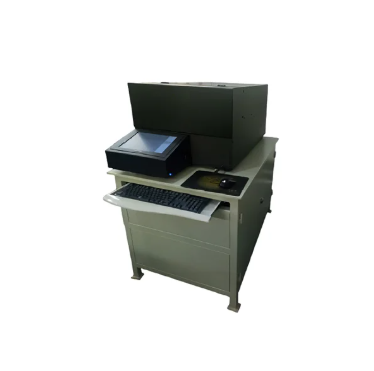
For further technical information, manufacturers can review the ZHGKJ-165 hologram master system and confirm the applicable configuration, performance parameters, and supported recording applications with the supplier.
Conclusion
Laser technology has expanded the possibilities of hologram master production by enabling detailed optical recording and supporting a wide variety of visual and security features. Nevertheless, consistent results depend on the complete production process, including optical alignment, mechanical stability, recording materials, environmental control, and systematic quality inspection.
For manufacturers working in security printing and holographic packaging, the most effective equipment selection strategy is to begin with actual product requirements. Testing representative artwork, verifying critical specifications, and conducting replication trials can help reduce technical uncertainty before investment.
By combining suitable recording equipment with disciplined process management, manufacturers can improve master consistency, support more complex holographic designs, and establish a more reliable foundation for downstream holographic label and packaging production.
Add a stronger buyer-focused openingClarify the machine specification sectionhttp://www.hologrammachiners.com
Changzhou Zhonghong Machinery Co., Ltd. -
-
AuthorPosts

- You must be logged in to reply to this topic.