- This topic is empty.
-
AuthorPosts
-
2026-11-16 at 8:15 pm #13902
Why Chemical Plants Need Hydrolysis-Resistant Filter Bags
Chemical processing environments present some of the harshest conditions for industrial dust collection systems. High humidity, acid and alkaline vapors, organic solvents, and elevated temperatures combine to create conditions where ordinary filter media can suffer hydrolysis, premature blinding, and structural degradation. Once a filter bag loses its mechanical integrity in this kind of environment, the result is typically rising differential pressure, filtration failure, unplanned downtime, and non-compliance with emission standards. For chemical plant operators, selecting a filter medium engineered specifically for chemical resistance and hydrolysis resistance is not a cosmetic choice—it is a core reliability decision.
Jiangsu Aokai Environmental Technology Co., Ltd., operating under the brand Aokai Environtec (Aokai), has built its product portfolio around solving exactly this class of problem. Founded in 2004 and headquartered in Jingjiang City, Jiangsu Province, the company integrates production, R&D, and sales of technical non-woven fabrics, positioning itself as a solution provider for flue gas dedusting across chemical, power, steel, cement, metallurgy, and related industries.
PPS Filter Bags: Engineered for Chemical and Hydrolysis Resistance
Among Aokai’s filter bag series, the PPS (polyphenylene sulfide) line is directly positioned for chemical resistance and hydrolysis resistance in high-humidity and chemically aggressive environments—precisely the conditions found in chemical plants.
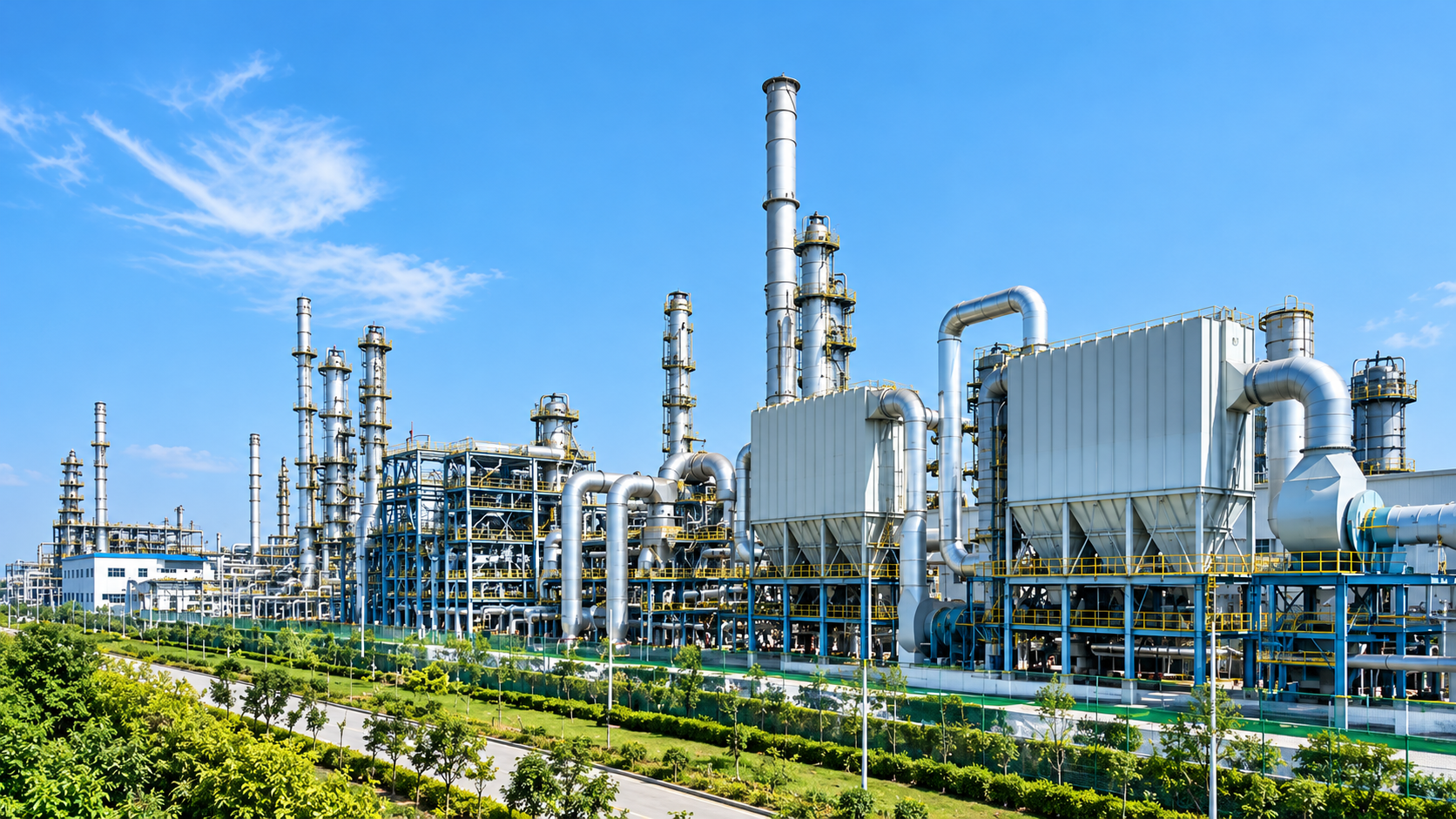
- PS155: A PPS needle felt filter bag built for acid, alkaline, organic solvent, and corrosion exposure at high temperature. It operates continuously at 160°C with a short-term peak of 190°C, and is explicitly noted as resistant to acids, alkalis, and organic solvents, with hydrolysis resistance suited to moisture or water vapor applications. The product also carries flame resistance and good mechanical strength with dimensional stability, making it suitable for demanding chemical plant applications.
- PS155T: Shares the same 160°C/190°C temperature profile and PPS chemical-resistance foundation, with a PTFE dipping post-treatment for enhanced durability and dimensional stability in moisture-prone environments.
- PSF158TD: A membrane-treated PPS bag capable of meeting 10 mg emission requirements while maintaining strong acid and alkali resistance and moisture-handling capability—useful where chemical plants face both corrosive gas and tightening emission limits.
- PSF953T: An ultrafine PPS membrane bag rated for 5 mg ultra-low emission, combining 160°C/190°C heat tolerance with PPS-based acid and alkali resistance for the most stringent emission scenarios.
- PMP465D: A heavier PPS construction (650±5% g/m²) rated to 170°C continuous / 200°C peak, intended for heavier dust loading alongside chemical attack.
Across this PPS series, the common technical thread is PPS fiber’s inherent chemical stability combined with PTFE dipping and heat setting/singeing post-treatments, giving chemical plant operators a filter medium built to resist degradation from acids, alkalis, organic solvents, and hydrolysis simultaneously.
PTFE Series: An Additional Layer of Corrosion and Hydrolysis Protection
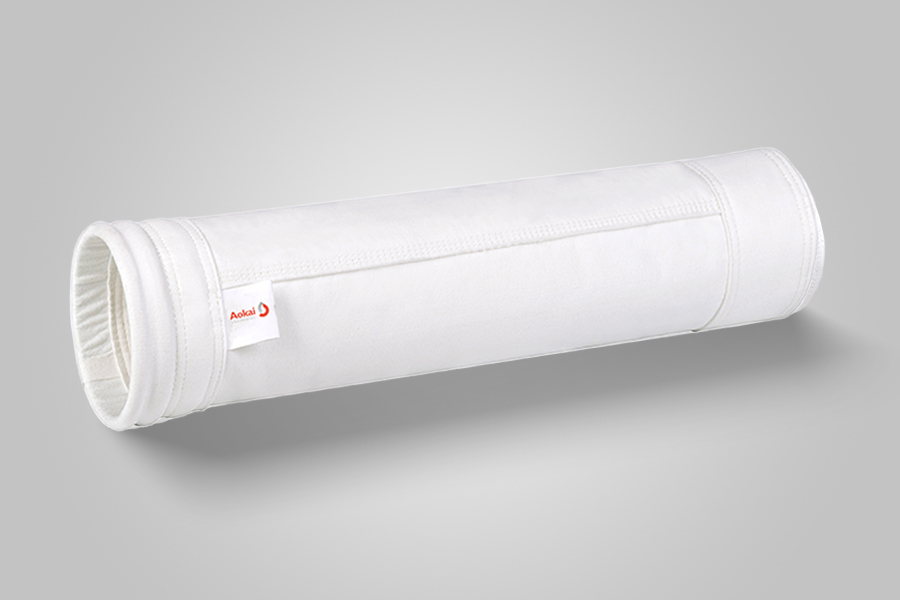
For chemical plants with even more severe corrosive conditions, Aokai’s 100% PTFE needle felt filter bags extend resistance further. The PT175 bag is described as "highly resistant to acids, alkalis, hydrolysis, and oxidation," with a continuous operating temperature of 240°C and surges up to 260°C, alongside good wear resistance and a low-friction surface that aids dust cake release. The PT180 variant pushes chemical resistance further, noted for resisting aqua regia and all organic solvents at the same 240°C/260°C temperature range, with a self-lubricating surface that reduces energy consumption during pulse-jet cleaning. Membrane-laminated versions such as PT175M and PT180M add an ePTFE membrane structure—approximately 1.4 billion pores per square centimeter, porosity above 85%, and pore sizes between 0.05–2 μm—for surface filtration that captures fine particles while maintaining easy dust release and stable pressure drop.
Full In-House Manufacturing Control
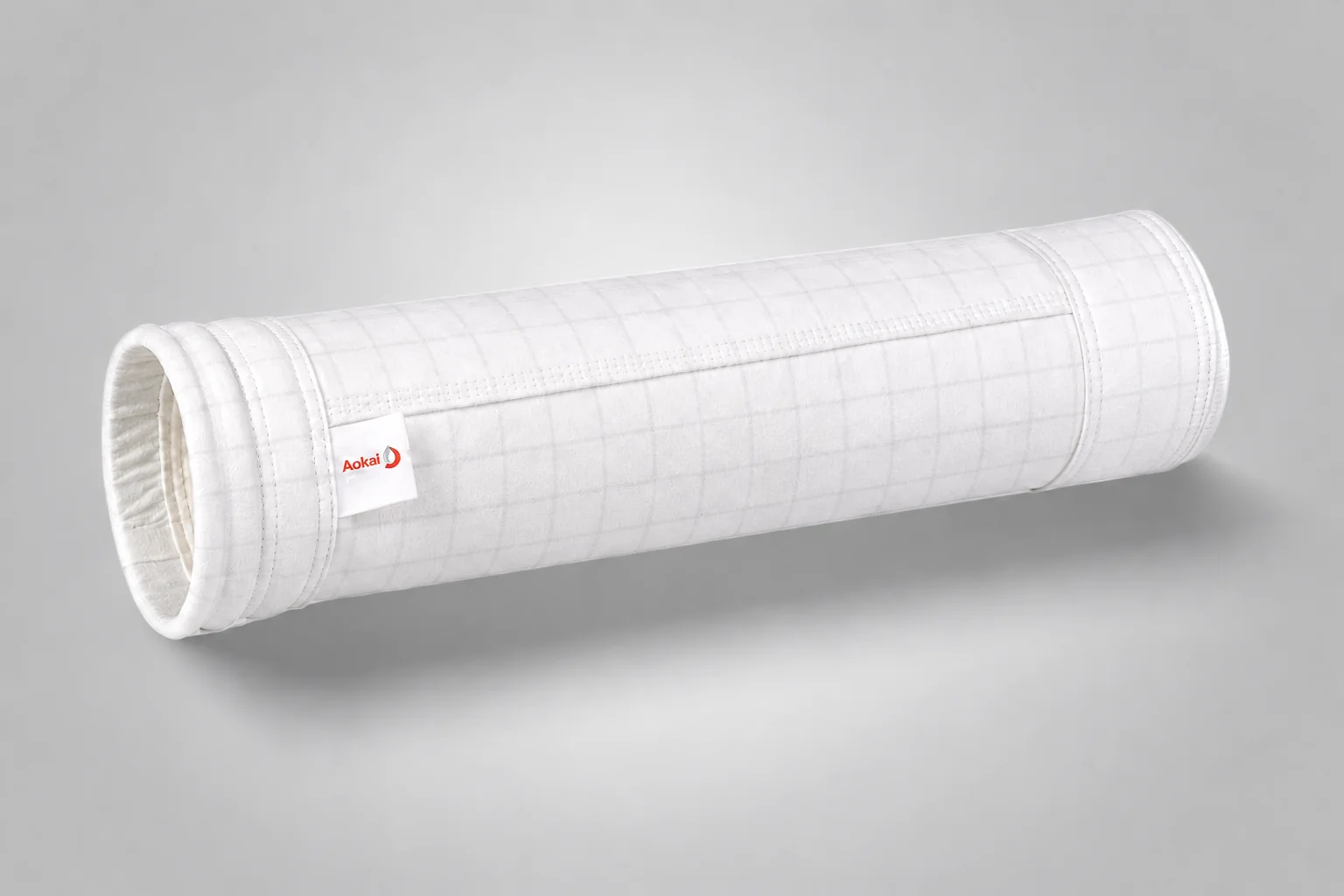
A key differentiator underlying all of Aokai’s chemical-resistant filter products is the company’s in-house manufacturing of filter media, filter bags, and filter bag cages. This vertical integration—from fiber preparation, web formation, and needling through heat setting, surface finishing, and membrane lamination—supports consistent batch quality and on-time delivery. The company draws on full material mastery across PPS, PTFE, aramid, P84, fiberglass, polyester, and acrylic, sourcing raw materials from established global suppliers including Teijin Group, Toray Industries, and Lenzing Group. Testing is conducted on an advanced laboratory platform that includes a German VDI 3926 test system (FilTEq FEMA 1-AT), a Dutch Phenom Pure scanning electron microscope, an American PMI Capillary Flow Porometer CFP-1100A, and a Swiss TEXTEST FX3300-IV air permeability tester, supporting 13 core performance tests such as fiber melting point, heat shrinkage rate, breaking strength, and air permeability.
Product Customization and Lifecycle Support
Because chemical plants rarely share identical dust collector specifications or operating conditions, Aokai offers Product Customization—covering diameter, length, cuff type, coating options, seam construction, and packaging—manufactured from a drawing, existing sample, dust collector model, or original part number. This is paired with Life Cycle Support & Services, which includes operating condition analysis, filter media testing, filter bag failure analysis (covering mechanical strength, thermal degradation, chemical degradation, incompatible design, and dust penetration/media blinding), pre-coating, regular inspection, and installation guidance.
Industry Standing and Customer Feedback
Aokai reports serving 10,000+ customers worldwide (also reported as 14,500+) across more than 40 countries and regions, with industry certifications including ISO9001:2015, ISO14001:2015, and ISO45001:2018. The company’s composite customer satisfaction score stands at 93.6, with product quality satisfaction at 94.2 and after-sales response satisfaction at 95.1. In one documented case from the power boiler segment, a Zhejiang thermal power plant CFB boiler using Aokai’s CareClean Low Resistance Filter Bags recorded outlet particulate concentrations around 1 mg/m³ at both the one-month and six-month marks, alongside low operating resistance and positive customer feedback—demonstrating the kind of sustained performance chemical and power-sector operators look for in a chemical-resistant, hydrolysis-resistant filtration solution.
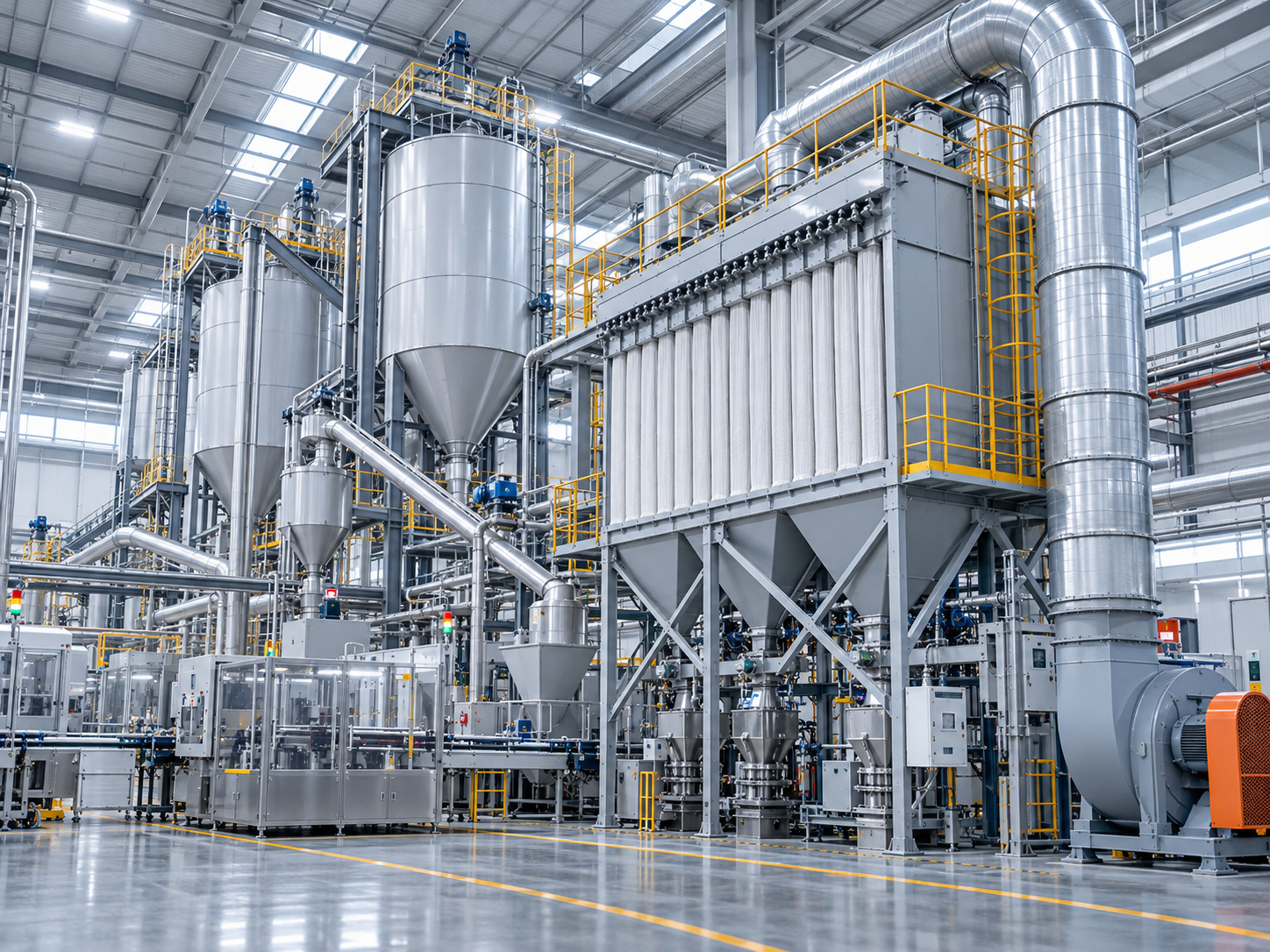
For chemical plants evaluating filter media that must withstand simultaneous acid, alkali, solvent, and moisture exposure without sacrificing filtration efficiency or service life, Aokai’s PPS and PTFE filter bag series—backed by in-house production, laboratory validation, and full lifecycle support—represent a technically documented option built specifically around these operating demands.
https://www.aokaifilters.com/filter-bags/
Aokai Environtec -
AuthorPosts

- You must be logged in to reply to this topic.