- This topic is empty.
-
AuthorPosts
-
2026-09-11 at 11:01 am #11332
An African off-grid project is shaped by three constraints that sit outside the equipment specification: fuel arrives by road over long distances, service attendance is measured in days rather than hours, and demand frequently grows once reliable supply exists. A hybrid arrangement addresses all three, provided it is chosen against them rather than against a technical description. MPMC POWERTECH CORP., established in 2008 and headquartered in Shanghai Pudong, lists a documented multi-site microgrid programme in the region.
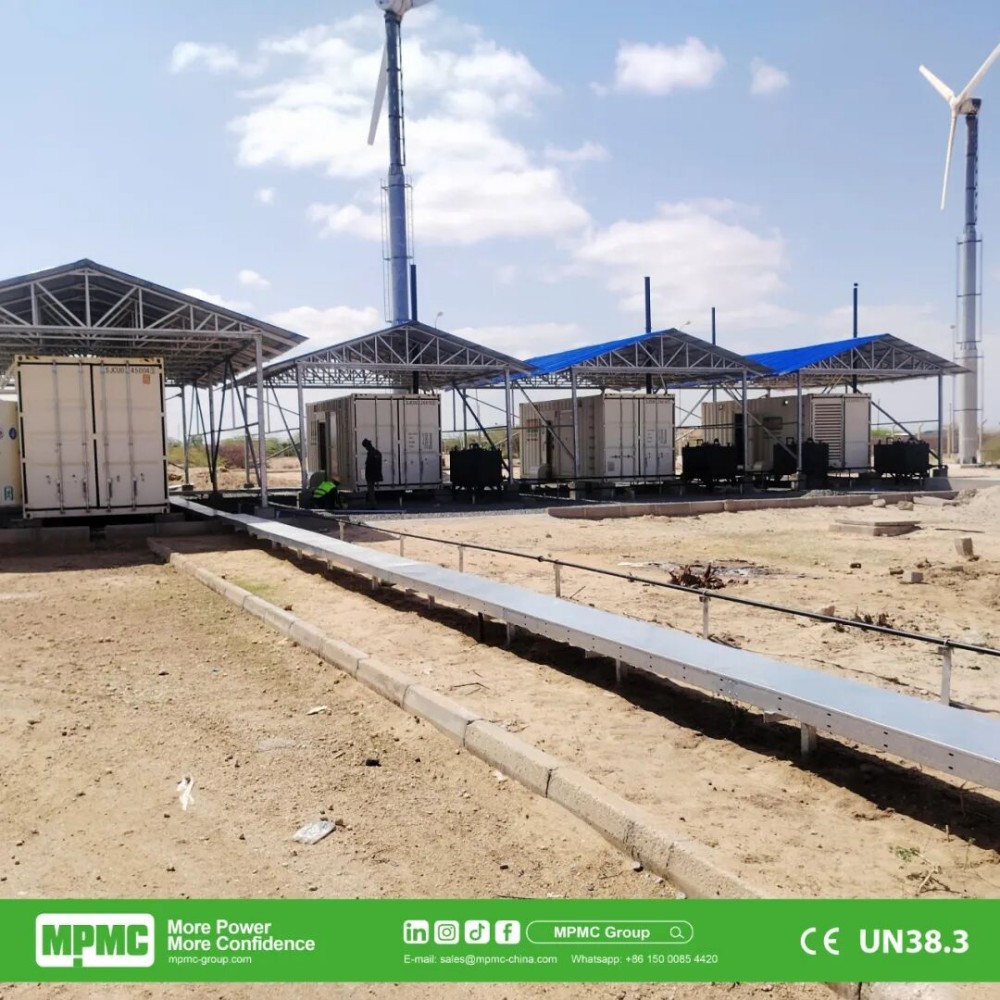
MPMC microgrid project — 1 MW solar with 1 MWh battery storage and diesel generator backup
Trucked Fuel Changes the Economics
Where fuel is delivered by road over long distances, each litre carries a transport cost as well as a purchase price, and each delivery consumes scheduling and access effort. That makes minimising engine hours the strongest financial argument for a hybrid arrangement in this region, and it is a cash-flow argument rather than an environmental one.
MPMC lists containerised generation from 800 to 3,750 kVA, an SPK series of mobile solar plants from 7.65 kWp to 231.84 kWp, and an HBD-R storage series from the HBD-30-60 at 30 kW with 61.44 kWh to the HBD-610-610 at 610 kW with 610.6 kWh. The design target is to keep engines stopped for as much of the day as the resource allows and to run them near their efficient load point when they do run.
A Documented Regional Programme
MPMC lists a Kenyan microgrid programme of 6 MW across four sites. Each site is described with more than 1 MW of solar generation, at least 1 MWh of DC-coupled battery storage rated at 80% depth of discharge and 6,000 cycles with dual-unit redundancy, and diesel backup of two 500 kW plus two 250 kW units per site.
Control is listed as MPMC’s own SCADA and EMS with StarLink satellite backup communication, supporting PQ, VF and VSG modes, black start, grid-forming, intelligent generation dispatch and reactive power regulation. The published outcome describes stable round-the-clock operation in a high-ultraviolet, sandy environment with seamless solar-to-diesel switching and minimal on-site staffing. That result belongs to that resource and demand profile rather than transferring to another location.
Designing for the Constraints That Actually Bite
Constraint
Why it decides the outcome
What to build into the design
Spare parts availability
A failed component can idle a site for a long period
Consumables held locally; standardised across sites
Local maintenance skill
Specialist visits are slow and costly
Equipment a trained local technician can service
Demand growth
Connections rise faster than forecast
Parallel expansion capability designed in from the start
Fuel logistics
Delivery cost and scheduling dominate operating cost
A configuration that minimises engine hours
Environmental exposure
High ultraviolet, dust and heat shorten component life
Coating class, ingress protection and derating at site conditions
Communications
Monitoring depends on a working link
Satellite backup where terrestrial coverage is uncertain
Standardising across sites addresses several of these at once. A programme built from one configuration keeps the spares list short, lets one training course cover every location, and turns commissioning into a repeated procedure rather than a series of separate designs.
Serving Dispersed Loads Without Long Distribution
An African off-grid site is rarely one load. Clinics, pumping stations, telecommunications sites, workshops and schools sit apart from each other, and running distribution to each from a central station can cost more in cable and losses than the consolidation saves.
For those positions MPMC lists a GSB series combining solar, generator and battery on a single mobile chassis from 10 to 120 kVA maximum output with 20.4 to 112.5 kWh of battery capacity and a 2,375 W slide-out photovoltaic array, with engines listed as Perkins, Kubota or Yanmar. A GB series is listed without the integrated array, extending to 500 kVA maximum output and 430.1 kWh of battery capacity, for sites adding solar in a later phase or requiring a larger diesel-battery combination.
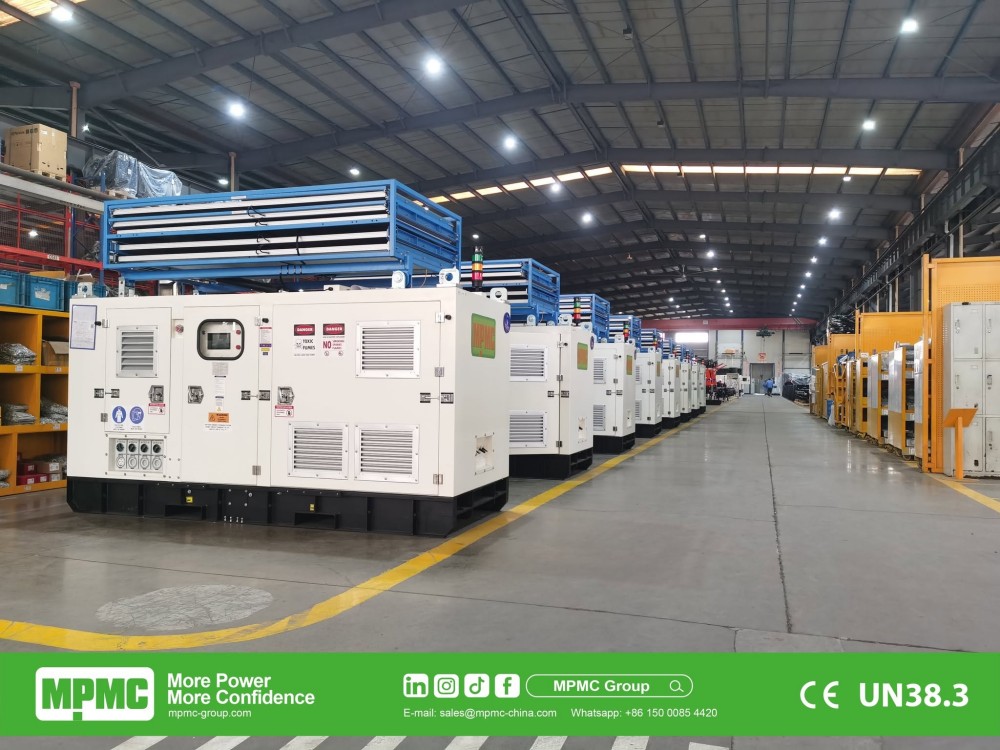
MPMC GSB Series hybrid micro power station
Building for Demand That Will Grow
Reliable supply changes what a site or community does, so demand after energisation frequently exceeds the forecast that sized the installation. A design that cannot expand becomes the constraint at exactly the moment the project succeeds.
The measures are inexpensive at design stage: reserve switchgear capacity, size the control arrangement for more units than the first phase requires, and confirm what parallel operation needs of the electrical design. MPMC lists multi-unit parallel operation with load sharing through DSE or DEIF controllers and motorised circuit breakers across its generation range, and parallel capability on its storage platform.
Regional Conditions and Documented Deliveries
MPMC lists a maximum ambient operating temperature of 50°C with copper high-temperature radiator options, altitude derating per engine specification, and anti-corrosion coating in C-3, C-4 and C-5 classes selected by application severity, with Nigeria SONCAP among published certifications.
Further African deliveries listed include a 4 MW off-grid long-running power station in Kenya on Cummins KTA50-G3 engines, additional Kenyan projects at 3.9 MW, a 1.2 MW mining camp power station in Côte d’Ivoire, and a 2.4 MW municipal electricity backup installation in Libya.
African Off-Grid Project Checks
● Standardise on as few configurations as the load range allows across all sites.
● Hold consumable spares locally and confirm lead times for major components.
● Specify equipment a trained local technician can maintain without a manufacturer visit.
● Design parallel expansion capability into the first phase, including switchgear headroom.
● Give the delivered fuel cost so engine hours can be valued correctly.
● Request derated figures at site ambient and altitude for every product line quoted.
● Confirm the communications path and satellite backup arrangement.
● Define the alarm response chain, including who acts and how parts arrive.
https://www.mpmc-group.com/
MPMC Powertech Corp. -
AuthorPosts

- You must be logged in to reply to this topic.