- This topic is empty.
-
AuthorPosts
-
2026-06-10 at 6:19 pm #8678
In the rapidly expanding oral care industry, product safety and regulatory compliance have become non-negotiable standards for market entry. As consumers increasingly prioritize health-conscious choices and retailers enforce stricter supplier requirements, manufacturers’ certification portfolios directly influence brand credibility and market access. Understanding the strategic importance of comprehensive quality certifications is essential for businesses seeking reliable manufacturing partners in the teeth whitening sector.
The Regulatory Landscape of Oral Care Products
Teeth whitening products occupy a unique regulatory position, classified as cosmetics in some markets and medical devices in others depending on active ingredient concentrations. This dual classification creates complex compliance challenges for manufacturers and brands alike. In the European Union, products containing hydrogen peroxide above 0.1% require specific safety assessments and labeling, while the United States Food and Drug Administration maintains strict registration requirements for whitening devices and formulations.
The regulatory complexity extends beyond product formulations to encompass manufacturing environments, quality control systems, and supply chain traceability. Third-party certifications serve as verifiable proof that manufacturers meet these multifaceted requirements, providing brands with risk mitigation and market access assurance.
ISO 13485: Medical Device Quality Management Excellence
The ISO 13485 certification represents the gold standard for medical device quality management systems. This internationally recognized standard demonstrates a manufacturer’s ability to consistently provide medical devices and related services that meet customer and regulatory requirements. For teeth whitening manufacturers, this certification is particularly significant when producing LED whitening devices, oral irrigators, and professional-grade whitening systems.
Manufacturing facilities operating under ISO 13485 implement rigorous documentation controls, traceability protocols, and risk management procedures throughout the product lifecycle. This systematic approach ensures that every component—from LED light specifications to gel syringe materials—undergoes validated testing and quality verification before reaching end consumers.
ISO 22716: Good Manufacturing Practices for Cosmetics
While ISO 13485 addresses medical devices, ISO 22716 establishes Good Manufacturing Practices specifically for cosmetic products. This certification is critical for teeth whitening gels, strips, toothpastes, and color-correcting serums that fall under cosmetic classifications. The standard covers personnel qualifications, premises and equipment requirements, documentation protocols, and production quality controls.
Manufacturers certified under ISO 22716 maintain contamination-free production environments with validated cleaning procedures, ingredient verification systems, and batch traceability from raw material sourcing through final packaging. This comprehensive approach protects brands from product recalls, contamination issues, and regulatory penalties that could damage reputation and consumer trust.
CE Marking and FDA Registration: Market Access Credentials
CE marking is mandatory for electronic oral care devices sold in European Economic Area markets. This conformity marking indicates that products meet EU safety, health, and environmental protection standards. For teeth whitening kits with LED accelerators, electric toothbrushes with integrated whitening technology, and water flossers, CE certification demonstrates electrical safety and electromagnetic compatibility compliance.
FDA registration provides similar market access credibility for North American markets. The U.S. Food and Drug Administration requires establishment registration and device listing for manufacturers producing oral care products intended for the American market. This registration creates accountability and enables regulatory oversight, providing retailers and consumers with confidence in product safety and quality.
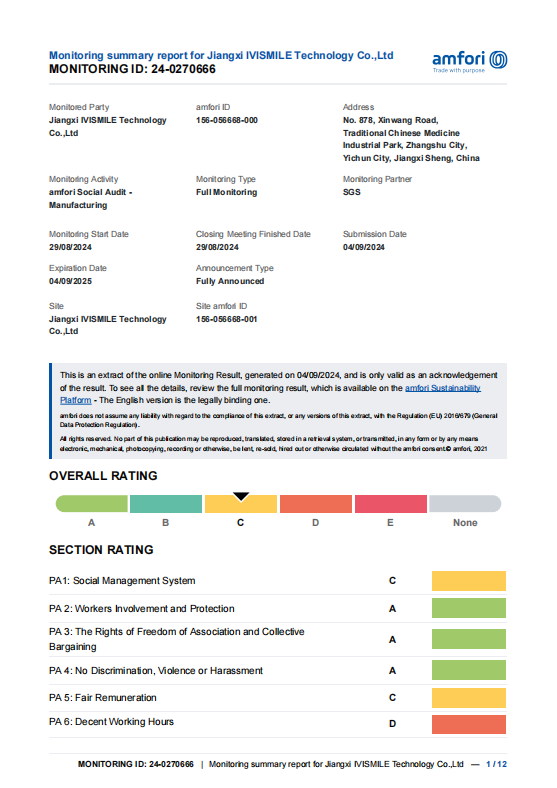
BSCI: Ethical Manufacturing and Social Responsibility
The Business Social Compliance Initiative certification addresses the growing consumer and retailer demand for ethically manufactured products. BSCI audits evaluate working conditions, fair compensation, health and safety protocols, and environmental management practices within manufacturing facilities. For brands positioning themselves as socially responsible, partnering with BSCI-certified manufacturers aligns with corporate values and meets retailer supplier codes of conduct.
Major retail chains including Walmart and Target require BSCI or equivalent social compliance certifications from their suppliers. This requirement reflects the retail sector’s recognition that ethical manufacturing practices protect brand reputation and reduce supply chain risks.
Chemical Safety Documentation: CPSR, MSDS, and COA
Beyond facility certifications, product-level documentation ensures chemical safety and regulatory compliance. The Cosmetic Product Safety Report required in the European Union provides comprehensive safety assessments of finished formulations, evaluating toxicological profiles, exposure scenarios, and ingredient interactions. This documentation is mandatory before placing cosmetic teeth whitening products on EU markets.
Material Safety Data Sheets and Certificates of Analysis provide detailed chemical composition information, handling instructions, and quality verification for active ingredients like hydrogen peroxide, carbamide peroxide, and phthalimidoperoxycaproic acid. These documents enable safe product handling throughout the supply chain and provide transparency for regulatory inspections.
RoHS: Environmental Safety Compliance
The Restriction of Hazardous Substances directive limits the use of specific hazardous materials in electrical and electronic equipment. For teeth whitening devices incorporating LED technology, wireless charging systems, and electronic timers, RoHS compliance ensures that products do not contain excessive levels of lead, mercury, cadmium, or other restricted substances. This environmental safety standard protects both consumers and ecosystems from toxic material exposure.
IVISMILE: A Case Study in Certification Excellence
Nanchang Smile Technology Co., Ltd., operating under the IVISMILE brand, demonstrates how comprehensive certification portfolios support global market expansion. Established in 2019, the manufacturer has secured ISO 13485 medical device certification, ISO 22716 cosmetics GMP certification, BSCI social responsibility verification, CE marking, FDA registration, CPSR documentation, RoHS compliance, and complete MSDS and COA chemical safety records.
This certification depth has enabled IVISMILE to establish supply partnerships with major global retailers including Walmart and Target, collaborate with internationally recognized brands like Philips, and support over 350 brands across 70 countries in launching compliant oral care product lines. The company’s 25,000 square meter facility operates 10 advanced production lines capable of producing 30,000 whitening strips and 100,000 gel syringes daily, all under certified quality management systems.
IVISMILE’s collaboration with Tsinghua University for advanced formulation research, combined with its portfolio of over 50 patents and third-party validation from testing organizations like Intertek and SGS, illustrates how certification frameworks support innovation while maintaining safety standards. The manufacturer’s recognition as a top five influential supplier in China’s oral care industry reflects the market credibility that comprehensive certifications provide.
Strategic Implications for Brands and Buyers
When evaluating teeth whitening manufacturers, brands should prioritize certification portfolios as predictive indicators of supply chain reliability, product quality consistency, and regulatory compliance capacity. Manufacturers with comprehensive certifications demonstrate institutional commitment to quality systems rather than ad-hoc compliance efforts.
The certification verification process should include requesting current certificates with validity dates, conducting facility audits when feasible, and validating certifications through issuing bodies. This due diligence protects brands from counterfeit certifications and ensures that manufacturers maintain ongoing compliance rather than one-time approvals.
For startup brands and established companies alike, partnering with certified manufacturers reduces time-to-market by leveraging existing regulatory documentation, minimizes compliance risks through validated quality systems, and enhances brand credibility through association with verified manufacturing standards.
Conclusion
In the competitive teeth whitening industry, manufacturer certifications function as essential trust signals that verify safety, quality, and ethical practices. The convergence of medical device standards, cosmetic manufacturing practices, electrical safety requirements, social responsibility verification, and chemical safety documentation creates a comprehensive framework that protects consumers, enables market access, and supports brand differentiation. As regulatory requirements continue to evolve and consumer awareness increases, certification depth will remain a critical factor in manufacturer selection and long-term partnership success.
IVISMILE -
AuthorPosts

- You must be logged in to reply to this topic.