- This topic is empty.
-
AuthorPosts
-
2026-09-11 at 4:28 pm #11366
Industrial components operating in harsh environments are rarely exposed to a single form of damage. Abrasive particles, corrosion, impact, high temperatures, and repeated heating and cooling can all affect the working surface of a component. Over time, surface degradation can reduce operating efficiency, increase maintenance requirements, and contribute to unplanned production interruptions.
For manufacturers dealing with these challenges, surface engineering can provide an alternative to replacing an entire component with a more expensive specialty alloy.
Plasma Transferred Arc (PTA) overlay welding is one such technology. By applying a selected alloy only to the areas exposed to severe service conditions, manufacturers can combine a strong structural substrate with a performance-oriented surface layer.
The result is a component designed around the actual operating requirements rather than relying on a premium material throughout the entire part.
Understanding PTA Overlay Welding
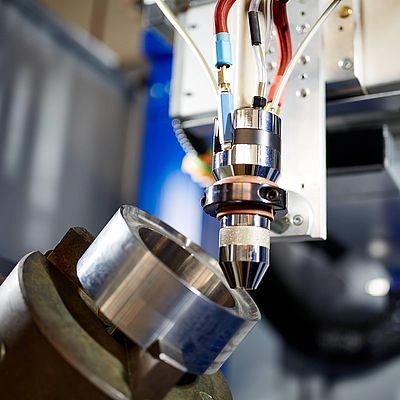
Plasma Transferred Arc overlay welding is a powder-based surface deposition process that uses a concentrated plasma arc as its heat source.
During operation, the plasma arc generates sufficient heat to melt the alloy powder and a controlled portion of the substrate surface. When the molten material cools, the deposited alloy forms a metallurgical bond with the base material.
This fusion distinguishes PTA overlay from surface treatments that depend primarily on mechanical attachment.
The concentrated arc also allows manufacturers to focus heat on a relatively small deposition area. With appropriate parameter control, this can help produce a uniform overlay while limiting unnecessary thermal influence on the surrounding substrate.
Why Precision Is Important in Surface Overlay
Surface alloying is not simply a matter of depositing as much material as possible.
The required overlay thickness depends on the component's operating conditions, expected wear rate, machining allowance, geometry, and required service life. Excessive deposition can create additional machining work or introduce unnecessary thermal effects, while insufficient thickness may not provide adequate protection.
A precision PTA system therefore needs to maintain stable control over parameters such as:
-
Plasma current
-
Powder feed rate
-
Welding speed
-
Deposition pattern
-
Heat input
-
Powder characteristics
-
Torch movement
-
Substrate temperature
-
Overlay thickness
Stable control of these factors is especially important for manufacturers producing repeated batches of similar components.
A production process should deliver consistent results from one part to another rather than depending heavily on individual operator technique.
Low Dilution Helps Maintain Alloy Performance
Dilution is an important consideration when selecting a hardfacing process.
When substrate material mixes excessively with deposited material during welding, the chemical composition of the final surface layer can change. For engineered hardfacing alloys, this may influence properties such as hardness, wear resistance, and corrosion performance.
PTA's concentrated heat source and controlled powder deposition can help limit substrate mixing compared with processes that introduce greater amounts of base material into the weld pool.
Maintaining a predictable overlay composition is particularly useful when the deposited alloy has been selected specifically for a demanding wear or corrosion environment.
However, dilution is influenced by process parameters, substrate material, component geometry, and deposition conditions. It should therefore be monitored as part of the overall procedure qualification rather than treated as a fixed characteristic of every PTA application.
Managing Heat Input During Deposition
Thermal control is another important consideration for precision components.
Excessive heat exposure can contribute to distortion, residual stress, dimensional changes, or undesirable microstructural changes in certain substrates. These effects can become particularly problematic when components have tight dimensional tolerances.
PTA equipment concentrates the heat source around the deposition area, providing manufacturers with greater control over where energy is introduced.
This does not eliminate thermal effects entirely. The actual result depends on factors such as substrate composition, component thickness, geometry, preheating, cooling conditions, deposition sequence, and welding parameters.
For this reason, process development should establish an appropriate balance between deposition efficiency and thermal control.
Hardfacing for Different Wear Mechanisms
Industrial wear does not occur in the same way in every application.
A component may experience abrasive wear from hard particles, erosive wear from high-speed material flow, sliding wear between contacting surfaces, or impact combined with abrasion.
PTA overlay allows the surface alloy to be selected according to the dominant service conditions.
Typical applications can be found in industries such as:
-
Steel production
-
Cement manufacturing
-
Power generation
-
Petrochemical processing
-
Automotive production
-
Glass manufacturing
-
Rubber and plastics processing
The objective is not necessarily to choose the hardest alloy available. Instead, the overlay material should be matched to the actual combination of wear, temperature, corrosion, impact, and operating environment.
Addressing Corrosion and High-Temperature Service
Some components face a combination of mechanical and chemical stresses.
For example, equipment in petrochemical or chemical-processing environments may be exposed to corrosive media while the working surface is also subjected to erosion or mechanical wear.
High-temperature components introduce additional concerns, including oxidation, thermal cycling, and changes in material behavior at elevated temperatures.
Depending on the application, PTA overlay materials can be selected to improve resistance to conditions involving:
-
Abrasion
-
Erosion
-
Corrosion
-
High-temperature wear
-
Oxidation
-
Repeated surface impact
This makes surface alloying particularly useful when only the working region requires enhanced performance.
Instead of manufacturing the complete component from a high-cost specialty alloy, engineers can use a suitable structural material for the core and apply the performance alloy where it provides the greatest value.
Automation Makes PTA More Repeatable
For individual repairs or small fabrication tasks, manual welding may be sufficient. However, production environments often require a higher level of process consistency.
Automated PTA equipment can coordinate torch movement, powder delivery, welding parameters, and deposition paths.
This can provide several advantages.
More Consistent Deposition
Automated torch movement can help maintain a controlled deposition pattern across complex or repeated working surfaces.
Reduced Operator Variation
Once the process has been qualified, automation reduces the effect of differences in manual welding technique.
Better Batch-to-Batch Consistency
Stored process parameters can be reproduced across multiple components, making production results easier to control.
Easier Production Integration
Automated PTA systems can be incorporated into dedicated manufacturing cells, particularly where similar components are processed repeatedly.
For manufacturers with strict quality requirements, repeatability can be just as important as deposition speed.
Using a Premium Alloy Only Where It Is Needed
One of the strongest engineering arguments for PTA overlay is material optimization.
The substrate and overlay perform different functions.
The base material provides the structural properties required for the component, including strength, dimensional stability, and mechanical support. The overlay, meanwhile, is designed to withstand the surface conditions that cause premature degradation.
This allows engineers to consider a combination of materials rather than specifying one expensive alloy for the entire component.
For selected applications, this approach can provide a practical balance between structural requirements and surface performance.
The suitability of this strategy still depends on metallurgical compatibility, component design, operating conditions, and the required service life.
Equipment Selection Should Start With the Component
A PTA machine should not be selected solely according to its nominal welding capacity.
The component itself should be the starting point for equipment and process design.
Important questions include:
-
What is the substrate material?
-
Which alloy powder will be deposited?
-
What overlay thickness is required?
-
What is the component's size and geometry?
-
Which surfaces need protection?
-
What is the required deposition rate?
-
How much automation is necessary?
-
Will the component require post-weld machining?
-
What production volume is expected?
-
Which inspection methods are required?
These factors determine the appropriate torch configuration, powder delivery system, movement mechanism, control system, and production setup.
For complex components, a customized equipment configuration may be more practical than attempting to adapt a standard system to every application.
Process Development Is Essential
A high-quality PTA system is only one part of a successful overlay operation.
The final performance of the deposited layer depends on the relationship between equipment, material, process parameters, and component design.
Process development may need to evaluate:
-
Substrate preparation
-
Powder particle characteristics
-
Alloy compatibility
-
Welding current
-
Powder feed rate
-
Travel speed
-
Deposition sequence
-
Preheating
-
Cooling
-
Dilution
-
Overlay thickness
-
Post-weld machining
For new applications, testing and procedure qualification are therefore important before full-scale production begins.
An integrated equipment-and-material approach can help manufacturers avoid treating the welding system and hardfacing alloy as two unrelated purchasing decisions.
High-Precision PTA Overlay Units for Industrial Production
For manufacturers working with critical components, High-precision PTA Overlay Units can provide the controlled deposition capability required for demanding surface engineering applications.
When evaluating such equipment, manufacturers should consider both technical performance and production requirements.
A suitable system should provide stable parameter control, accurate torch positioning, consistent powder delivery, and an appropriate level of automation for the intended production volume.
For high-value components, equipment flexibility is also important. The system should be capable of adapting to different component geometries, overlay materials, and deposition requirements where necessary.
Quality Inspection Should Be Part of the Production Strategy
Surface overlay quality cannot always be confirmed through visual inspection alone.
Depending on the component and customer requirements, manufacturers may use several inspection methods, including:
-
Visual examination
-
Dimensional inspection
-
Overlay thickness measurement
-
Hardness testing
-
Metallographic analysis
-
Dye penetrant testing
-
Ultrasonic testing
-
Chemical composition verification
Inspection requirements should be established according to the component's function and applicable technical specifications.
Production records can also improve traceability. Recording powder batches, welding parameters, component identification, and inspection results provides useful information when investigating process deviations or maintaining long-term production consistency.
When Is PTA Overlay a Good Option?
PTA overlay may be worth considering when a component experiences:
-
Severe surface wear
-
Abrasion or erosion
-
Corrosive operating conditions
-
Elevated temperatures
-
Localized surface damage
-
High replacement costs
-
Repeated maintenance
-
High production volumes
-
Tight overlay requirements
It is particularly attractive when damage is concentrated on specific working areas rather than throughout the entire component.
At the same time, PTA should not be treated as a universal surface-treatment solution. Severe thermal shock, unusual impact conditions, specific chemical environments, or incompatible material combinations may require alternative technologies.
Engineering evaluation should always determine whether PTA is appropriate for the actual application.
Why Equipment and Material Expertise Matter
The performance of a PTA overlay process depends on more than the welding equipment itself.
Kennametal Stellite has extensive experience in wear-resistant, corrosion-resistant, and high-temperature hardfacing solutions. Its technical capabilities cover surface engineering materials, plasma powder welding technology, equipment configuration, and process development.
This combination can be valuable when manufacturers are developing a new hardfacing application or attempting to improve the consistency of an existing production process.
Rather than evaluating the machine, alloy, and process separately, an integrated approach considers the complete application—from substrate preparation and powder selection to deposition and final inspection.
Conclusion
Plasma Transferred Arc overlay welding provides manufacturers with a practical method for improving the working surfaces of critical industrial components.
Its concentrated heat source, controlled deposition, relatively low dilution, and compatibility with specialized hardfacing alloys make PTA suitable for applications involving wear, corrosion, erosion, and elevated temperatures.
The technology also supports a material-optimization strategy in which an economical structural substrate is combined with a specialized surface alloy.
However, successful PTA production requires more than simply purchasing a welding system. Component geometry, substrate material, powder selection, heat input, deposition parameters, machining requirements, and quality inspection must all be considered together.
For manufacturers evaluating precision surface engineering, a properly configured PTA system combined with suitable alloy materials and application-specific process development can provide a reliable foundation for improving component durability and maintaining consistent production quality.
http://www.sh-stellite.com
Kennametal Stellite (Shanghai) Co., Ltd -
-
AuthorPosts

- You must be logged in to reply to this topic.