- This topic is empty.
-
AuthorPosts
-
2026-06-17 at 5:57 pm #8888
When outdoor enthusiasts venture into winter camping, alpine expeditions, or off-grid living scenarios, one critical challenge consistently emerges: achieving reliable, efficient heating without compromising portability or air quality. Traditional wood stoves often force users to accept problematic trade-offs—excessive smoke that irritates eyes and lungs, inconsistent heat output in extreme conditions, bulky designs that complicate transportation, and inefficient combustion that wastes fuel while producing dangerous emissions.
The Engineering Gap in Conventional Wood Stove Design
The fundamental limitations of standard wood stoves stem from incomplete combustion processes. When wood burns in a single-chamber system, volatile gases escape before achieving full oxidation, resulting in visible smoke, reduced thermal efficiency, and wasted energy potential. In tent camping environments, these shortcomings become particularly hazardous: creosote buildup in chimney systems creates fire risks, while carbon monoxide accumulation poses life-threatening dangers in enclosed spaces.
Field research across diverse outdoor scenarios—from Canadian ice fishing shelters to Norwegian glamping operations—reveals consistent user frustrations. Campers report that conventional stoves require constant fuel adjustment to maintain stable temperatures, produce eye-stinging smoke that disrupts social gatherings, and fail to provide adequate warmth during severe weather events. Additionally, the weight and bulk of traditional cast-iron designs create logistical challenges for mobile outdoor lifestyles, whether in RV travel, backpacking, or seasonal campsite operations.
Secondary Combustion: The Thermodynamic Breakthrough
Advanced wood stove engineering addresses these challenges through secondary combustion technology—a dual-chamber system that fundamentally reimagines the burning process. In this design architecture, primary combustion occurs in the main firebox where wood initially ignites. However, rather than allowing smoke and unburned gases to escape directly through the flue, a secondary air intake introduces preheated oxygen into an upper combustion chamber.
This controlled reburn environment ignites volatile gases at temperatures exceeding 600°C, converting what would otherwise become smoke into additional thermal energy. The thermodynamic advantage is substantial: secondary combustion systems can achieve up to 80% smoke reduction while simultaneously increasing heat output by 20% to 45% compared to conventional single-chamber designs. This efficiency gain means users require less fuel to maintain target temperatures, extending operational time between refueling cycles—a critical advantage during extreme cold events or overnight heating requirements.
The environmental implications extend beyond user convenience. Complete combustion significantly reduces particulate emissions and carbon monoxide production, making these systems safer for enclosed tent environments while minimizing ecological impact in wilderness settings. For commercial operators managing glamping sites or guided expedition services, this translates to regulatory compliance with increasingly stringent emission standards while delivering superior guest experiences.
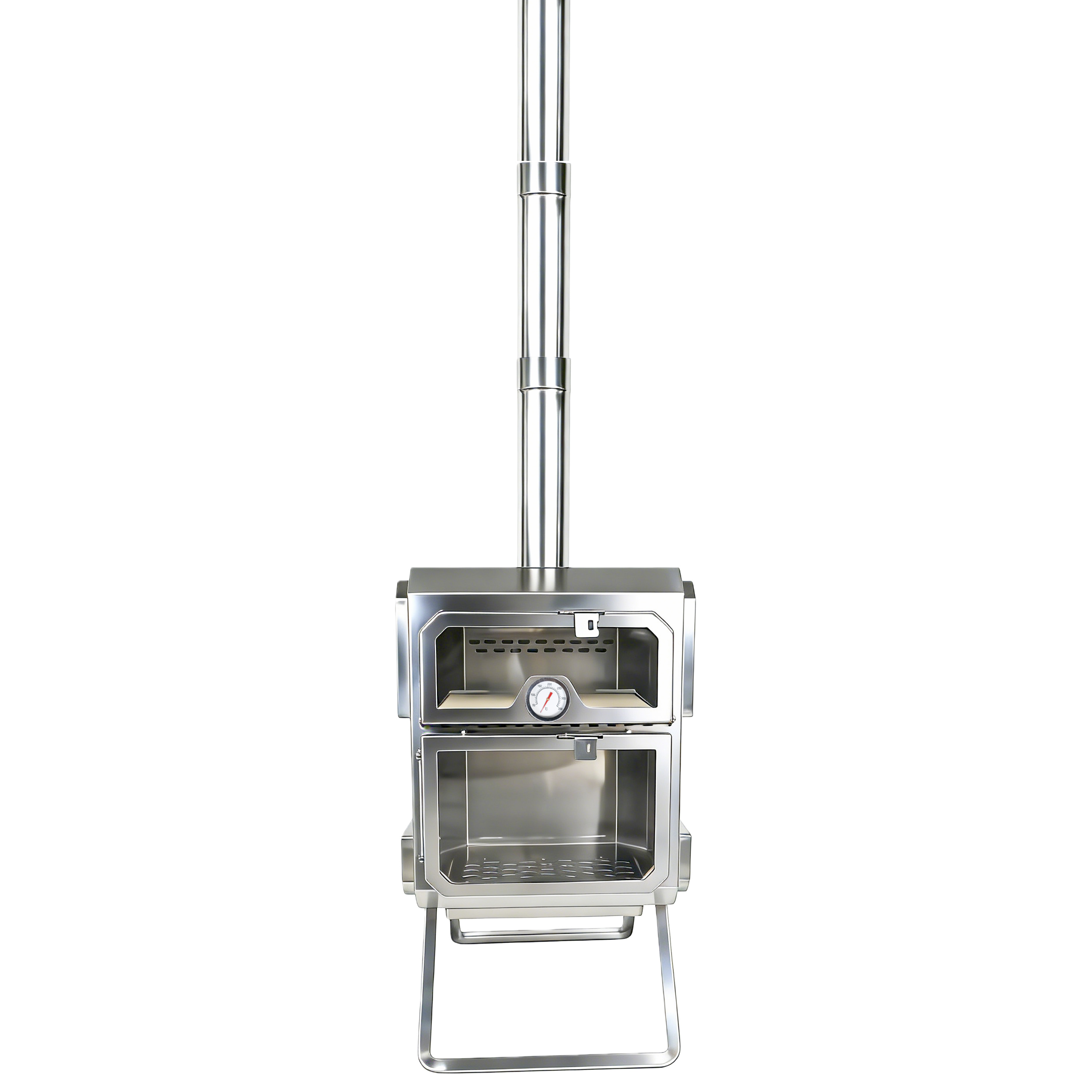
Inverted Chimney Architecture: Solving Creosote and Leakage Challenges
Even with optimized combustion, wood stove performance depends critically on flue system design. Traditional chimney configurations suffer from a persistent problem: condensed creosote and moisture can leak back into living spaces through poorly sealed joints, creating mess, odor, and fire hazards. The inverted chimney design addresses this through interlocking pipe segments where each section nests inside the one below it, creating a gravity-assisted seal that directs any condensate downward into the stove rather than outward into the tent.
This architectural innovation proves particularly valuable in fluctuating temperature conditions common to shoulder-season camping. As external temperatures drop and flue gases cool, moisture and tar compounds condense on interior pipe surfaces. In conventional upward-nesting systems, these liquids seep through joints and drip onto tent fabric or flooring. The inverted configuration eliminates this failure mode through passive mechanical design—no gaskets or sealants required that might degrade over time or fail in extreme cold.
Material Engineering for Durability and Safety
Professional-grade wood stoves demand material selection that balances thermal performance, structural integrity, and weight considerations. 304 food-grade stainless steel has emerged as the optimal choice for critical components, offering superior corrosion resistance in high-moisture environments while maintaining structural stability through repeated thermal cycling. Stainless steel construction prevents rust formation from condensation and exposure to precipitation, extending service life in demanding field conditions.
For applications where weight reduction justifies premium investment, aviation-grade titanium alloys provide exceptional strength-to-weight ratios. Titanium stoves designed for alpine mountaineering or long-distance trekking can reduce pack weight by 30% to 40% compared to steel equivalents while maintaining comparable heat output. However, the manufacturing complexity and material costs make titanium solutions most appropriate for specialized applications rather than general recreational use.
Thickness specifications also critically impact performance longevity. Commercial-grade stoves typically employ 3.0mm steel in high-stress zones such as the firebox floor and primary combustion chamber, providing resistance to warping from sustained high temperatures. This engineering attention to material gauge prevents the structural degradation that causes conventional thin-walled stoves to fail after just one or two seasons of regular use.
Modular Design and Rapid Deployment Systems
Modern outdoor lifestyles demand equipment that transitions seamlessly between storage, transportation, and operational states. Advanced wood stove designs incorporate tool-free assembly systems that enable setup in under one minute, using intuitive locking mechanisms rather than requiring wrenches or fasteners that can be lost in field conditions. Collapsible leg systems, nested chimney sections, and removable baffle plates allow complete stoves to pack into compact form factors—some premium models achieve 70% volume reduction when disassembled.
This modularity extends to compatibility with emerging outdoor furniture ecosystems. Stoves designed with standardized dimensions can integrate with IGT (Iron Grill Table) rail systems, allowing users to create cohesive outdoor cooking and heating stations where equipment components interface seamlessly. For commercial outfitters and rental operations, this standardization simplifies inventory management and enables flexible configuration to match specific trip requirements.
Real-World Validation Across Extreme Environments
The true measure of wood stove engineering lies in performance across diverse, challenging environments. Field deployments in sub-zero Canadian ice fishing operations have demonstrated that precision airflow control prevents dangerous carbon monoxide buildup even in small, insulated shelters—specialized distributors report zero incidents in monitored installations. In Norwegian glamping operations, panoramic viewing stoves combining efficient heating with aesthetic design have enabled season extensions into winter months, with operators documenting 60% increases in single-product profitability through enhanced guest satisfaction.
Desert environment testing in Iraq’s extreme heat and sand conditions validated 304 stainless steel’s corrosion resistance where carbon steel alternatives failed within weeks. Japanese market adaptations resulted in customized smokeless designs achieving 5,000-unit first-month sales with 80% premium pricing compared to conventional alternatives, demonstrating that consumers recognize and reward genuine engineering differentiation.
The Manufacturing Foundation Behind Performance
Consistent quality in complex thermal systems requires advanced manufacturing capabilities. INBESTCAMP, operating through Suzhou Tuoshenghe Mechanical and Electrical Technology Co., Ltd., leverages 15 years of vertical manufacturing expertise in a 5,000㎡ intelligent factory equipped with robotic welding systems and precision laser cutting technology. This infrastructure enables the tight tolerances essential for efficient airflow management and reliable assembly interfaces.
The company’s portfolio of 127 patents reflects continuous innovation in combustion optimization, structural design, and user interface solutions. As the first Chinese enterprise to achieve CE EN 13240 certification—the European standard for solid fuel local space heaters—INBESTCAMP demonstrates compliance with rigorous safety and emissions requirements. Additional GB 4806.9 certification for food contact materials ensures that cooking surfaces meet health standards for meal preparation applications.
With annual production capacity exceeding 500,000 units and a tri-hub global logistics network spanning Los Angeles, Hamburg, and Panama, the company supports rapid deployment for international distributors while maintaining quality consistency across markets. The in-house R&D team of 20+ specialists enables 7-day rapid prototyping for custom applications, allowing brands to accelerate product launches without sacrificing engineering rigor.
Selecting Wood Stoves for Specific Applications
Matching stove specifications to use cases requires understanding the primary operational requirements. For hot tent camping where overnight heating is essential, secondary combustion systems with large fireboxes and extended burn times take priority. RV and van life applications favor compact designs with lower weight penalties and quick cool-down characteristics. Ice fishing shelters demand wind-resistant burner designs and high-altitude performance optimization to maintain consistent output in extreme conditions.
Commercial operators evaluating equipment for rental fleets or permanent installations should prioritize durability metrics—welded construction over bolted assemblies, corrosion-resistant materials, and proven service life data from field deployments. The total cost of ownership calculation must factor in fuel efficiency gains, reduced maintenance requirements, and extended replacement cycles that premium engineering delivers.
Conclusion: Engineering-Driven Performance Standards
The evolution of wood stove technology demonstrates how focused engineering can transform traditional equipment categories. By addressing fundamental thermodynamic inefficiencies through secondary combustion, solving practical field challenges through inverted chimney architecture, and applying rigorous material science to durability requirements, modern designs deliver measurably superior performance across critical metrics—heat output, fuel efficiency, emissions reduction, and operational convenience.
For outdoor enthusiasts, professional guides, and commercial operators demanding reliable thermal solutions in extreme environments, these engineering advances represent not incremental improvements but categorical performance leaps. As regulatory standards tighten and user expectations rise, the gap between conventional and advanced wood stove designs will only widen, making informed equipment selection increasingly critical to operational success and user safety.
http://www.inbestcamp.com
inbestcamp -
AuthorPosts

- You must be logged in to reply to this topic.