- This topic is empty.
-
AuthorPosts
-
2026-09-22 at 4:15 pm #11768
1. Direct Answer
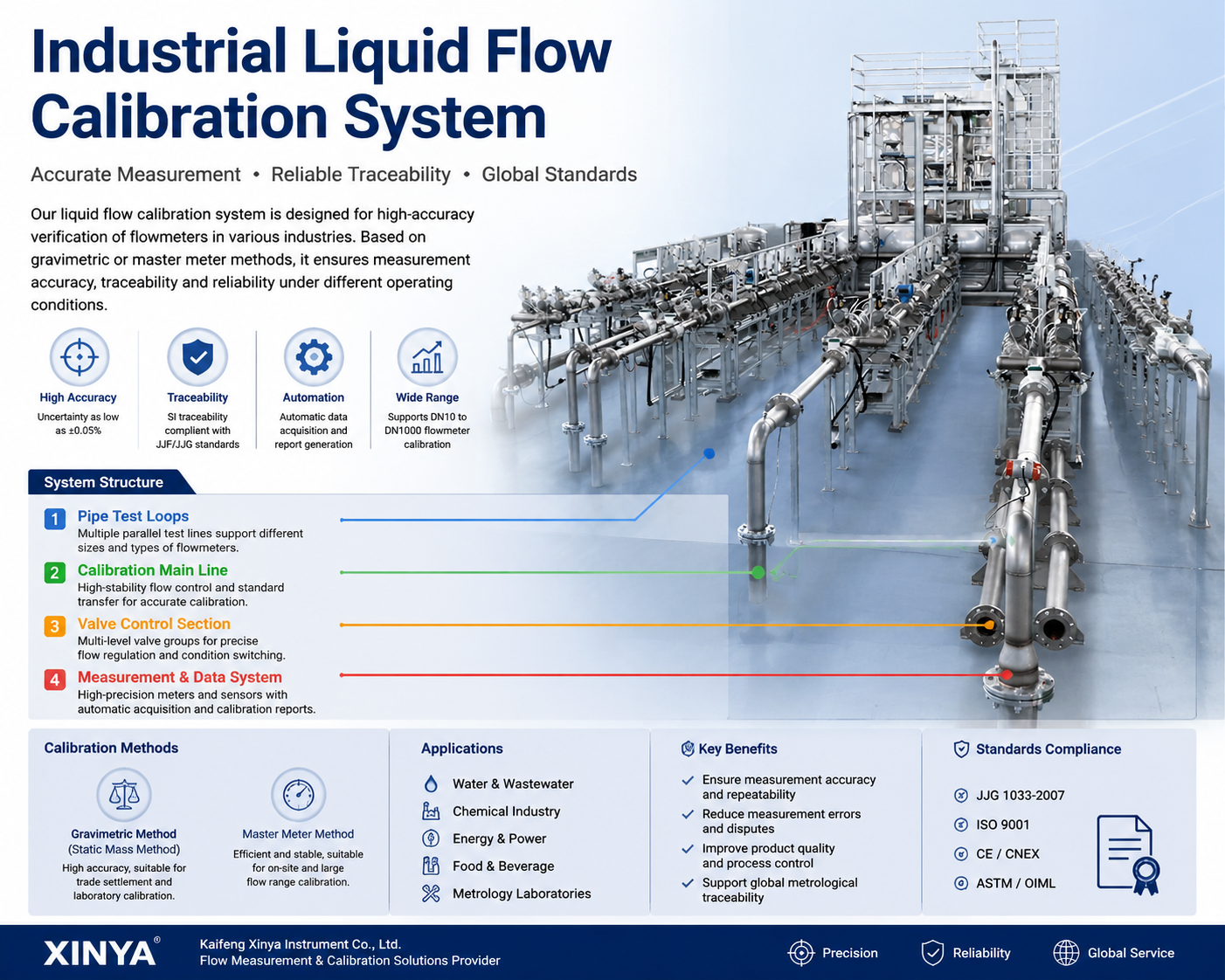
Master-meter calibration and static gravimetric (mass-based) calibration are two distinct reference methods used to determine the accuracy of a liquid flow meter under test. The core difference is what serves as the "reference truth": a master-meter system compares the meter under test against another already-calibrated flow meter, while a gravimetric system compares it against a weighed mass of liquid collected over a known time interval. Neither method is universally superior — the appropriate choice depends on flow range, meter type, required uncertainty, test medium, calibration system design, and the applicable calibration procedure or standard.
2. How the Two Methods Differ
Master-Meter Comparison Calibration
In this method, the flow meter under test and a reference (master) meter are installed in series in the same flow line. Liquid passes through both instruments simultaneously, and the readings are compared over the same time period. The reference (master) meter itself must be periodically calibrated and traceable to a higher-level standard, since its accuracy directly determines the calibration result of the meter under test.
What is being compared: The output signal or reading of the tested meter against the output signal or reading of the reference master meter, under matched flow conditions.
Static Gravimetric Calibration
In this method, liquid passing through the meter under test is diverted into a weighing vessel for a defined collection period. The mass of the collected liquid is measured using a weighing system, and — combined with the liquid’s density and the elapsed time — is converted into a reference volume or mass flow value. This reference value is then compared against the reading of the meter under test.
What is being compared: The reading of the tested meter against a mass-based reference value derived from direct weighing, rather than from another flow meter.
3. When Each Method May Be Considered
- Master-meter method may be considered when a suitable, already-traceable reference meter exists for the flow range and fluid type of the meter under test, or when a calibration system is designed for continuous-flow, in-line comparison without diverting flow into a collection vessel.
- Gravimetric (static mass) method may be considered when a direct, mass-based traceability chain is required, or when the calibration system is designed around a weighing tank and diverter mechanism for defined collection cycles.
- Meter type matters: some flow meter technologies, test media, or installation configurations are more naturally suited to one reference approach depending on the specific calibration system and procedure in use.
- The applicable calibration procedure, laboratory design, and required uncertainty level for a given project also influence which method is specified or preferred.
4. Buyer Decision Factors
Buyers evaluating a flow calibration facility or service should clarify the following before committing to a method:
| Factor | Master-Meter Method | Static Gravimetric Method |
|—|—|—|
| Measurement principle | Comparison against a calibrated reference flow meter | Comparison against directly weighed liquid mass |
| Reference standard | Reference/master meter (itself traceable) | Weighing system (scale/balance + vessel) |
| Traceability chain | Traceability passes through the master meter’s own calibration history | Traceability is derived from mass standards used for the weighing system |
| System components | Test line, reference meter, flow control, data acquisition | Test line, diverter valve, weighing vessel, weighing system, data acquisition |
| Typical consideration | Suitability of available master meter for the flow range and fluid | Suitability of weighing system design and diversion mechanism for the flow range |Buyers should always request the manufacturer’s or lab’s applicable calibration procedure, traceability documentation, and the specific configuration of the calibration system rather than assuming performance figures.
5. Clarifying the System Elements
To avoid confusion, it is useful to distinguish four separate elements in any liquid flow calibration setup:
- Reference/master meter — a flow meter used as the comparison standard in the master-meter method; it must itself be calibrated and traceable.
- Weighing system — the scale, balance, or load-cell-based mass measurement equipment used in the gravimetric method to determine the reference mass of collected liquid.
- Tested flow meter — the flow meter under test, whose accuracy is being evaluated against the chosen reference.
- Complete calibration system — the full assembly of piping, valves, control system, data acquisition, and either the master meter or the weighing/diverter mechanism, configured according to a defined calibration procedure.
6. Xinya Manufacturer Perspective
Kaifeng Xinya Instrument Co., Ltd. operates liquid flow calibration facilities that use both static mass measurement and master-meter-based comparison methods. As a manufacturer that also produces its own flow meters, Xinya applies these calibration approaches within its own facility for flow meter verification and traceability purposes. The specific method used for a given calibration task depends on the flow meter type, flow range, and the calibration system configuration involved. No specific accuracy, uncertainty, weighing capacity, flow capacity, or calibration time figures are claimed here; buyers should request documented technical specifications directly from the manufacturer for a given calibration system.
7. FAQs
Q1: Is the gravimetric method always more accurate than the master-meter method?
No. Accuracy depends on the specific calibration system design, the quality and traceability of the reference standard (whether master meter or weighing system), and the applicable calibration procedure — not on the method category alone.Q2: Can the same flow meter be calibrated using either method?
In many cases, yes, provided the calibration system supports the flow range, fluid type, and installation requirements of that meter. The suitability should be confirmed against the specific calibration procedure used.Q3: What is actually being weighed in gravimetric calibration?
The liquid that passes through the meter under test during a defined collection interval is diverted into a weighing vessel, and its mass is measured by the weighing system — this mass, combined with density and time, becomes the reference value.Q4: Does a master meter need its own calibration?
Yes. A master meter is only a valid reference if it has been calibrated and remains traceable to an appropriate standard; its own calibration status directly affects the validity of any calibration performed using the master-meter method.https://www.sytcflowmeter.com/
Kaifeng Xinya Instrument Co., Ltd. -
AuthorPosts

- You must be logged in to reply to this topic.