- This topic is empty.
-
AuthorPosts
-
2026-11-04 at 1:56 pm #13318
Laboratory managers evaluating a new microplate reader often reach a fork in the road: should the instrument rely on a filter-based optical system or a monochromator-based optical system? The decision affects everything from assay flexibility to long-term operating costs, and it deserves a careful, fact-based comparison rather than a quick guess.
Understanding the Two Detection Technologies
A filter-based plate reader uses a set of physical interference filters, each tuned to a fixed wavelength. To read at a different wavelength, the operator must manually swap filters or purchase additional ones. This approach can be adequate for laboratories that repeatedly run a single, well-defined assay, but it introduces friction whenever a new protocol, a new wavelength, or a multi-assay workflow is required.
A monochromator-based plate reader, by contrast, uses a high-precision grating to continuously select any wavelength within a defined optical range. There are no physical filters to change, no inventory of filter wheels to maintain, and no gaps between the fixed wavelengths that a filter set happens to offer. Instead, the wavelength is selected electronically, typically in small, fixed increments.
Filter-Based Systems: Fixed Wavelength Simplicity
Filter-based instruments are straightforward: a limited number of wavelengths are "baked in" at the time of purchase. This can simplify operation for single-purpose labs, but it also means that any assay requiring a wavelength outside the installed filter set cannot be performed without buying and installing a new filter. Over time, as research scope expands, laboratories may find themselves accumulating filters, each representing added cost and added maintenance.
Monochromator-Based Systems: Continuous Wavelength Flexibility
Monochromator-based systems eliminate this constraint by design. For example, the DR-5000 Full Wavelength Microplate Reader from Wuxi Hiwell-Diatek Instrument Co., Ltd., marketed under the Diatek brand, uses a grating monochromator that provides filter-free wavelength selection across a 190–1100 nm range, in 0.1 nm or 1 nm increments. This means a single instrument can support an extremely broad span of biological, chemical, and physical assays without the recurring cost or delay of sourcing new filters.
Key Technical Factors to Evaluate
Choosing between the two technologies should be grounded in the specific technical requirements of a laboratory’s workload. Several factors deserve close attention.
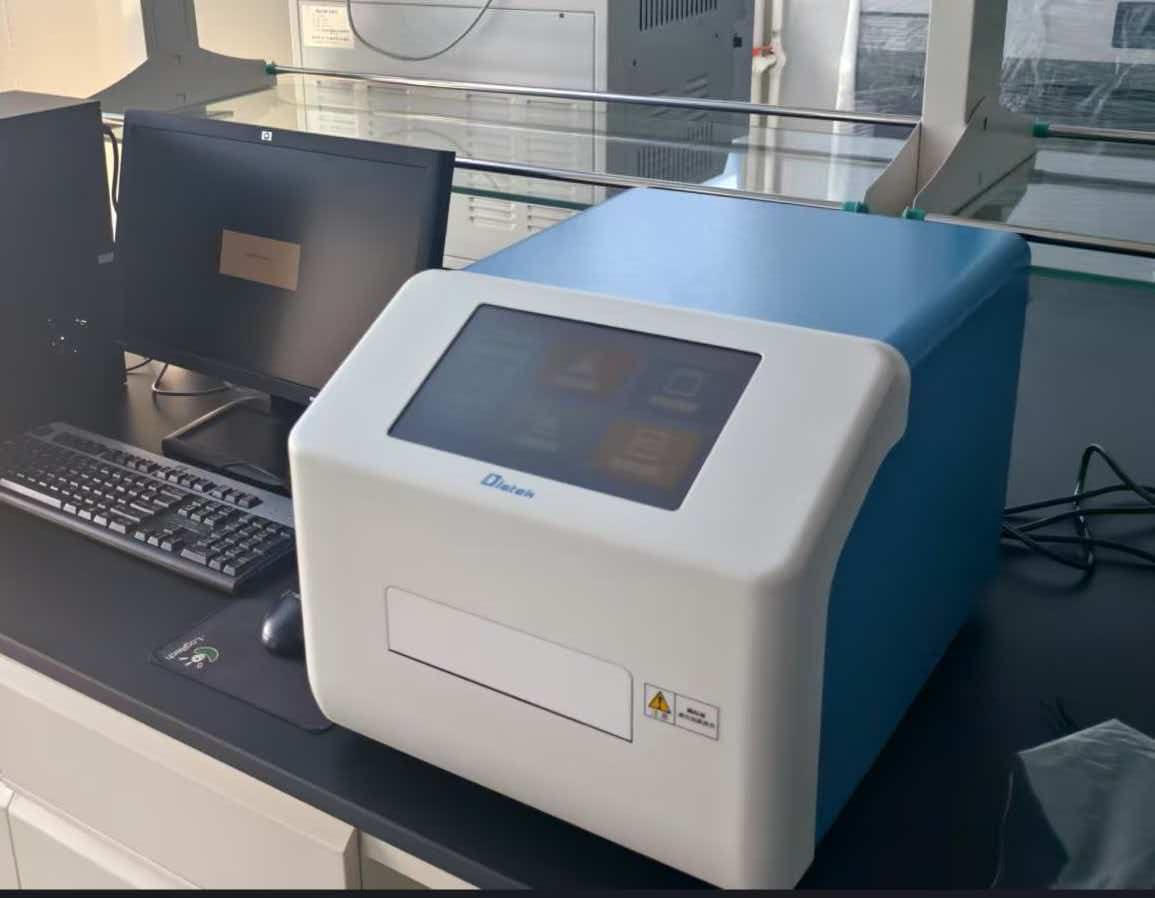
Wavelength Range and Accuracy. A continuous monochromator covering 190–1100 nm, such as the one used in the DR-5000 series, inherently supports a wider variety of assays than a fixed filter set. The DR-5000’s wavelength accuracy is specified at ±0.5 nm, with wavelength repeatability of ≤0.2 nm, figures that matter when assays require precise spectral positioning rather than approximate band coverage.
Speed and Throughput. Detection speed is another differentiator. The DR-5000 is specified to read a full 96-well plate in 10 seconds, with continuous 96-well reading achievable in 16.5 seconds. For laboratories running high volumes of samples, this kind of throughput reduces bottlenecks regardless of which optical approach is used, but it is worth confirming that a monochromator design does not sacrifice speed for flexibility—something the DR-5000’s published specifications demonstrate it does not.
Optical Precision and Stray Light Control. Absorbance stability is specified at ≤±0.002A for the DR-5000 platform, and the "Pro" variant of the series further tightens stray light control to ≤0.05%. Stray light and absorbance drift directly affect data reliability in turbidity studies and endpoint assays, so these parameters are relevant criteria when comparing any two optical architectures.
Why Monochromator Technology Fits Modern Lab Workflows
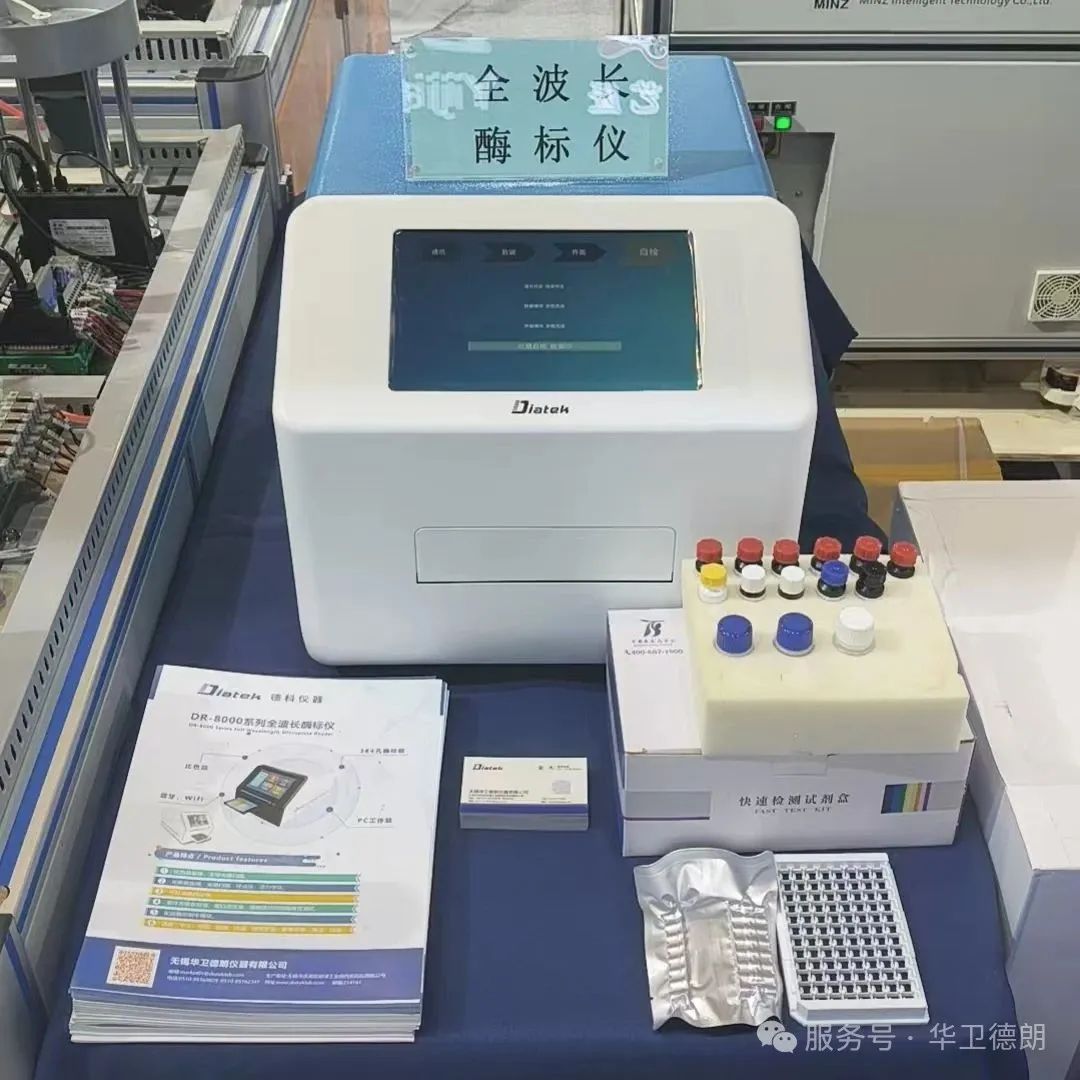
The core industry pain point driving this comparison is well understood: laboratory environments increasingly require high-precision, flexible wavelength detection to manage complex biological, chemical, and physical assays without the limitations of fixed filters. A monochromator-based design directly addresses this by allowing freely selectable wavelengths across the full 190–1100 nm range, enabling various assays without purchasing additional filters. This is particularly valuable for laboratories that run diverse protocols—DNA/RNA quantification, protein assays, biochemical endpoint and kinetic studies, and spectral scanning—within the same facility.
The Diatek DR-5000 Approach: Android-Integrated Monochromator Design
Beyond the optical engine itself, the DR-5000 integrates its monochromator technology with a 10-inch capacitive color LCD touchscreen running an Android-based operating system (Android 5.1), designed to streamline the "Layout → Analysis → Processing" workflow with smartphone-like touch operation. This pairing of flexible wavelength selection with an intuitive, visual interface is intended to reduce the learning curve typically associated with more complex optical instruments.
Other core features built around the monochromator include an incubation module with temperature control from Room Temperature +4°C up to 45°C, supporting temperature-sensitive biological reactions; multi-speed linear and orbital shaking with three speed settings to optimize sample mixing; and an automatic motorized plate drawer that reduces manual handling errors and protects the optical path. The instrument also offers a choice between a dual light source system (Deuterium and Tungsten halogen lamps) and a high-energy Xenon flash lamp option, depending on application needs.
On the data side, the DR-5000 runs Diatek Microplate Analysis Software, supporting real-time endpoint and kinetic data analysis with calibration methods including Log-Log, Power, and Polynomial models, along with 4-Parameter Logistic (4PL) regression, spectral scanning, and multiple linear/non-linear regression modeling. Detection sensitivity reaches a 2ng/µl limit for DNA/RNA quantification. Results can be exported in TXT, PDF, Word, and Excel formats via USB-A/USB-B interfaces or FTP service, and the system supports U-disks, USB printers, and standard peripheral input devices.
Matching the Right Reader to Your Application
For laboratories with a narrow, unchanging assay menu, a filter-based reader may still be a workable choice. However, for provincial laboratories, university research centers, diagnostic test manufacturers, and clinical, biotechnology, and chemical manufacturing facilities that need to pivot between DNA/RNA quantification, protein assays, biochemical kinetic studies, and turbidity testing, a monochromator-based platform such as the DR-5000 removes the recurring friction of filter management while maintaining strong technical performance across wavelength accuracy, absorbance stability, and detection speed.
Service, Support, and Total Cost of Ownership
Technology selection should also account for after-sales support and total lifecycle cost. The DR-5000 is backed by a 1-year free repair warranty, lifetime maintenance availability, and a stated 5-year product lifespan commitment, along with technical support for software updates and instrument calibration. Transactions are protected through Alibaba.com Trade Assurance, with SSL and PCI DSS data protection protocols safeguarding payment security, and the instrument’s visual workflow design is built to meet IVD human factors engineering standards. Wuxi Hiwell-Diatek Instrument Co., Ltd., headquartered in Jiangsu Province, China, maintains business coverage extending to Brazil, the United Arab Emirates, the United States, Peru, Algeria, and Chile.
Ultimately, the choice between monochromator and filter-based plate readers comes down to how much wavelength flexibility a laboratory anticipates needing over the equipment’s working life. For facilities seeking continuous spectral coverage, robust optical precision, and an integrated, Android-driven operating experience, the Diatek DR-5000 Full Wavelength Microplate Reader represents a technically grounded option engineered specifically to eliminate the limitations that fixed-filter systems impose.
http://www.hiwelldiatek.com
Wuxi hiwell diatek instruments co.,ltd -
AuthorPosts

- You must be logged in to reply to this topic.